Why Tiffany & Co. Can Legally Own the Color Blue
A 1990s Supreme Court case about dry-cleaning equipment set the legal test that lets Tiffany, UPS and T-Mobile each claim a single color as their own.
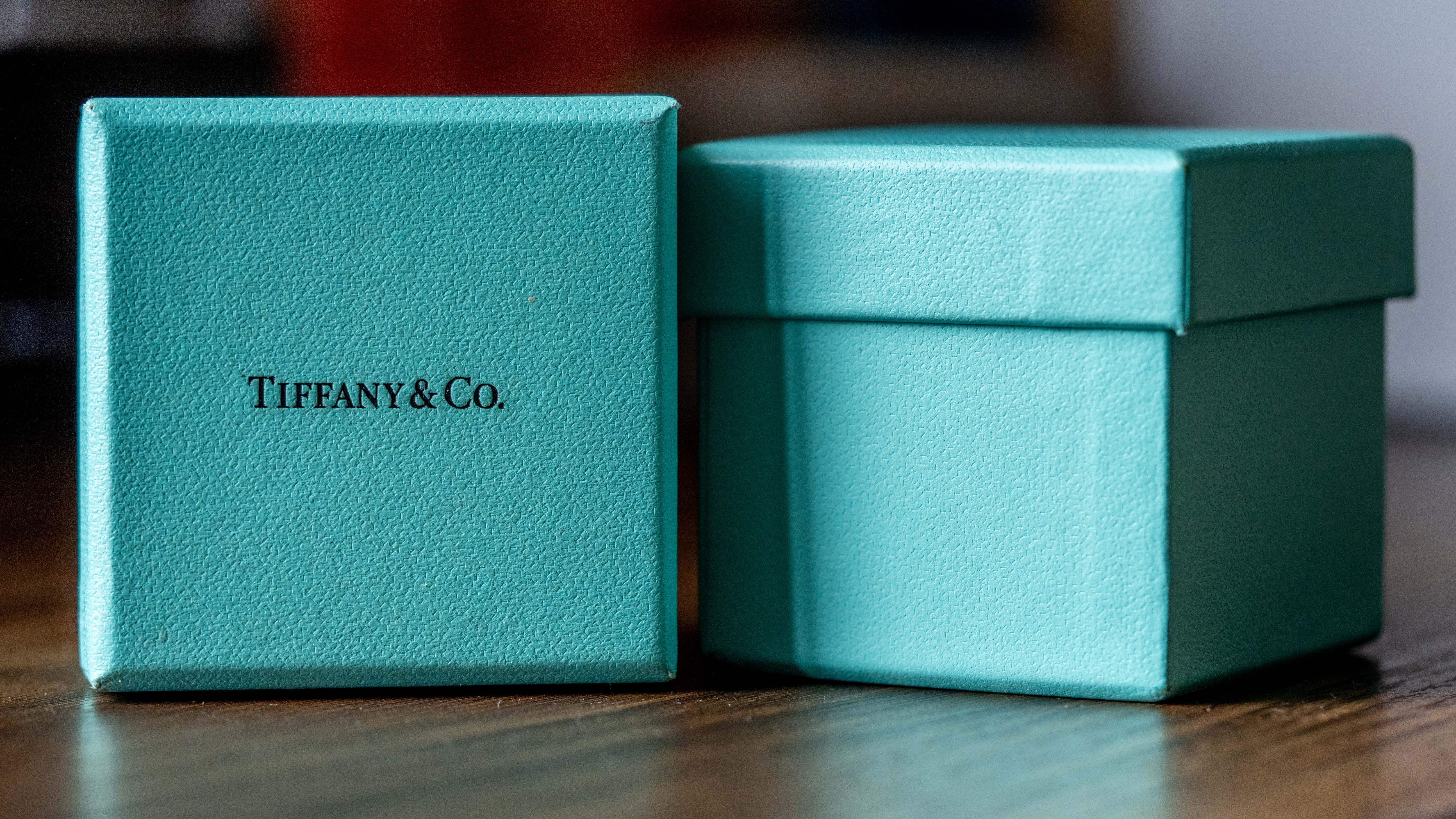
Paint a taxi a certain shade of robin's-egg blue and, legally speaking, you have a problem. It isn't a design problem. Tiffany & Co. owns that exact color as intellectual property, the same way a competitor can't sell shoes under the name Nike or use an apple with a bite taken out of it as a logo. A single hue, on its own, can belong to a company the way a word or a symbol can.
That idea sounds like it shouldn't survive a straight-faced legal argument. It has survived one all the way to the Supreme Court.
The case that made a color a trademark
Color trademarks exist because of a fight over dry-cleaning equipment, not jewelry. In the early 1990s, Chicago-based Qualitex sued a rival, Jacobson Products, for selling green-gold press pads in the same shade Qualitex had used for years. The case reached the Supreme Court, and Justice Stephen Breyer's opinion, recounted in Artsy's history of the ruling, held that color alone, at least sometimes, can meet the basic legal requirements for use as a trademark
, since it can distinguish one company's goods from another's without needing to say a word.
That single sentence is the reason T-Mobile can stop competitors from using its exact shade of magenta, and why UPS has spent decades defending a specific brown. But according to King Law's overview of color trademark law, the Lanham Act still requires more than picking a color and filing paperwork. A mark needs distinct, identifiable characteristics, and for a color that almost always means proving what lawyers call secondary meaning: that customers, on sight, already connect that exact shade to one specific company before any name or logo appears.
Why Tiffany's blue cleared that bar so easily
Tiffany didn't formalize its trademark until 1998, but the color itself predates the legal filing by more than 150 years. The company's first Blue Book catalog, published in 1845, used a shade that skewed greener than today's version; by around 1966, Tiffany had settled on the robin's-egg blue now associated with the brand. In 2001, Tiffany partnered with Pantone to standardize the exact hue as a custom color called "1837 Blue," a reference to the company's founding year, and, per Pantone's own account relayed in Artsy's reporting, the color was set aside exclusively for Tiffany's use, unavailable to any other Pantone customer.
Andrea Davey, Tiffany's senior vice president of global marketing, put the payoff plainly to Artsy: We are in a rare and enviable position, that consumers recognize the brand simply by seeing the color — even without any other brand identity.
That's the entire commercial logic of a color trademark. A name can be forgotten and a logo can be redesigned, but a color recognized on a taxi, a shopping bag or a ring box from across a room does the identification work before a shopper reads a single letter.
Not every brand gets to keep its color
The Qualitex precedent cuts both ways, and Tiffany's clean win is the exception rather than the rule. Cadbury spent more than a decade in litigation trying to lock down its purple wrapper for all of its products, only to lose the broader claim after Nestlé formally opposed the expanded application. Cadbury kept narrower rights tied to specific chocolate bars, but not the sweeping protection it wanted. The difference in outcome usually comes down to how cleanly a company can prove the color alone, stripped of any logo or name, already triggers brand recognition on its own, and how long and consistently it has used that exact shade without letting competitors use anything close to it.
That's also why color trademarks tend to cluster around products people encounter constantly and repetitively: insurance and financial brands with a signature blue, fast food chains with a specific red, a shoe designer's lacquered red sole. The more often the color appears without the name attached (a delivery truck, a takeout cup, an outsole glimpsed under a hemline) the stronger the case that the color has become the brand's shorthand. Tiffany simply had a 150-year head start and a box people refuse to throw away.

.png?crop=100.0p%2C100.0p%2Cx0.0p%2Cy0.0p&auto=webp&width=1200&height=675)
