Gene Shalit, the 'Today' Show's Punning Film Critic, Dies at 100
Gene Shalit, the bushy-haired, mustachioed film critic who reviewed movies on NBC's 'Today' show for four decades with a fondness for puns, has died at 100, his family said Friday.
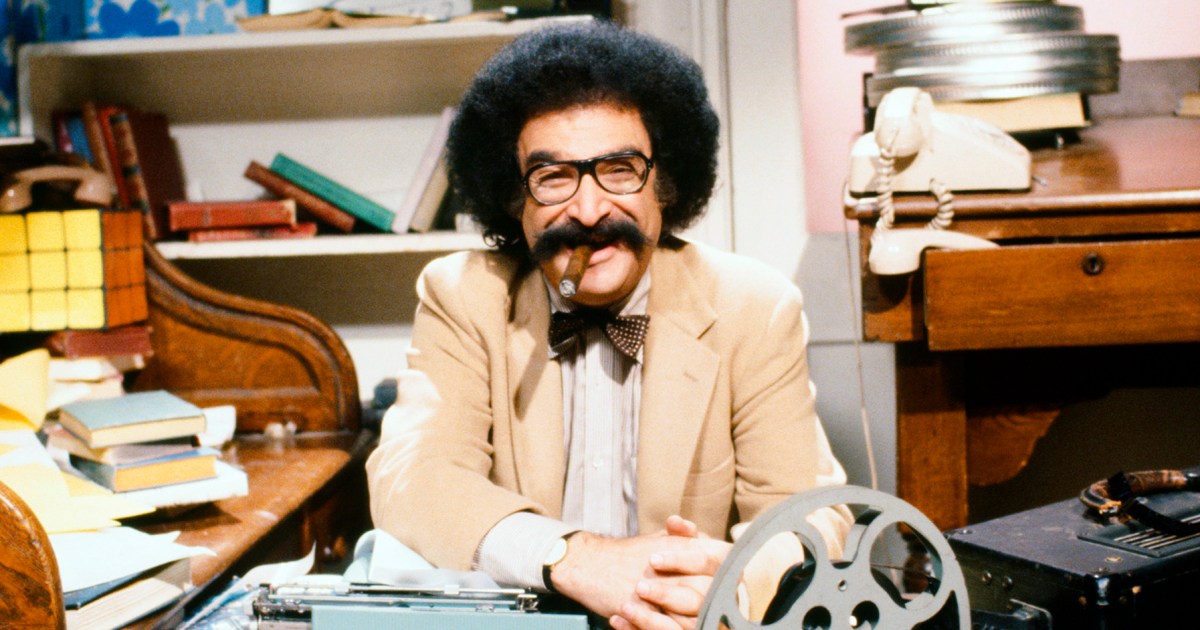
Gene Shalit, who reviewed movies for NBC's "Today" show for four decades behind a halo of frizzed hair and a handlebar mustache that arrived in a room before he did, has died. He was 100.
His family announced the death on Friday to NBC News, saying he "passed away peacefully today after 100 years of an amazing life." No cause was given.
Shalit joined "Today" as a contributor in 1970 and became arts editor in 1973, eventually settling into the segment that made him a household face: "Critic's Corner." When he stepped away in 2010 he was, by then, one of the last high-profile film critics still working on a major broadcast network — a role that has all but disappeared in the years since.
The look was the brand, but the puns were the signature. He called "Hudson Hawk" awful, "spelled o-f-f-a-l." He dismissed "Ishtar" in three syllables — "Ishtar-ish tarrible." And for "The Silence of the Lambs," the 1991 film that would win best picture, he allowed that it "may be all wool and a yard wide, but it makes a terrific yarn," as the Associated Press noted in its account of his career.
It is easy to file the wordplay under shtick, and plenty of critics did. But the puns were a delivery system. Shalit was reviewing films for an audience eating breakfast, not for a film-society quarterly, and he understood the assignment: tell millions of people in ninety seconds whether a movie was worth their Friday night, and make them remember which one. A groan was a memory aid. The mustache was a logo.
That model — a single, recognizable critic with a network pulpit and a national audience — barely exists now. Newspaper film desks have thinned, the morning shows have largely dropped standalone criticism, and the job of telling a mass audience what to watch has scattered across streaming algorithms and a million strangers' star ratings. Shalit was a fixture of the era when one person on one couch could move a weekend's box office, and his retirement in 2010 looks, in hindsight, like a closing door.
His longevity is its own kind of statement. He held a film-review chair on national television for nearly four decades, through the rise of the multiplex, the video-store boom, and the first stirrings of the internet that would eventually make his role obsolete. He outlasted most of the movies he panned and a fair share of the studios that made them.
Daybreak Wire has also marked the recent loss of painter David Hockney at 88; the cultural register that shaped how a generation saw movies and pictures is, plainly, getting quieter.
What he leaves is harder to measure than a filmography, because he made none. He leaves a way of talking about movies — quick, warm, unembarrassed by a bad pun, contemptuous of pretension — that a generation absorbed before they were old enough to disagree with him. Somewhere this weekend a middle-aged moviegoer will walk out of a theater, reach instinctively for a groaner, and not quite remember where the habit came from.