The Byrd Rule, Explained: Why a Voter ID Bill May Not Survive
Republicans are weighing reconciliation to pass a voter ID bill without 60 votes, but the Senate's Byrd rule requires real budgetary impact, and precedent isn't on their side.
The House has already passed the SAVE America Act, a voter ID and citizenship-verification bill that President Donald Trump wants signed into law. Getting it through the Senate is a different problem — one measured less in votes than in dollars.
Republicans control the Senate but not 60 seats, so the party has floated attaching the bill to a budget reconciliation package, the same filibuster-proof process used to pass tax and spending bills with a simple majority. The catch is that reconciliation isn't a blank check. Under the Senate's Byrd rule, a reconciliation bill can only include provisions that are genuinely budgetary — and voter registration requirements, on their face, are not.
What exactly does the Byrd rule do?
Named for the late Sen. Robert Byrd and adopted in the mid-1980s before being written permanently into statute as Section 313 of the Congressional Budget Act, the rule lets any senator raise a point of order against "extraneous material" in a reconciliation bill. A provision counts as extraneous if it meets any of six tests, according to a legal analysis published by the law firm Gibson Dunn: it produces no real change in federal spending or revenue, it falls outside the jurisdiction of the committee that wrote it, it violates the instructed committee's savings target, it would add to the deficit beyond the bill's budget window, it touches Social Security, or its budgetary effect is judged "merely incidental" to a larger policy change.
If the Senate parliamentarian agrees a provision is extraneous, it gets stripped from the bill unless three-fifths of the Senate — typically 60 votes — votes to overrule that call. That threshold is the entire point: it puts the burden back on whichever party wants the exemption to find eight or more votes from across the aisle, defeating the purpose of using reconciliation in the first place.
Has a provision like this survived a Byrd challenge before?
Rarely, and not for lack of trying. During the 2015 reconciliation fight over repealing the Affordable Care Act's individual mandate, the parliamentarian found that even though repeal carried a net savings of roughly $147 billion over 10 years, that figure was "dwarfed by the scope and impact of this mandate on the 270 million Americans who are covered by it," and ruled the provision extraneous. The same logic sank a 2021 push to raise the federal minimum wage to $15 an hour through reconciliation and a separate 2021 effort to overhaul immigration law, which parliamentarian Elizabeth MacDonough rejected as "a tremendous and enduring policy change that dwarfs its budgetary impact."
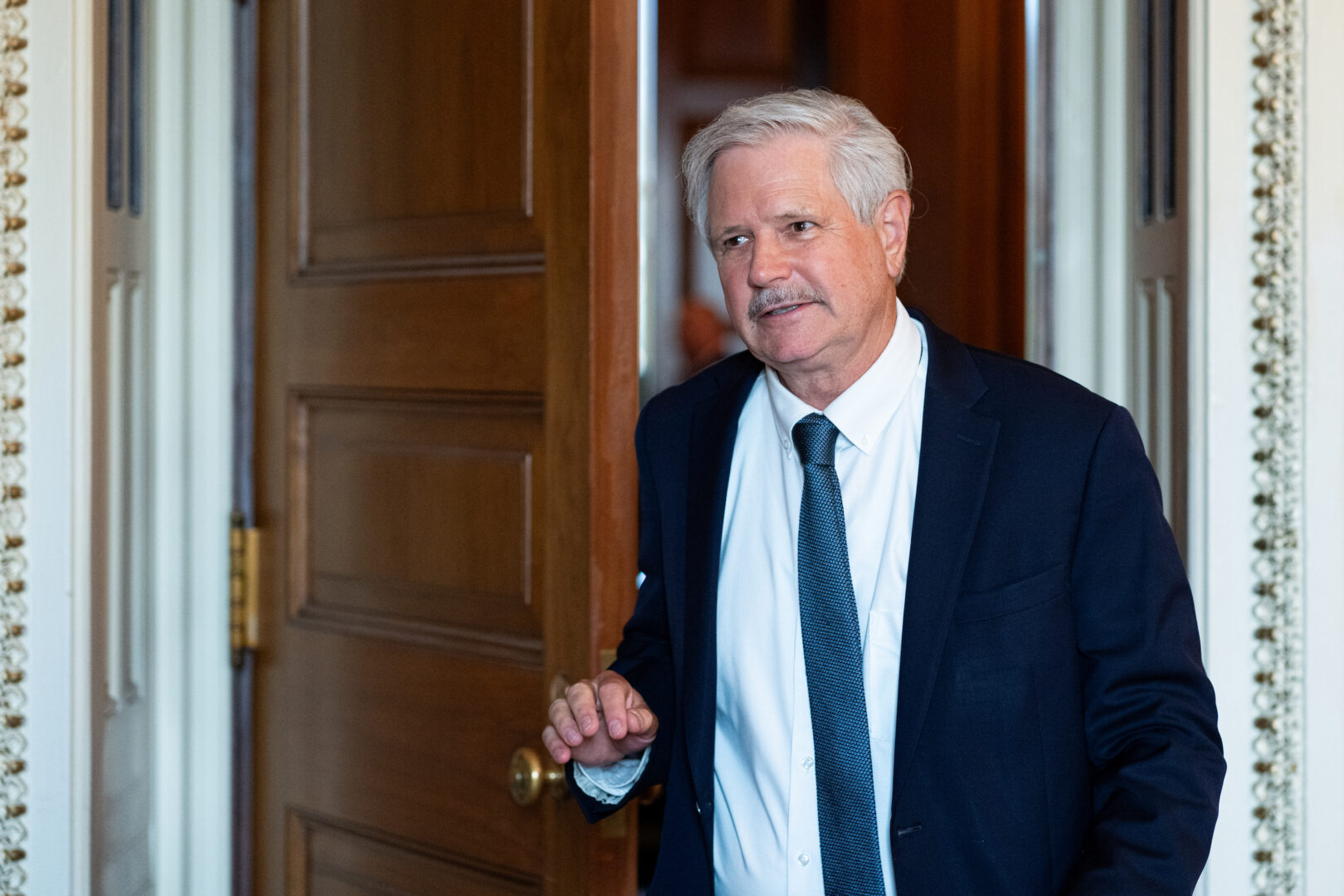
Sen. John Hoeven, R-N.D., has argued the voter ID bill can clear that bar anyway. "So if you just put your mind to it, there's plenty of ways, I think, that we can go to work and include SAVE America provisions through the budgetary process, in terms of the federal government and providing funding to states," he told reporters, pointing to the federal money Congress already sends states to run elections.
"Nothing in the current versions I've seen of SAVE would pass the Byrd rule. They could probably provide money to states for voter fraud enforcement or creating/enhancing voter ID requirements, but the number of strings put on the money would have to be pretty minimal to pass muster."
A former Senate Republican aide, speaking to Roll Call
Budget economists are skeptical in both directions. Douglas Holtz-Eakin, a former Congressional Budget Office director who now leads the center-right American Action Forum, called the underlying bill "not budgetary in nature." Bobby Kogan of the left-leaning Center for American Progress put it more bluntly: reconciliation "is about getting federal dollars in or out the door, and telling a state how it must conduct its voting has nothing to do with federal dollars going in or out." Even Sen. Rick Scott, R-Fla., one of the bill's own backers, told reporters he doesn't see any way that any part of the SAVE America Act, of any teeth, gets included in a reconciliation package.
That leaves Senate Republicans with an uncomfortable choice if MacDonough rules against them: accept the loss, or try to overturn her ruling with a simple-majority vote — the parliamentary maneuver known as the "nuclear option," because it would gut the Byrd rule's protection for every future minority party, including Democrats the next time they hold the gavel. Senate Majority Leader John Thune has signaled he won't go there, and Sen. James Lankford, R-Okla., one of the SAVE Act's own supporters, has already said he wouldn't back the move either — which means the voter ID bill's real test isn't a floor vote at all. It's a closed-door argument in front of a nonpartisan referee, over whether funding formulas can carry a policy this large.
The fight fits a pattern this Congress has run into repeatedly on other reconciliation-adjacent maneuvers, including the White House's own use of the pocket rescission to cancel funding without a vote and the poison-pill amendments both parties have used to force uncomfortable choices on the floor. In each case, the underlying dispute is the same: whether a maneuver built for budget math can be stretched to cover a fight over policy.