Nine States, One Citizen Test: What the DHS Door-Knocking Order Covers
A federal judge's preliminary injunction limits DHS field interviews likely to reach U.S. citizens in nine states through Nov. 3, but it is stayed until 5 p.m. Friday and leaves lawful investigations open.
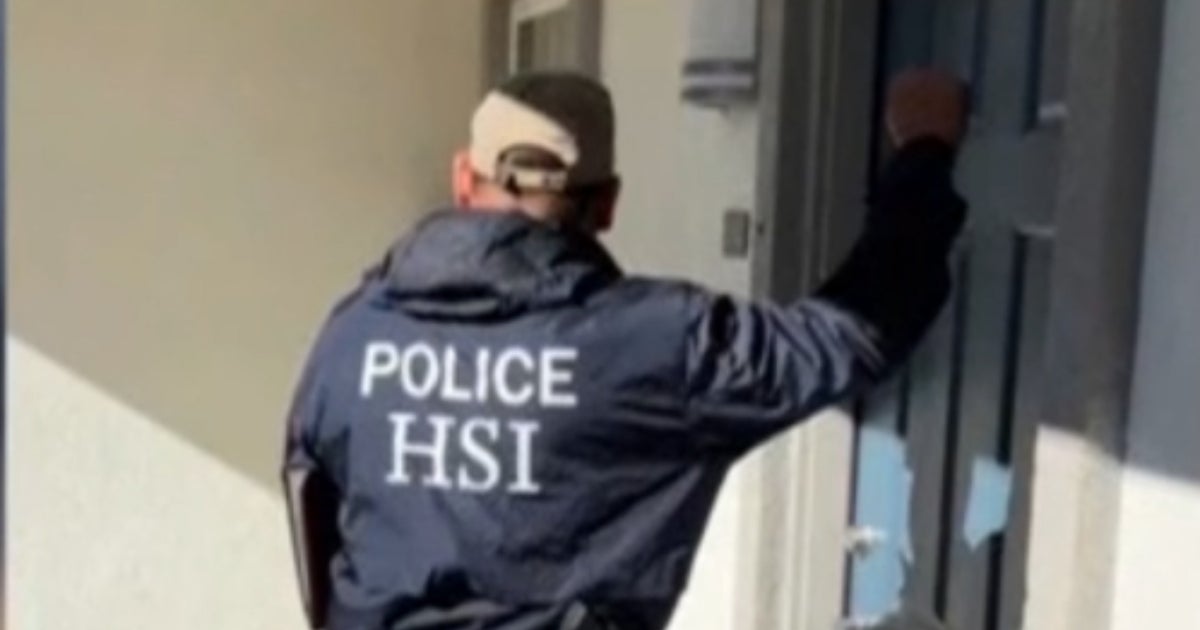
One conditional clause decides who the new federal court order covers. It is not the list of nine states, and it is not the word "blocks" in the headlines. As quoted in reporting, the order bars federal agents from "elections-related field operations and field interviews" that involve, or are likely to involve, people whom they "know, suspect or should reasonably know or suspect are U.S. citizens." Everything else follows from that sentence.
U.S. District Judge Araceli Martinez-Olguin of the Northern District of California, a Biden appointee, granted a preliminary injunction on Wednesday, Oct. 21, late in the day, CBS News reported. A preliminary injunction holds a policy in check while a lawsuit continues; it is not a final ruling. The case is California Nurses Association et al. v. Mullin et al., No. 3:26-cv-10680, filed Sept. 18. The defendants include the Department of Homeland Security and its secretary, Markwayne Mullin, in his official capacity.
The order runs "until the polls close on Nov. 3," a Tuesday, in California, Connecticut, Georgia, Missouri, Nevada, New York, Pennsylvania, Washington and Wisconsin. But it is stayed, meaning paused, until 5 p.m. on Friday, Oct. 23. CBS said the pause gives the government a chance to seek an appeal. The San Francisco Chronicle called it a presumed window to go to the 9th U.S. Circuit Court of Appeals. The reports gave no time zone, and as of Thursday, Oct. 22, no appeal had been reported in the sources reviewed.
The plaintiffs are the California Nurses Association, National Nurses United, San Francisco, Santa Clara County and the Voto Latino Foundation. The complaint is the primary document linked here; the text of the order was not obtained, so quotations from it below are as reported. The hearing was Monday, Oct. 19, and the ruling came 33 days after filing.
The order stops a narrow class of field work and leaves the rest alone
The table sets out what the reporting says the order touches and what it leaves alone.
| Question | As reported |
|---|---|
| States | CA, CT, GA, MO, NV, NY, PA, WA, WI |
| Ends | When polls close Nov. 3 (stayed until 5 p.m. Fri., Oct. 23) |
| Barred | Election-related field operations and interviews likely to involve people agents know, suspect or should reasonably know or suspect are U.S. citizens; the Chronicle and Raw Story also describe a bar on operations based on certain flagged records against such people |
| Left open | Investigating unlawful voting "by lawful means"; prosecutions already filed are not described as barred |
| Interviews of people agents do not suspect to be citizens | Not addressed in the reporting reviewed |
| Who won relief | California Nurses Association and National Nurses United only |
As analysis, the sentence that most favors the government is the judge's own. "Plaintiffs do not claim, nor does the Court find, that it is unlawful for federal officials to undertake investigations into unlawful voting in federal elections," Martinez-Olguin wrote, as quoted by CBS. The judge added that limiting the policies "does not prevent defendants from exercising their authority to investigate voter fraud by lawful means," per Courthouse News.
Analysis: that is arguably the government's strongest ground, and a DHS spokesperson put the position plainly to CBS: "HSI is actively rooting out and investigating election fraud wherever it can be found." The judge's reply, quoted by Raw Story, was narrower than a rebuttal: "Declaring that an action is completed pursuant to legal authority does not make the act necessarily lawful." On the judge's account, authority to investigate is not in dispute; the plaintiffs challenge the method, which Justice Department attorney Kelsey Helland defended as lawful investigative tactics.
The legal hook is the Voting Rights Act. The San Francisco Chronicle quoted the order finding the plaintiffs "likely to succeed in their claim that Defendants have run afoul of the Voting Rights Act's prohibition of intimidating voter assistance and mobilization." That is a likelihood finding on a preliminary record. Raw Story reported that the judge wrote of an "objectively reasonable fear" among people who urge others to vote, and the Epoch Times reported similar language.
Only two plaintiffs got relief. The Chronicle said the nurses' organizations were "the only plaintiffs who showed they could be directly harmed"; Raw Story reported that Voto Latino and the two counties lost on standing, the test of who may sue. Plaintiffs' counsel had asked for nationwide relief, the Chronicle reported, and the government argued for relief limited to plaintiffs with standing.
Prosecutions already under way are a separate matter. On Monday, Oct. 19, the Justice Department announced criminal complaints against 28 people in California, all lawful permanent residents, under "Operation Protect the Vote," according to the department's release, which says 11 were arrested that day. Outlets differ on arrests: CBS reported more than 20 and Courthouse News reported 28. The charges are allegations, and the reports describe nothing in the order that bars those cases.
An open question, offered as analysis and not from the order: no federal database lists citizenship, so an agent's "should reasonably know" will be the argument in any later dispute. Whether it covers a naturalized citizen on a list has not been addressed in reporting.
The judge found the list rested on flawed data and a fast pace
Per reporting, the order's factual core is about how targets were chosen. CBS reported that it cites "a high likelihood of error" in assembling them from government-agency and commercially available data. The Washington Sun, quoting the order, counted 48.2 million records from independent sources "of questionable provenance" and 50.6 million from official state voter-roll data or unreliable commercial versions of it. That adds up to about 98.8 million records by our arithmetic, though the reports do not say whether the two groups overlap.
The judge's explanation, as the Epoch Times quoted it: "Even under the best conditions, there is a high likelihood of error in review because there is no federal database containing citizenship status of U.S. residents." She also objected to "the reliance on admittedly flawed and incomplete data to create a list of individuals for [Homeland Security Investigations (HSI)] to interview in the months leading up to an election."
On pace, the judge's findings say, in the Epoch Times' quotation, that "During the Surge, the agents were ordered to complete a minimum of 40 suspected subject reviews, which requires officers to take no more than twelve minutes to eliminate a person from the target list using the commercial databases." By our arithmetic, at the 12-minute ceiling 40 reviews would take up to eight hours. CBS reported that a USCIS whistleblower described a similar quota of 40 subjects a day. A DHS spokesperson told CBS the efforts are "far from being rushed or untrained" and that "There is no quota on criminality."
CNN reported on Aug. 31 that internal guidance described a "coordinated criminal voter fraud surge initiative" starting Sept. 1, with offices in nine states expected, in CNN's paraphrase of the guidance, to take investigative action from early September to mid-October. CNN added that DHS, "as a separate department, is not obligated to follow" the Justice Department policy that discourages overt investigative steps near elections.
A sample offers one check on the list. On Oct. 13, the Justice Department gave California a list of about 20,000 people DHS calls "likely noncitizens," NPR and OPB reported. Los Angeles County officials reviewed 200 names. Assistant Registrar-Recorder Monica Flores wrote in a court declaration: "The review is preliminary and quality control is continuing, but it indicates that the October List is unreliable." Of the records where birthplace was "meaningfully reported," 38.9% indicated U.S. birth, which she called "strong evidence of citizenship." Separately, 112 of the 200, or 56%, were canceled or inactive.
Flores described the review as preliminary, and NPR noted that place of birth is an optional field on the state's online form. The Epoch Times reported that the Justice Department filed a separate civil suit over the same 20,000 voters on Oct. 15; our earlier report covers that suit.
The government answered that lists are only leads. Acting Deputy Attorney General Trent McCotter said, "There may be some names on there who it turns out ultimately are citizens, we're not perfect," and added that is why California was asked to cooperate. Justice Department deputy press secretary Kiersten Pels said, "California cannot facilitate the violation of federal law." At the Oct. 19 hearing, Assistant U.S. Attorney Kelsey Helland told the court the plaintiffs had no evidence of specific citizens interrogated, and that "Citizens are filtered out of this process." Helland also said any purported intimidation would at most be "ancillary intimidation that rises out of that. It is a minor aspect of lawfully investigative actions."
Plaintiffs' counsel Geoffrey Curfman answered that DHS has acknowledged arresting citizens in voting-crime investigations, and that "The federal government, of course, does not want to publicize these actions, but that does not mean it does not exist." Beau Tremitiere of Protect Democracy told CBS that "DHS built its lists on bad data, never checked how often it was wrong, and recklessly sent agents to people's homes weeks before an election."
| Claim | Result | Source |
|---|---|---|
| Nationwide: 300,000 individuals under review | About 130 prosecuted (0.043%) | Plaintiffs' counsel Curfman at Oct. 19 hearing (Courthouse News) |
| Nevada: about 16,000 noncitizens publicized in July | 185 flagged a month later (1.2%); CNN reported another 6,200 labeled "higher confidence matches" that still needed vetting | Plaintiffs' complaint, para. 233 (allegation); CNN |
| California: 190,000, then 20,000 | "Single indictment" per plaintiffs' counsel; on Oct. 19 DOJ announced 28 complaints | Curfman (Courthouse News); DOJ release |
| LA County sample of 200 from the 20,000 list | 56% canceled or inactive; 38.9% of those with reported birthplace say U.S.-born | LA County court declaration via NPR/OPB |
| Counts come from different sources and time points; they are not an error rate. | ||
Other tallies do not match. CBS reported that DHS has alleged as many as 250,000 "citizens" [sic, presumably noncitizens] are illegally registered to vote, a figure election experts dispute, and said the Justice Department counts 156 people charged since the administration began. Newsweek reported a figure of 300,000 people targeted, which matches the number plaintiffs' counsel gave in court.
The reporting reviewed contains no DHS or court total of how many homes agents actually visited. The public record is individual photographs and videos.
At the door and through Nov. 3, the stay clock matters more than the map
HSI's own accounts have advertised the work. CBS documented agents in uniform, armed, asking residents about immigration status and whether they had registered or voted, and noted captions like the one in this Sept. 1 post from HSI Kansas City.
AMERICAN ELECTIONS ARE FOR AMERICANS.
— HSI Kansas City (@HSIKansasCity) September 1, 2026
HSI is committed to protecting the integrity of our elections by investigating voter election fraud and holding violators accountable. pic.twitter.com/BZNnusFZbA
DHS's position, per its spokesperson to CBS: "Those who are here legally and are not breaking other laws have nothing to fear."
For what a resident can do, the available guidance comes from advocacy groups, and it is a position, not legal advice. The ACLU of Northern California says: "If ICE knocks on your front door, don't open it, and ask to see a warrant." It adds that "you always have the right to remain silent." Patrick Eddington of the Cato Institute, via Newsweek, advised saying nothing beyond wanting to speak with a lawyer. Amanda Fischer of Public Interest Legal offered the counter-view to Newsweek: investigations triggered by answers on USCIS Form N-400, the naturalization application, are routine, and door-knocking is one method the government may choose.
The calendar is short. Today is Thursday, Oct. 22; Election Day is 12 days away. The stay holds the order until 5 p.m. Friday, one day from now. If it is not extended and no court intervenes, the order would be in force for about 11 days, from Oct. 23 to Nov. 3. An appeal, or a request to pause the order further, would change that arithmetic, and none had been reported.
Whether the surge is already winding down has not been reported, and no further hearing date has been reported either.
The stay expires at 5 p.m. on Friday, Oct. 23, and anything filed before then will appear on the docket for No. 3:26-cv-10680 in the Northern District of California.


