Why NFL Players Stopped Wearing Pink in October
The league retired its breast-cancer-only look after the 2016 season. The reasons involve a player's denied tribute, an 8% merchandise math problem and a bet on screening over symbolism.
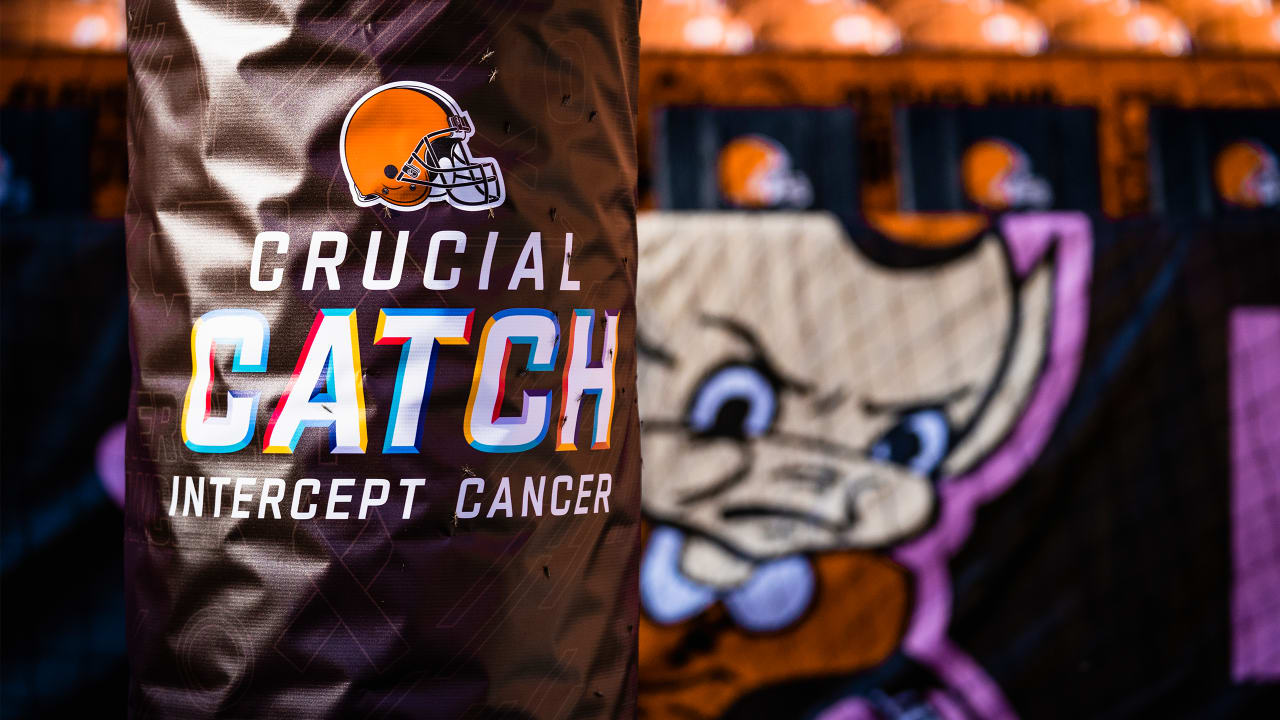
If you have been watching NFL games this month and wondering where all the pink went, you are not misremembering. For eight seasons, October turned the league pink: towels, cleats, gloves, wristbands, the works. Then, after the 2016 season, the NFL retired the breast-cancer-only campaign and folded October into a broader, multicolored effort called Crucial Catch. The pink did not vanish because the league stopped caring about cancer. It vanished because the league changed what it was asking fans to do.
That shift is the real answer to one of the most-searched football questions every fall, and it says something uncomfortable about how sports charity used to work.
Why did the NFL stop wearing pink?
The league announced the change in December 2016. According to CBS News Baltimore's report on the decision, the Breast Cancer Awareness initiative would end after that season, and teams would get autonomy over the causes they promote for roughly 18% of their schedule. Anna Isaacson, then the NFL's vice president of social responsibility, framed it as a strategy call rather than a retreat:
"We have seen a lot of success in having focused, strategic campaigns... We are committed to that."
Anna Isaacson, NFL vice president of social responsibility, 2016
Two pressures pushed the league there. One was fairness. Players who had lost a parent to a different cancer had no way to show it, because the uniform code is strict and the October exception covered only pink. The most public example came in 2015, when Pittsburgh running back DeAngelo Williams asked to wear pink all season to honor his mother, Sandra Hill, who had died of breast cancer. The league said no. Troy Vincent, the NFL's vice president of football operations, told him "there are no exceptions to the uniform policy," CBS Boston reported, so Williams dyed parts of his hair pink instead. It's not just about October for me. It's not just a month, it's a lifestyle,
he said at the time.
The other pressure was money, or rather where the money went.
Where did the money from NFL pink merchandise go?
In October 2013, a breakdown first circulated by ESPN's Darren Rovell, and summarized by Sports Illustrated, estimated that only about 8% of every pink item sold ended up funding cancer research. The split looked like this:
| Share of a pink retail sale (2013 estimate) | Recipient |
|---|---|
| 50% | Retailer |
| 37.5% | Manufacturer |
| 8.1% | American Cancer Society, for research |
| 3.24% | American Cancer Society, administration |
| 1.25% | NFL |
The league's position was that it took a 25% royalty on the wholesale price and donated 90% of that royalty to the American Cancer Society. Both things can be true at once. The NFL was not pocketing the proceeds, but the retail chain was, and fans who bought a pink jersey assuming most of the price went to research were wrong. That gap between perception and reality became a reputational problem the league had every reason to fix.
It is worth being clear about what that 2013 math described: a merchandise model that no longer exists in the same form. Today, the American Cancer Society says the NFL donates 100% of proceeds from Crucial Catch apparel to the charity.
Does the NFL still do breast cancer awareness in October?
Yes, but breast cancer now shares the spotlight. Crucial Catch, run with the American Cancer Society, focuses on screening and early detection across several cancers. The program's partnership dates to 2009, and the society says it has raised more than $38 million since inception, reached over 2.7 million people and supported more than 1,170,800 screenings in communities with the greatest need. The money flows largely through "CHANGE grants" to health centers in every NFL team market.
The screening focus is specific. In its 2025 campaign announcement, the society listed breast, cervical, colorectal, lung and prostate cancer, and said its 2024 grantees reached over 183,000 eligible patients and diagnosed 1,466 cancers. Addressing gaps in cancer screening and encouraging fans to get screened has played an essential role in our work to improve cancer outcomes nationwide,
said Dr. Arif Kamal of the American Cancer Society.
What color is Crucial Catch, and when are the games?
Crucial Catch games are played during Weeks 4 through 6 of the regular season, which is why the campaign lands in early October. The branding uses a multi-stripe palette rather than a single color, with each stripe nodding to a different cancer. Look at the goalpost padding, end zones, game balls and field-wall banners and you will see it. In Baltimore, the Ravens' Crucial Catch game against the Tennessee Titans on Sunday, Oct. 4, featured a 14-year-old leukemia survivor ringing a bell on the field, according to Hoodline.
Players get latitude too. Under the post-2016 rules they can wear cleats, shoelaces and wristbands representing any cancer that has touched them personally, and the society lists 33 official player ambassadors for the 2026 season. The league also gave players a separate outlet in its "My Cause, My Cleats" program, which lets them design custom footwear for a charity of their choosing.
The visual cost of all this was obvious almost immediately. By October 2018, ProFootballTalk observed that "October in the NFL meant a proliferation of pink. Now, you can hardly see it anywhere," noting that most players were not deviating from their standard uniforms at all. A single color is a brand. Five colors spread across optional accessories are much harder to spot from the couch.
Was dropping the pink the right call?
Judged on television, the old campaign won easily. Pink October was one of the most recognizable cause-marketing efforts in American sports, and it is fair to say breast cancer awareness lost a high-visibility showcase when it ended.
Judged on outcomes, the trade looks smarter. Awareness of breast cancer was never the bottleneck by the mid-2010s; access to screening, especially for colorectal and lung cancer, was. A campaign that pays clinics to screen under-served patients in every NFL market does more measurable good than a sea of pink socks, even if fewer people notice it. The league swapped a symbol for a service, and the symbol was the part fans could see.
For readers, the practical takeaway is simple. If a Crucial Catch broadcast nudges you toward an overdue mammogram, colonoscopy or lung scan, that was the point all along. The pink was just the packaging, and the NFL decided the packaging had started to overshadow what was inside the box.
For more on how the league quietly rewrites its own rules, see our explainer on the NFL's new onside-kick rule, and for the screening side of the story, our report on how HPV vaccination cut cervical cancer deaths in England. The money side of team ownership is covered in how NFL owners approve a team sale.