Why Cold Weather Makes You Sleepy, and Why It's Really the Dark
The drowsiness that arrives every October has more to do with light than temperature, and the warm room may be doing more harm than the cold outside.
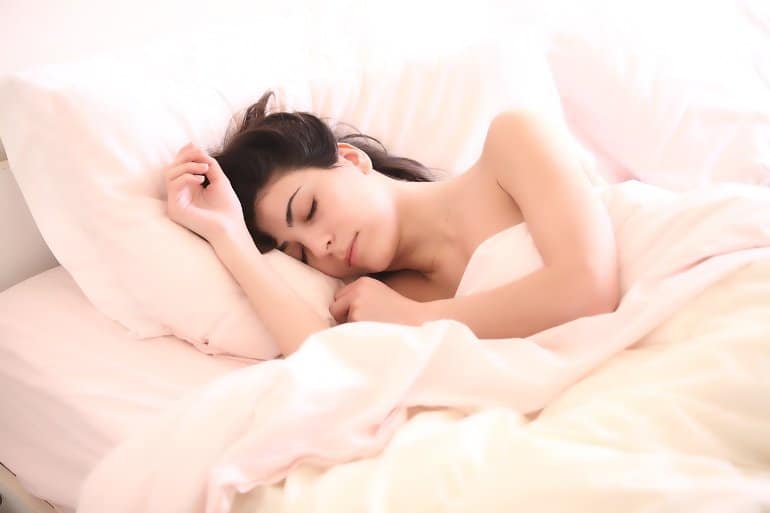
Blame the cold if you like. The evidence points somewhere else. The heavy-eyed, could-sleep-at-8-p.m. feeling that arrives every October has far more to do with light than temperature, and the one way temperature does matter runs opposite to what most people assume: it is the warm room, not the cold air, that is more likely to leave you groggy.
That distinction is useful, because it changes what actually helps.
Why does cold weather make me sleepy?
Mostly because cold weather arrives with darkness. The body's master clock, a cluster of neurons in the brain called the suprachiasmatic nucleus, sets its timing from environmental cues, and the Sleep Foundation describes light and darkness as the most important and powerful
of them. As evening falls, the brain starts producing melatonin, the hormone that makes you feel sleepy. Morning light shuts that production down and pushes the system toward alertness.
In autumn both ends of that signal weaken. Darkness comes earlier, so the melatonin cue arrives sooner in the evening. Mornings are dimmer, so the off-switch is softer. And around this time of year the change is happening fast: daylight shrinks quickest near the equinox, which is why early October feels like the evenings are collapsing rather than gently shortening.
The cold matters mainly as a co-conspirator. It keeps people indoors, under artificial light, and away from the strong daytime signal the clock relies on. A commute in the dark, a day at a desk and a drive home after sunset can add up to very little real daylight at all.
Is it normal to sleep more in winter?
There is some evidence that it is, though it comes with caveats. A study by researchers at St Hedwig Hospital in Berlin, published in Frontiers in Neuroscience, analyzed overnight sleep-lab recordings from 188 patients across the year. REM sleep ran about 30 minutes longer in winter than in summer. Total sleep was roughly an hour longer in winter, although that difference was not statistically significant, and deep sleep dipped in autumn.
The participants were people who had come to a sleep clinic with sleep problems, in an urban setting with plenty of artificial light, so the results may not describe everyone. The corresponding author, Dieter Kunz, was explicit about that.
"This study needs to be replicated in a large cohort of healthy subjects."
Dieter Kunz, Clinic of Sleep and Chronomedicine, St Hedwig Hospital, Berlin
Still, the finding fits the everyday experience. If you feel you need a little more sleep from October to March, you are probably not imagining it, and going to bed earlier is a reasonable response rather than a failure of willpower.
Does a warm room make you tired?
It can, and this is where heating season quietly works against you. Core body temperature falls by about 2 degrees Fahrenheit across the night, and that drop starts roughly two hours before sleep, in step with the release of melatonin, according to the Sleep Foundation's guidance on sleep temperature. Cooling down is part of how the body falls asleep.
Crank the thermostat and that process gets harder. The foundation says a bedroom that is too warm can interfere with the body's thermoregulation abilities and cause fatigue,
and links a higher core temperature to less restorative slow-wave sleep and less REM. Its recommended bedroom setting is about 65 degrees Fahrenheit, with a range of 65 to 68.
So the cozy, overheated living room in the evening may make you feel drowsy on the couch, and the same overheated bedroom may leave you sleeping worse and waking up tired. A cooler bedroom tends to suit sleep better.
When is winter tiredness a sign of something else?
For some people the seasonal slump is more than sluggishness. Winter-pattern seasonal affective disorder is a form of depression, and the National Institute of Mental Health lists oversleeping, carbohydrate cravings and social withdrawal, the sense of wanting to "hibernate," among its specific symptoms. The institute says people with the winter pattern produce too much melatonin, which can increase sleepiness, and that it is more common in women and in people living farther north.
The treatment with the best-known track record is light, which again says something about the cause. The NIMH describes sitting in front of a very bright light box of 10,000 lux for about 30 to 45 minutes a day, usually first thing in the morning, from fall to spring. Anyone noticing significant changes in your mood and behavior when the seasons change
should talk to a health care provider, the institute advises, rather than self-diagnosing. Mayo Clinic Health System has a short overview of the condition.
There is also a summer version, which looks quite different, and plenty of fall fatigue has nothing to do with the seasons at all; ragweed season, for example, can drain energy on its own through the allergy and the drugs used to treat it.
For most people, though, the practical fix follows from the mechanism. Get outside in the morning, even briefly, as the Sleep Foundation suggests. Keep evenings dimmer and bedrooms cooler. Hold a steady wake time instead of sleeping in on weekends, which scrambles the body clock further. None of it makes November any brighter. It just stops the darkness from setting your schedule for you.