Bolivia Declares State of Emergency to Clear 50-Day Road Blockades
President Rodrigo Paz declared a state of emergency, clearing the way to deploy the army against road blockades that have choked Bolivia for 50 days, even after a deal with the country's largest union.
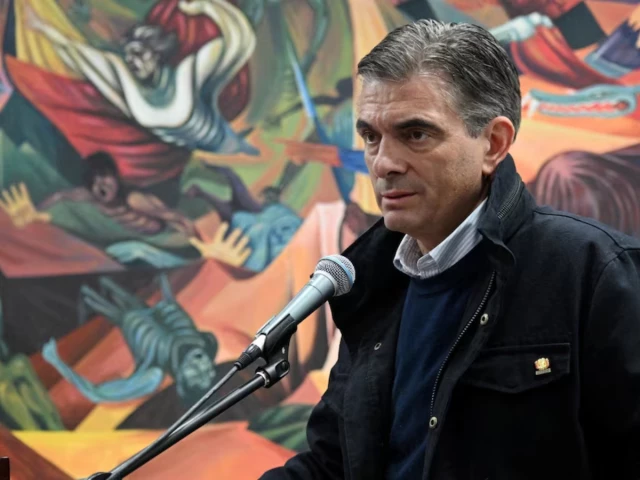
President Rodrigo Paz declared a nationwide state of emergency on Saturday, opening the way to send Bolivia's armed forces to break road blockades that have strangled the country for 50 days, cutting off food, fuel and medicine to cities including La Paz.
The decree takes effect immediately but is not the last word. Paz must notify Congress within 24 hours, and lawmakers then have up to 72 hours to approve or reject it. The move came only hours after he announced a deal with the country's largest labor federation, an agreement that has not stopped protest groups loyal to former president Evo Morales from keeping key highways shut.
The crisis grew out of economics before it became a political siege. Paz abruptly cut Bolivia's long-standing fuel subsidies to shrink the deficit, against a backdrop of a worsening dollar shortage and talks with the International Monetary Fund. He later moved to stabilize fuel prices and reversed unpopular land reforms, but the anger widened into demands for higher wages, an end to fuel and dollar shortages, and his resignation.
Friday's accord was struck with the Bolivian Workers' Confederation, known by its Spanish acronym COB. The problem for Paz is who was not in the room. Many of the roads choking the country's main production corridor are held by rural associations aligned with Morales, who took no part in the talks and are still mounting blockades, concentrated around Cochabamba. A union deal, in other words, does not reopen the roads the union does not control.
Paz cast the emergency as a defense of the state rather than a crackdown on protest, saying the unrest had hardened into an organized attempt to destabilize democracy after weeks of violence. He said the measure was meant to restore order, protect citizens and keep essential goods moving, and warned that those who kept blocking roads would face legal consequences.
"This is not a state of emergency to restrict people's lives ... It is a state of emergency to give freedom back to the people, to free Bolivia from those who use political conflict to block roads and harm the population."
Rodrigo Paz, president of Bolivia
The stakes are sharpest for ordinary Bolivians far from the political fight. This is a landlocked country that moves most of its goods by road, so a sustained blockade does not merely slow commerce; it empties shelves of food and pharmacies of medicine and leaves vehicles stranded for want of fuel. Reuters reported that protesting groups had cut off key arteries for weeks, stranding trucks and choking supplies, a picture echoed in CNN's account of the declaration.
That is the gamble Paz is now making. His deal answered the union; his decree answers the law. Neither, on its own, persuades the Morales-aligned blockaders camped on the roads around Cochabamba, and whether soldiers can clear what negotiation could not will decide how this ends.