Two Indonesian Ferry Disasters, 17 Days Apart, Same Old Warnings
A ferry caught fire off Madura Island on Aug. 2, killing five and leaving dozens missing -- 17 days after another boat sank off Sulawesi with 78 aboard.
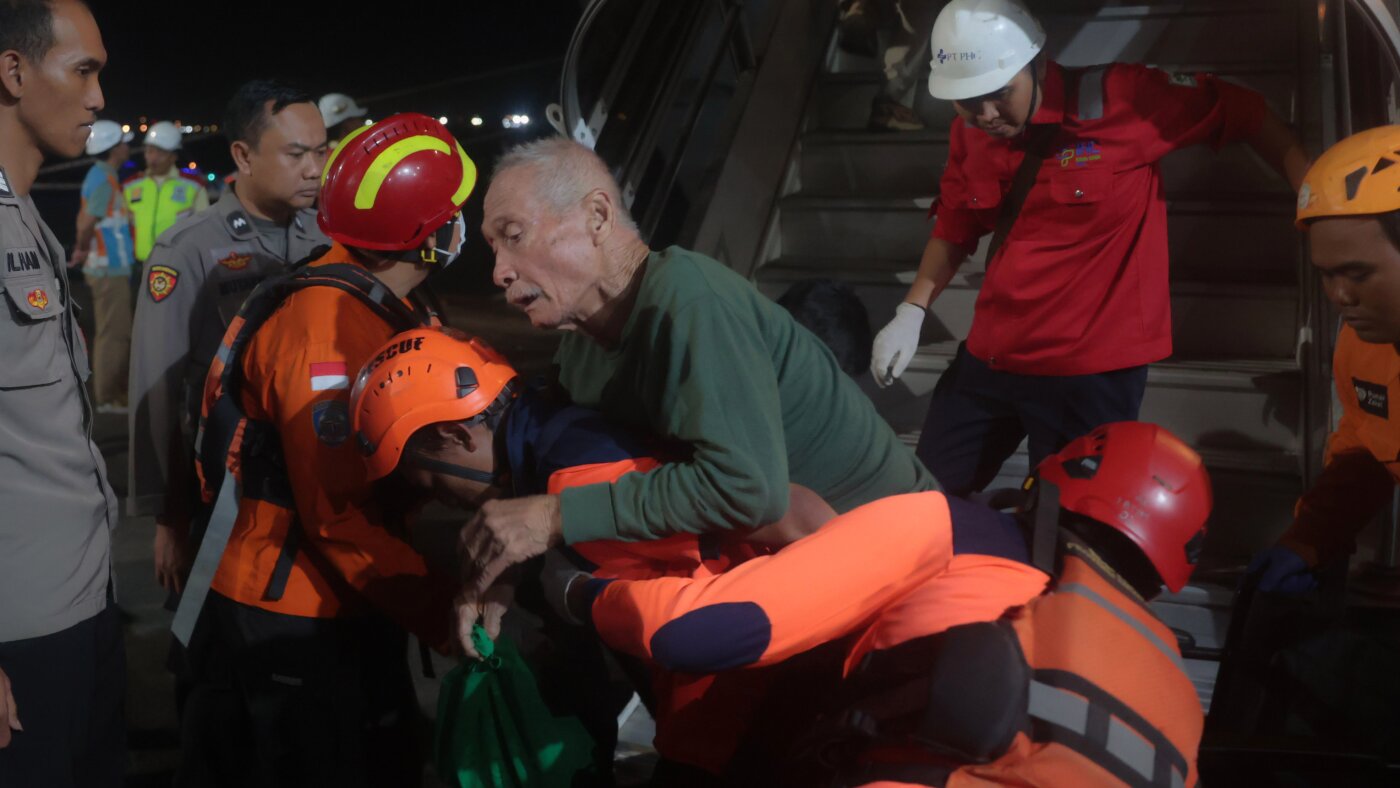
Ahmad Abdul Karim was already on the upper deck of the Mutiara Sentosa 2 when someone came up from below shouting that a truck was on fire. By the time he went to look, two vehicles were burning on the lower deck. Fanned by the wind, the flames spread extremely quickly,
he said afterward. In less than 30 minutes, everyone had been instructed to move to the bow of the ferry.
That was Sunday, Aug. 2, in the waters off Madura Island, East Java. Seventeen days earlier and roughly 800 miles away, the KM Nurul Salsa lost engine power and sank off South Sulawesi, dumping 78 people into the sea. Survivors of that sinking stayed alive for days by lashing together jerry cans and cork.
Two boats, two very different ways of going down, and — once officials, survivors and safety advocates started talking — the same list of failures.
The Mutiara Sentosa 2 was carrying 271 people, 232 of them passengers and 39 crew, along with 181 vehicles including an excavator, when the fire broke out between 6 and 7 a.m. on the Surabaya-to-Makassar route, a 40-hour crossing that mostly serves truck drivers hauling freight between Java and Sulawesi. Indonesia's search and rescue agency, Basarnas, said the ferry operator didn't report the blaze for roughly an hour, and contact with the captain was lost soon after. By Sunday evening, five coast guard vessels, a Navy warship, a helicopter and passing civilian ships had pulled 227 people out of the water and recovered five bodies. As of Monday, officials had narrowed the unaccounted-for list to two.
The ferry itself was no stranger to long service: built in Japan in 1992, it ran the Osaka-Shinmoji route as the "Ferry Osaka" before Indonesia bought it in 2015. The National Transportation Safety Committee, known as KNKT, is now investigating what triggered the fire on the vehicle deck.
Post by @indepenSumatera
What's drawing sharper criticism is what happened after the fire started. Udin Karo Karo, chairman of the Makassar–Surabaya Truck Drivers Association, said crew members left passengers to evacuate themselves. Around 40 percent of drivers aboard the vessel saved themselves. This is far from what is required under existing regulations,
he said. He added that many people jumped straight into the sea from a vessel 160 meters long because no lifeboats or inflatable rafts were visible during the evacuation, and he's now demanding an investigation into whether negligence played a role, plus compensation for the victims.
None of this is new, which is exactly the problem. Indonesia is an archipelago of more than 17,000 islands, and ferries aren't a novelty service the way they are in most countries — they're the highway system for a huge share of domestic freight and passenger travel, running everything from car-carrying ocean crossings to small wooden boats between fishing villages. That scale, combined with a regulatory structure that splits authority between sea-transport and land-transport directorates and leans on operators to self-police, has produced a pattern regulators keep documenting and rarely fixing. One transportation researcher told Vice in 2018 that the KNKT's own recommendations after accidents were being implemented only about 10% of the time, largely because officials worry that strict rules would force small operators out of business entirely.
The July sinking followed a version of the same script. The KM Nurul Salsa was traveling from Jampea Island to the port of Benteng on Selayar Island when its engine failed and it went down, about 43 nautical miles from port, with 78 people aboard. Search-and-rescue official Muhammad Arif Anwar described how a handful of survivors kept themselves afloat for days: After the ship sank, each of them saved themselves using whatever equipment or makeshift flotation they could find. They rigged together jerry cans and pieces of cork tied up with rope, then climbed on top of them.
Local media reported 47 people rescued the day after the sinking; by more than a week later, at least 18 remained missing.
The Jakarta Post, reporting from Surabaya, noted the fire on the Mutiara Sentosa 2 came "only a month" after the Nurul Salsa went down — close enough in time and cause that Indonesian officials are now facing two open safety investigations into passenger vessels within the same news cycle. Neither ship, on paper, was unusual. Both were doing exactly what thousands of Indonesian ferries do every day: moving people and cargo between islands with no easy land alternative.
That's the part outsiders tend to miss when a story like this surfaces once and vanishes. The KNKT will file its report on the Mutiara Sentosa 2 fire, as it has after hundreds of accidents before it — and Indonesia's transportation ministry will decide, as it reportedly has after most of them, how much of it to act on.

.jpg)

