Deckle Edges, Explained: The 'Defect' Publishers Fake on Purpose
The feathered edges on some book pages look like a defect. They're a callback to hand papermaking that collectors have paid extra for since the 1600s.
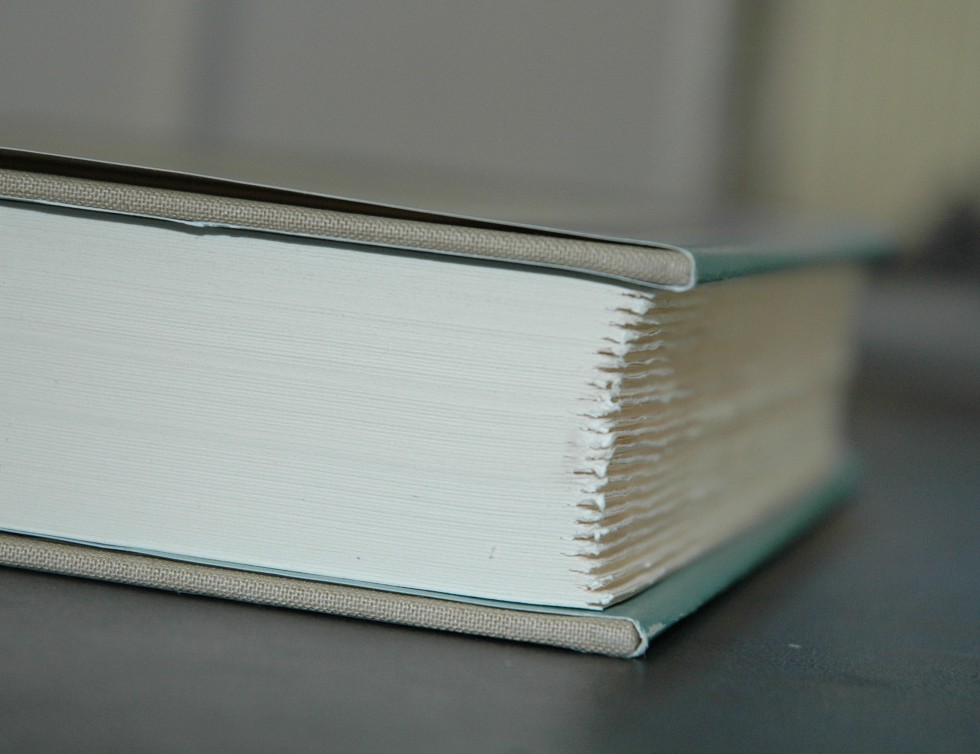
At Knopf, the production department regularly fields calls from readers convinced their book arrived broken. The pages along the outer edge are ragged, feathered, uneven, not sliced clean like every other book on the shelf. It isn't a printing error. Someone paid extra to make it look that way.
The feature is called a deckle edge, and its popularity runs backward from how books actually used to be made. In hand papermaking, a wooden frame called a deckle sits on top of a screen to contain the wet pulp as it's poured and drained. The deckle never seals perfectly, so pulp seeps beneath its edges, leaving the finished sheet with a soft, irregular border where it meets the frame. That accident of process is the literal deckle edge, and for centuries it was something publishers trimmed away, not something they sold.
The turn happened with collectors, not printers. As book collecting took hold in 17th-century Europe, untrimmed edges became evidence that a volume hadn't been cut down or rebound, proof of an original, pristine binding, according to Book Riot's history of the practice. A trimmed book might have lost its margins to an overzealous binder; a deckle edge meant nobody had touched it. Papermaking historian Dard Hunter, writing decades later, watched the aesthetic outlive its origin with open disdain. He dismissed machine-made imitations of the effect as "an imitation of an imperfection," rough edges standing in, he wrote, for "private presses, limited editions, and all manner of book snobbery."
There's also a second, unrelated kind of rough edge that gets confused with the deckle: unopened pages. Older books were printed on large sheets, folded into signatures, and bound before the folds were cut. Readers sliced them open themselves with a dedicated paper knife. Italo Calvino leaned on the ritual directly in If on a Winter's Night a Traveler, writing to his reader: Armed with a good paper knife, you prepare to penetrate its secrets. With a determined slash you cut your way between the title page and the beginning of the first chapter.
A deckle edge is feathered and soft, a papermaking artifact. An unopened edge is jagged from a blade, a binding choice. Both read, to modern eyes, simply as "old."
Today the deckle edge survives entirely as costume. Modern paper is machine-made and perfectly capable of a clean, flush edge, so publishers who want the ragged look have to manufacture it back in: sawing, tearing or sandblasting a smooth edge into an irregular one. At Knopf, the deckle edge is simply part of the house style for certain titles, alongside particular fonts and other flourishes. It is typically used for more literary-oriented books,
associate production manager Peggy Samedi told The Millions, describing it as something that harkens back to an older way,
built on the idea that not everything has to be smooth and slick.
The variation is part of the point. Look closely at a deckle edge, even across two copies of the same title, and the pattern differs slightly, a tight saw-tooth on one, a looser, free-form ragged line on another, because it's produced by machinery that varies factory to factory, not by a single template. Some 19th-century presses leaned into that unpredictability on purpose, selling the same title in two editions: one smooth-cut, one deckled and priced higher, turning what was once a papermaking flaw into a two-tier product line.
None of that stops readers from assuming the worst when their copy shows up looking torn. It sits alongside habits this site has already tracked in how books get made, the reason some titles carry two different ISBNs, and why hardcovers reliably arrive months before the paperback. These are small production decisions, invisible until someone notices, that trace back to how publishers signal a book is worth handling differently. A deckle edge is the most literal version: a defect, kept on purpose, because for four centuries it has meant the same thing to the right reader. Nobody rushed this one.
View on Instagram