Why Classical Audiences Still Won't Clap Between Movements
The rule against clapping between symphony movements is younger than it sounds, born from claques, Mahler's objections and the arrival of recording equipment — and some top conductors think it should go.
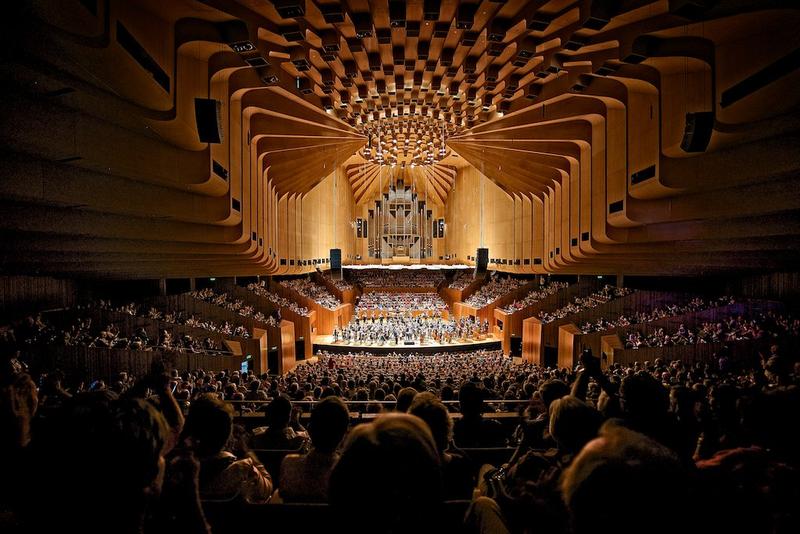
Somewhere between the final chord of a symphony's first movement and the conductor's tiny exhale before the second, a room full of people who just heard something extraordinary sits in total silence. It's one of classical music's stranger customs: the music stops, the audience clearly loved it, and almost nobody claps.
Clapping does not bother me in the least,
says Marin Alsop, conductor of the Baltimore Symphony and São Paulo State Symphony. When Beethoven pieces premiered, people would clap within the middle of the piece.
She's right about the history — and the rule that now stops most modern audiences from doing the same thing is younger, and shakier, than it sounds.
When did audiences used to clap freely?
In the late 18th century, a classical concert looked nothing like today's hushed concert hall. These were small, aristocratic gatherings, and composers wanted a reaction. Mozart is on record expecting audiences to talk during performances and delighting in spontaneous applause — enough so that individual movements were sometimes played again on the spot if the crowd's response was big enough, according to Classic FM's history of the custom.
What changed the room wasn't a rule. It was an audience.
Claques, composers and the birth of a taboo
Once concerts moved from private salons into public halls in the 19th century, organized groups of professional applauders called claques were sometimes hired to cheer on particular performers — a practice many composers despised. Gustav Mahler went as far as writing instructions into the score of his song cycle "Kindertotenlieder" specifying that its movements should not be interrupted by applause. He wasn't alone: at the 1842 premiere of his "Scottish" Symphony, Felix Mendelssohn asked explicitly that it be played straight through with no break for clapping, and Robert Schumann made the same request for his piano and cello concertos and his Symphony No. 4.
By the time recording technology arrived in the 20th century, the shift had hardened into consensus: applause between movements came to be seen as a distraction from a work's unity, unwanted noise stamped onto pieces increasingly treated as fixed, sacred texts rather than living performances.
Should you clap anyway if you feel like it?
Not everyone in the profession is on board. Alsop, speaking to The Independent, drew a distinction between enthusiasm and habit: The only time I am disturbed by applause is when it feels perfunctory or obligatory simply because something has concluded — for example at the end of a slow movement of a Mahler symphony.
In her account, spontaneous joy was never the problem; reflexive clapping just because the music paused was.
Chicago Symphony Orchestra bassoonist William Buchman makes the opposite case, telling the Chicago Tribune that silence itself is part of the composition. Unlike a lot of other forms of music, silence plays an important role in a lot of classical music,
he said. The silence is as profound as some of the music, and when that silence is not allowed its space, you lose a lot of the emotional impact that the silence can otherwise generate.
For newcomers, the rule can feel like a test nobody warned them about — one more unwritten expectation stacked on top of ticket prices and dress codes. For orchestras trying to grow younger audiences, that tension cuts both ways: enforce the silence too rigidly and a first-timer feels scolded before intermission; abandon it entirely and the audiences who show up expecting reverence feel the room has lost something it can't get back. Neither Alsop nor Buchman is arguing to police the room — she's making a case for permission, he's making one for protecting the pause — and that split is itself the tell. A rule this contested isn't really a rule anymore. It's a live argument that happens to get replayed, silently, at every performance.
A faux pas, not a felony
Today the consequence of clapping too early is mostly social — a few disapproving glances, not an ejection. It's one entry in a whole catalog of concert-hall customs that feel arbitrary until you learn the backstory: WQXR's "How To Classical" series has tackled others, from why an orchestra tunes to a single oboe rather than the piano to what rosin actually does to a violin bow. None of them are really about the notes on the page. They're about what several hundred strangers silently agree to do together for two hours.
Which leaves the room in the same place it's been for roughly a century: braced, mid-symphony, in a silence that is either exactly what the composer wanted or exactly the kind of enthusiasm Mozart would have welcomed — depending entirely on who you ask.


