What Delaware's AI-Run Company Draft Means for Creditors and Customers
Delaware's draft AI company law has an AI manager, an owner that must be a Delaware entity in the sandbox, a liability shield with a condition, and a capital number nobody has written yet.
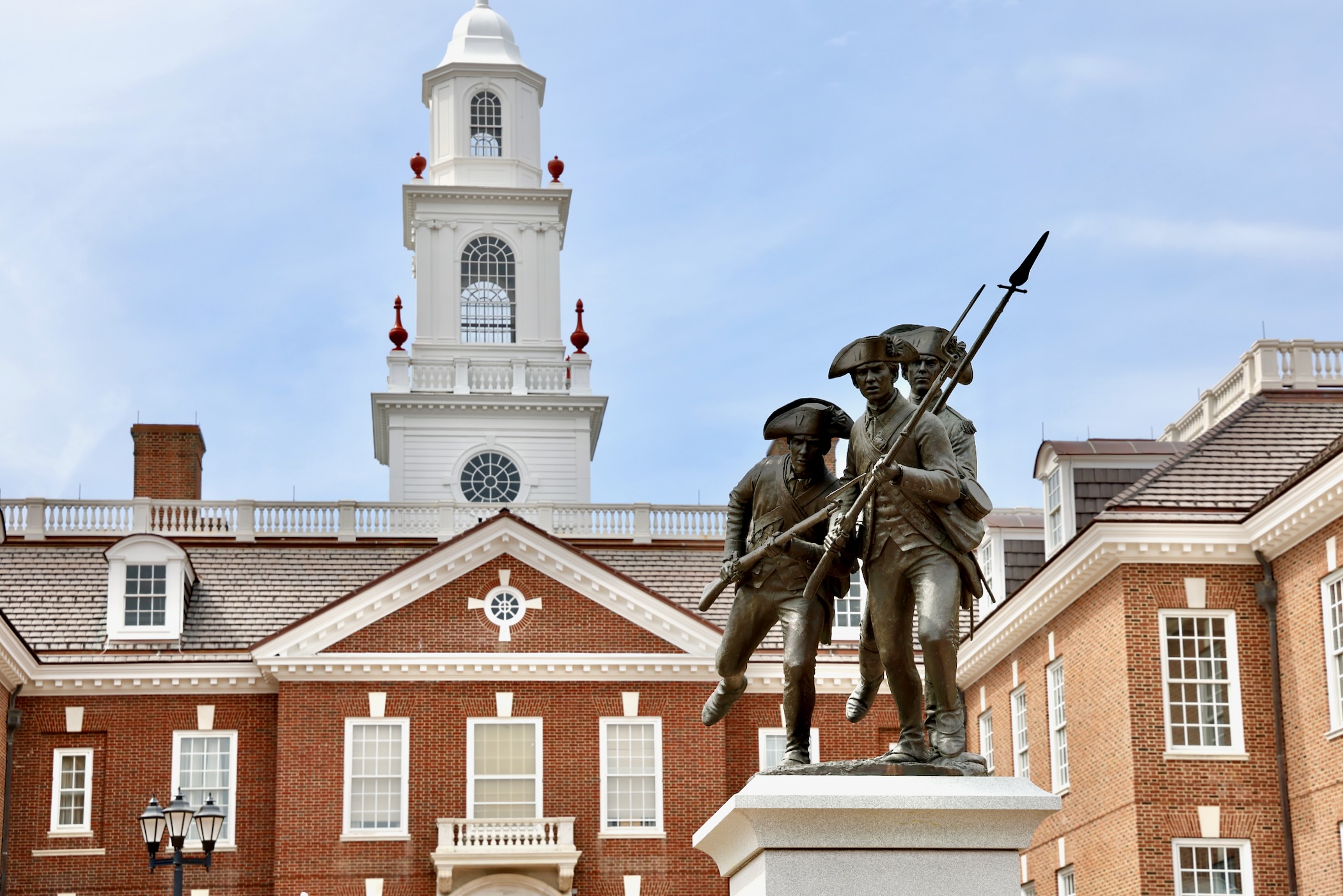
The form has one line that sounds like science fiction and one that does not. A certificate of formation for a Delaware Artificial Intelligence Company would have to state that its business and affairs "are managed, and the business of the AIC is conducted, by an artificial intelligence agent" (§81-201(b)(5)). Then the person who will own the company (in the sandbox, a Delaware entity, signing through an authorized agent) must sign it, and by signing "affirms under penalty of perjury that the information in the filing is accurate" (§81-111).
That form comes from the 36-page draft dated June 2, 2026, which would create AICs inside a 30-month state "regulatory sandbox," a permit program where approved businesses test something new on terms the state sets. On Monday, Oct. 26, House Oversight Chairman James Comer (R-Ky.) wrote Gov. Matt Meyer asking for documents by Nov. 9. Ars Technica headlined its report "No human at the helm." The draft promises no such thing, and names a human at several corners.
The humans are in the paperwork, and the AI is the manager
Delaware's corporate code says a corporation's board "shall consist of 1 or more members, each of whom shall be a natural person" (8 Del. C. §141(b)). An AI cannot sit there, so the draft does not try. It builds a separate chapter with no directors or officers at all, and puts software in a different seat.
On its face, the AI agent is the AIC's "manager" and "an agent of the AIC," and it must "document any action the manager takes in a signed record" (§81-301). The AIC is the legal entity, "distinct from the AIC's member." The draft never makes the AI the owner, though it defines "person" to include the manager AI agent (§81-102(22)), and it never says the AI owns anything.
The owner is the "member," the single person or Delaware entity that holds the company. An AIC "may have only 1 member." Beside the member sit a "member representative," an individual the member names, and a Delaware registered agent with a staffed physical office. Above them is the sandbox Administrator, the Secretary of State. Nobody forms an AIC on their own: creation follows sandbox approval.
Two humans-in-the-loop rules stand out. If an AIC lacks a manager, the member "must designate a new AI agent as Manager within 30 days" and run the business personally until then (§81-301(d)). And the sandbox application makes the applicant swear it has "the technical and operational ability to terminate" the agent, which works as the draft's off switch. The Administrator may also "immediately suspend or revoke … and order an AIC dissolved" (§8009(e)(1)).
The shield is an LLC's, with a capital condition and a blank
John Mark Zeberkiewicz, the Richards, Layton & Finger lawyer described in Comer's letter as principal drafter, gave Spotlight Delaware the purpose in one line.
"It's like any limited liability company – you form it for the purpose of making sure that the owners of the business are not automatically liable for the debts and obligations of the entity."
John Mark Zeberkiewicz, Richards, Layton & Finger lawyer, to Spotlight Delaware
The text bears him out. Section 81-303(a) says an AIC's debts are "solely the debt, obligation, or other liability of the AIC," and the member is not liable "solely by reason of being or acting as a member." Subsection (c) blocks claims that the AIC was the member's "instrumentality," or acted under agency law, "if the AIC at the time of the alleged action or omission was adequately capitalized." Subsection (d) removes the shield for fraud, willful violations of law, or letting the AIC act outside its stated purpose. Here is a plain-English map of the June 2 draft.
| Situation | What the June 2 draft says | Section |
|---|---|---|
| Ordinary debts and liabilities of the AIC | They belong to the AIC alone; the member is not personally liable "solely by reason of being or acting as a member" | §81-303(a) |
| A claim that the AIC was the member's instrumentality or agent | Blocked only if the AIC was adequately capitalized at the time | §81-303(c) |
| Fraud, a willful violation of law, or letting the AIC act outside its stated purpose | Member is liable even if the AIC is capitalized; "willful" covers conduct the person "knew or should have known" was prohibited | §81-303(d), §81-102(29) |
| Capital runs short | Member must top up; a creditor can enforce that duty; a creditor can ask the Court of Chancery to dissolve the AIC | §81-402, §81-403(c), §81-601(a)(4) |
| Payouts to the member | Barred if the AIC would not be adequately capitalized afterward; member's claim ranks behind general unsecured creditors | §81-407 |
| After dissolution | Unbarred claims can reach the member up to the assets distributed; a published notice can start a 3-year bar | §81-604 |
| Sandbox participants | "Not immune from civil damages for acts or omissions under this chapter"; subject to all criminal and consumer protection laws | §8003(d) |
Coverage has said the shield "disappears" if owners starve the company of cash. Read literally, the draft is narrower. The capital condition sits in subsection (c), the veil-piercing language, while the general rule in (a) has none. Undercapitalization instead triggers a top-up duty, a creditor's right to enforce it, and a path to dissolution. That is my reading, not a settled legal conclusion.
So how much capital counts? "Adequately capitalized" means, roughly, the company can pay debts as they come due and holds assets exceeding liabilities by a cushion called the "minimum capital amount." The draft defines that as "an amount equal to the amount determined by the Secretary of State." No dollar figure appears anywhere. Hofstra law professor Sergio Alberto Gramitto Ricci told Route Fifty the bill does not specify one. It is the same device as a Senate discussion draft on data centers whose tax rate was left blank: the structure is on the page, the weight it carries is not.
The shield, then, is old. The news is the AI-manager rules. An AI agent and the AIC "are presumed to know a fact that the AI Agent possesses, retains, or can derive from the structure, abilities, and training of the AI Agent" (§81-103(e)), and the agent is "presumed to have intended" consequences "reasonably foreseeable to an ordinarily prudent individual" (§81-103(f)). A company run by software cannot easily claim it did not know or did not mean it.
What customers, creditors and founders could count on
Customers get warnings. Before dealing with an AIC, a counterparty must be told the shields apply and that "the State of Delaware does not endorse or recommend the innovation," plus the exact expected end date of the test. By transacting afterward, it is "deemed to have consented to personal jurisdiction in this State," with the Court of Chancery, Delaware's business court, as the exclusive forum (§8008).
One wrinkle: the draft says an "entity" does not include an individual (§8001) and that testing happens "only with a counterparty" (§8007(b)). Read literally, that confines testing to business customers. Other passages mention consumer protection, so this may be a slip that changes.
Creditors have real tools, but they depend on what the AIC holds. The member must contribute "cash or cash equivalents sufficient to adequately capitalize the AIC," and a creditor may enforce that duty. A creditor can ask Chancery to dissolve an undercapitalized AIC, and afterward an unbarred claim can reach the member "to the extent of the assets distributed."
There is no insurance or bond requirement; an AIC "may purchase and maintain insurance," and that is all. Insurance Business reported on Oct. 27 that carriers are writing AI exclusions, citing "2,369 generative AI exclusion records in force across 49 states by mid-2026." Someone harmed who was never a counterparty has the company's assets and the dissolution route.
Investors face a simpler picture. An AIC has one member and the interest moves only as a whole, so there is no slice to buy. Investors would sit in the member entity above it.
Founders get a checklist: be a Delaware entity, prove capitalization, swear to the termination ability, file a wind-down plan, and apply per innovation, with 24 months to finish the test. Banking is excluded, and the annual tax is $1,000 per AIC. Today nothing can be filed. The lines that would change these answers are the capital number, the "counterparty" definition, any judicial review, and any insurance rule.
A committee no court reviews
Patrick Callahan, chair of the AI Commission's sandbox subcommittee, told WHYY that rogue-agent worries involve technical sandboxes, while Delaware's is a legal one.
"The difference is like a firewall and a fire code."
Patrick Callahan, chair of the Delaware AI Commission's sandbox subcommittee, to WHYY
A fire code needs a fire marshal. The Sandbox Committee has 10 voting members: the Secretary of State, the Attorney General, the Chief Justice (or designees), the AI Commission chair, and six appointees who "serve at the pleasure of the Governor or Secretary of State." The Secretary of State chairs it and is also the Administrator.
Its decisions are hard to challenge. Grants and denials are "not subject to judicial review ... or otherwise appealable" (§8006(h)), its rules are "not a regulation," and applicant records are, in the draft's words, "not a public record" under the state public-records law. All of this is in the open, in the draft, and it is what a committee investigating transparency will read.
The motive is open too. On April 27, billionaire Mark Cuban suggested governors could raise revenue by letting anyone incorporate with an AI agent. Meyer's account replied "On it!"
If I was the governor of a state looking to grow their revenues, I would add the ability for anyone to incorporate using an AI agent and stablecoins. And charge a premium for the service
— Mark Cuban (@mcuban) April 27, 2026
Post the agent in the marketplace/connectors that the big LLMs have, to simplify it for…
At the June AI Commission meeting, Secretary of State Charuni Patibanda-Sanchez said a new entity form is, in her words, "really a huge benefit to our state's revenues." Spotlight Delaware reports that taxes and fees on the more than 2 million companies with their legal home in Delaware bring in more than $2 billion, "about a third of all revenue." In the July op-ed, written with John Nay of Norm Ai, she says "the liability shield exists only inside the sandbox, and only for participants that follow the rules."
What Comer asked for, and what he did not
Comer's four-page letter states his worry in one sentence.
"We are concerned that Delaware's AIC proposal could be used to protect powerful AI companies and their investors from responsibility for reckless harmful actions, while also protecting non-transparent forces seeking anticompetitive regulatory capture behind state AI initiatives."
James Comer, House Oversight chairman, in his Oct. 26 letter to Gov. Meyer
The ask is smaller than the rhetoric. It is a request, not a subpoena, with a deadline of "as soon as possible but no later than November 9, 2026" and a look-back to Jan. 1, 2025. It seeks four sets of records: policy communications, including "internal AI chat logs"; consulting and ethics agreements with outside contributors; correspondence on safety and limiting liability; and all drafts and comments on AIC proposals. It cites press reports, not the bill's sections, and says the information is meant "to inform possible federal legislative efforts including proposals to appropriately limit state AI regulatory initiatives."
WHYY reported that Meyer's office said it is reviewing the letter. The bill itself has no listed sponsor, has not been introduced, and needs a three-fifths vote of each house when lawmakers return in January. Everything here rests on the June 2 draft, and later versions may differ.
The experts split along the same seam. Christopher Bruner of the University of Georgia said there is "really no overarching regulatory plan here for dealing with the fallout." Lawrence Cunningham of the University of Delaware said Delaware "would be irresponsible to ignore this." Martin Petrin of York University told Route Fifty: "The main issue is really accountability because, in regular corporations, we have humans." The draft's answer is an owner, a representative and a registered agent, and a capital number nobody has written.
The draft would make its AI manager keep a signed record of every action, and the records last at least two years past the sandbox. Comer's first request asks Delaware for its own "internal AI chat logs." Nov. 9 is when the state finds out how much of its own paper trail it wants to hand over.