Why the DR Congo Ebola Outbreak Keeps Breaking Records
DR Congo's Ebola case counts keep breaking records for a specific reason: the strain spreading has no approved vaccine, and its death rate is climbing, not falling.
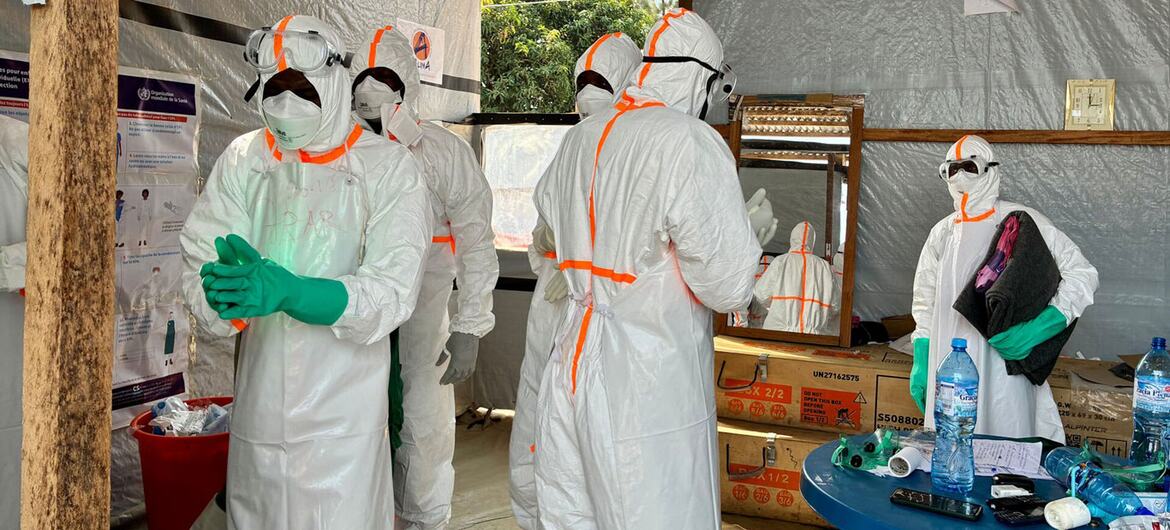
Normally, an outbreak's death rate falls as it goes on. Contact tracing catches up, treatment centers fill in the gaps, and people learn to recognize the early symptoms before they're too sick to reach help. The Ebola outbreak spreading through eastern Democratic Republic of the Congo is doing the opposite. In early June, roughly 1 in 5 confirmed cases were dying. By mid-August, it was nearly 1 in 2.
"Normally, as an outbreak progresses, the case fatality ratio should fall as contact tracing improves and patients are identified and treated earlier," Thomas Parisch, a public health specialist deployed with Doctors Without Borders, told Al Jazeera. "Instead, we're still seeing many cases detected very late, when treatment is less likely to succeed, with many identified only after they die in the community."
Why is this outbreak different from past Ebola outbreaks?
The short answer is the specific virus involved. Ebola disease can be caused by several related viruses, and the one driving this outbreak — Bundibugyo virus — is not the one the world spent the last decade building defenses against. The vaccines developed after the catastrophic 2014-2016 West Africa epidemic, and refined during DRC's 2018-2020 outbreak, protect against a different species, formally called Zaire ebolavirus. Their genetic sequences diverge by roughly 30%, according to research summarized by the National Academies of Sciences, which is enough that neither of the two approved vaccines is confirmed to work against Bundibugyo.
Past Bundibugyo outbreaks were small enough — in Uganda in 2007 and DRC in 2012 — that developing a dedicated vaccine was never prioritized. This is the third time the strain has surfaced, and the first time it has spread anywhere near this scale, so the world is essentially doing outbreak response and late-stage vaccine development at the same time.
How much worse has it gotten since it was declared?
The outbreak was officially declared on May 15, though genetic sequencing later showed the virus had already been quietly circulating since February, three months earlier. The early numbers looked contained: around 500 suspected cases and 130 deaths as of late May, according to MSF's own field reporting. Then it accelerated.
By Aug. 11, confirmed cases had reached 4,381 across five provinces, with 2,011 deaths — already the fastest-growing Ebola outbreak on record, according to Al Jazeera, and second in size only to the 2014-2016 West African epidemic that killed more than 11,000 people. Six days later, the death toll passed 2,325, surpassing DRC's own 2018-2020 outbreak to become the deadliest Ebola event in the country's history. By Aug. 21, the U.N.'s senior Ebola coordinator, Julien Harneis, told reporters that 5,290 people had been infected and 2,516 had died — with half of all deaths occurring in just the previous 20 days.
"The epidemic is spreading to an area that is bigger than France," Harneis said, briefing from the outbreak's epicenter in Bunia, Ituri province. "And the outbreak is growing faster and wider than the Ebola response."
Is there any treatment or vaccine coming?
Not yet approved, but not standing still either. World Health Organization Director-General Tedros Adhanom Ghebreyesus told an emergency committee meeting on Aug. 18 that the response was "far from being under control," warning the virus "had a big head start, and we are still playing catch-up." That same week, the first volunteer received an experimental Bundibugyo-specific vaccine, developed at Oxford University, in a trial in the United Kingdom. Hundreds of thousands of doses have already been manufactured in India, ready to ship if the trial results hold up — though WHO officials have cautioned that meaningful data is still months away, and the outbreak won't wait for it.
In the meantime, care relies on what it always has for viral hemorrhagic fevers without a specific cure: fluid replacement, oxygen support, and close monitoring, delivered as early as possible. MSF's own data from past Bundibugyo outbreaks put the fatality rate at 25% to 40% under decent supportive care — grim, but well short of the roughly 90% death rate Zaire ebolavirus can reach when it goes completely untreated. That gap is the actual argument for urgency here: this version of Ebola is survivable with basic hospital support, but only if patients reach a treatment center before the disease is advanced, and DRC's response is currently struggling to make that happen amid conflict, distrust of health workers, and a banking system in the affected provinces that Harneis said "barely functions" well enough to pay frontline staff.
Post by @UN_News_Centre
What this means going forward
Case counts and death tolls will keep climbing for as long as chains of transmission remain unbroken — that's arithmetic, not speculation, and health officials have been explicit that an end date isn't something they can currently forecast. What's changed since this outbreak first spread into a fourth province in early July is the acknowledgment, from the U.N.'s own coordinator, that the response is losing ground to the virus rather than gaining on it. Whether that changes likely depends less on medicine than on money: Harneis said existing response funding could run out within weeks without new international commitments.