MLB's Luxury Tax, Explained: The $244 Million Threshold
Major League Baseball has no salary cap, just a $244 million threshold, escalating tax rates, and a Dodgers front office that's turned paying it into strategy.
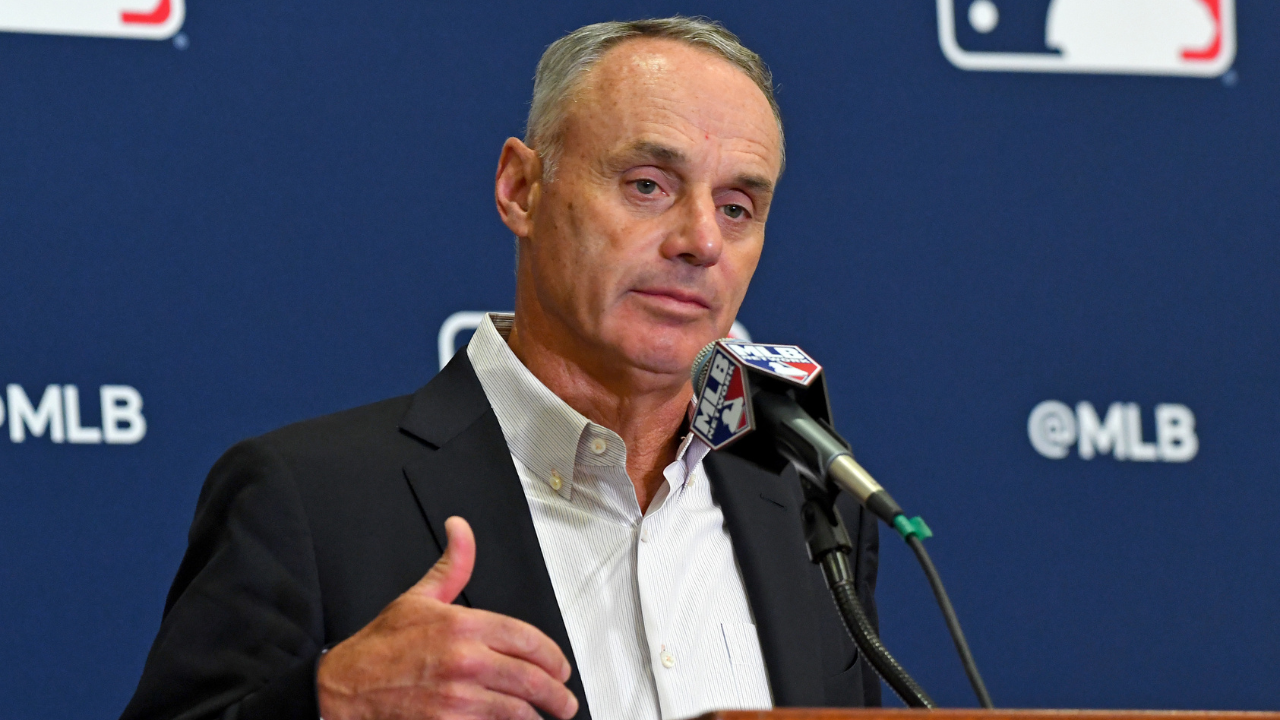
The Los Angeles Dodgers will write Major League Baseball a check worth well over $100 million this offseason, and nobody in their front office will call it a mistake.
That check is the Competitive Balance Tax — baseball's substitute for a salary cap, and the closest thing the sport has to a spending ceiling that isn't actually a ceiling. In 2026, the final year of the current labor deal, the threshold sits at $244 million. Teams that go over don't get blocked, suspended, or docked in the standings. They just pay for it, at rates that climb the longer they stay over the line.
Does MLB have a salary cap?
No. Baseball is the only one of the four major North American leagues without a hard cap — the NFL runs a strict one, the NBA uses a soft cap with a punishing luxury tier of its own, the NHL has a hard number too. MLB's answer instead is the CBT: a threshold set in the collective bargaining agreement and defined on the league's own glossary page as the average annual value of every contract on the 40-man roster plus benefits, not the simple cash payroll a team writes checks against in a given year.
Cross it, and a team becomes what the league calls a CBT payor for that season. Stay under, and the bill is zero. That single distinction is why contenders make surgical, almost accountant-driven decisions in July before the trade deadline — every addition gets weighed against the tax bill it triggers, not just the roster spot it fills.
The rates get steeper every year a team stays over
First-time offenders pay 20% on every dollar above the threshold. A team over for a second consecutive year jumps to 30%. Three or more years running, and the rate hits 50% — a team that dips back under the line for even one season resets its clock to the cheapest tier, which is exactly why some contenders "pause" spending for a year on purpose.
On top of the base rate, surcharge tiers stack at $20 million, $40 million, and $60 million over the threshold, landing at roughly $264 million, $284 million, and $304 million for 2026. The top tier is informally called the Steinbrenner tax, though some in the sport still call the $60-million-over surcharge the "Cohen tax," after Mets owner Steve Cohen, a rule the league added in 2022 specifically to slow his spending. He blew through it anyway. Combined, the worst-case rate on a dollar spent that far over the line reaches 110%. Teams that finish more than $40 million over also see their next amateur draft pick drop 10 spots, which is the one penalty big spenders actually seem to feel.
Where does luxury tax money actually go?
It doesn't get redistributed straight into small-market payrolls, despite how the debate around it often sounds. A portion funds player benefits and retirement accounts; the rest goes to teams that stayed under the threshold that year, as a kind of reward for restraint. That distinction — money funding benefits and going to other owners, not directly raising anyone's payroll — is at the center of the sport's biggest labor argument: small-market executives call the tax toothless, the players' union calls a hard cap a nonstarter, and neither side has moved much in years.
The Dodgers didn't just accept the tax; they built a strategy around it. Shohei Ohtani's $700 million contract defers $680 million of it, which means its CBT hit is calculated at something closer to $46 million a year in present value rather than the $70 million a straightforward annual salary would carry. It's legal, it's been copied across the league since, and it's a big part of why a team can run a $300 million-plus payroll, absorb a nine-figure tax bill, and still treat both as a cost of doing business rather than a deterrent.
None of this is settled for long. The current CBA expires December 1, 2026, and the CBT's entire structure — the threshold, the tiers, whether a hard cap replaces it altogether — is on the table this winter. Compare it to how the NFL's hard cap actually rolls over year to year, and the contrast tells you most of what the coming fight will be about: one league tells teams no, the other just tells them the price. The same offseason calculus that lets a $700 million free agent negotiate a no-trade clause also shapes whether a front office decides crossing that $244 million line is worth it. For the Dodgers, so far, it always has been.