Why World Cup 2026 Games Keep Running Past 100 Minutes
FIFA's push to count every dead second didn't start this summer. It traces to a 2001 study and a 2022 directive that only tightened for 2026.
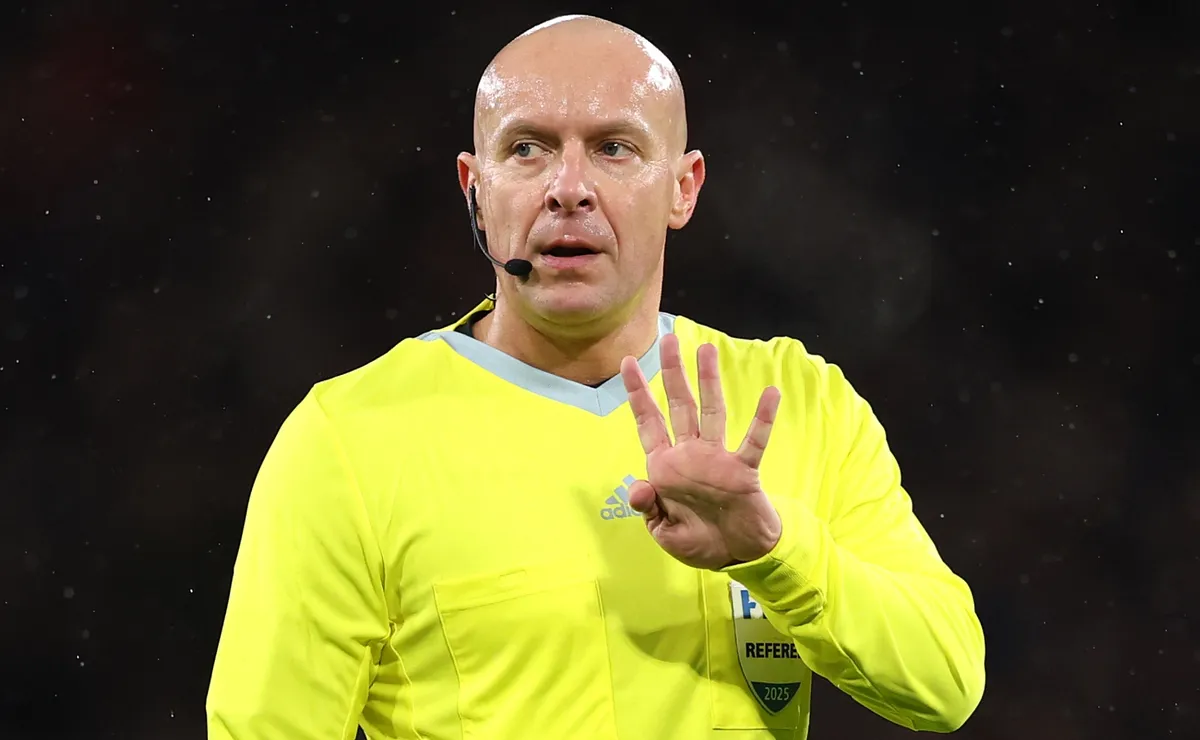
Ten to fifteen minutes. That's not a red-card review or a weather delay — it's how much stoppage time referees are now routinely tacking onto a single half at the 2026 World Cup, and it isn't an accident. FIFA told its officials this tournament to count every second of dead time, full stop, with no official cap on how high the number can climb.
Substitutions, injuries, goal celebrations, VAR reviews, the five-second countdowns now enforced on throw-ins and goal kicks — the fourth official tracks all of it on a running tally, and at the final whistle of each half, that tally gets added on top of the standard 45 minutes. It's why so many 2026 matches have stretched well past the 90-minute mark fans grew up with.
The instinct is to treat this as a gimmick invented for this summer's tournament. It isn't. The real story starts with a number that's now 25 years old.
A 2001 stat that FIFA couldn't unsee
Long before anyone in Philadelphia or Mexico City had heard the phrase "no cap on stoppage time," a 2001 study by the football research group CIES found that Italy's Serie A had the ball in play for just 63.2% of a 90-minute match — barely more than 56 minutes of actual soccer inside a 90-minute broadcast window, according to figures CBS Sports reported as FIFA began weighing changes ahead of the 2022 tournament. Time-wasting — slow substitutions, keepers holding the ball, players collapsing over minor knocks — was quietly eating a third of every match.
FIFA referees committee chairman Pierluigi Collina made the case explicit in a video FIFA posted on the eve of the 2022 World Cup, explaining that any stoppage during play — injuries, time-wasting, celebrations — would now be compensated in added time. That was the moment the philosophy changed. What's happening in 2026 is that mandate tightened, not invented.
FIFA explains the 2022 stoppage-time directive
Why Collina kept pushing after Qatar
Collina didn't let the issue drop once the Qatar tournament ended. In 2023, defending FIFA's continued push for more accurate timekeeping, he pointed to a Premier League match between Aston Villa and Brentford where the ball was only in play for 43 minutes total.
"Fans don't want to pay to watch a 43-minute match."
Pierluigi Collina, FIFA Referees Committee chairman, quoted by ESPN
League-wide, the numbers backed him up: Premier League matches averaged just 54.49 minutes of actual playing time that season, and the Scottish Premiership came in even lower, at 50.42 minutes. Three years and one World Cup later, that argument is now baked into how referees are instructed at the sport's biggest stage.
The other half of the equation: the 8-second goalkeeper rule
Longer stoppage time is only one prong of the crackdown. Goalkeepers used to be able to hold the ball for six seconds before conceding an indirect free kick — a punishment referees almost never enforced, since a free kick that close to goal felt disproportionate to the offense. The International Football Association Board scrapped that rule for good, and as of 1 July 2025, a keeper who holds the ball past eight seconds — with the referee visibly counting down the final five on a raised arm — now concedes a corner kick instead, according to IFAB's own announcement of the change.
A corner is a real scoring threat in a way an indirect free kick against a set defense never was, and referees have actually started calling it. Combined with stricter added-time accounting, the result is a tournament where delay tactics that used to work quietly now cost a team either possession or minutes on the clock — often both.
None of this means every match balloons in length for the same reason. A World Cup game can still run unusually long for reasons that have nothing to do with stoppage time at all: France's 3-0 win over Iraq on 22 June 2026 in Philadelphia was suspended at halftime for two hours and eleven minutes because of a lightning warning near the stadium, a safety protocol entirely separate from the referee's added-time count, as Bolavip noted in its coverage of the tournament's longest match by elapsed time.
What's changed for 2026 isn't the length of the game itself — it's still 90 minutes plus whatever was lost. What's changed is that FIFA finally stopped pretending those lost minutes didn't matter. The result is a World Cup where a 1-0 lead in the 89th minute might mean six, eight, or eleven more minutes of a team defending it, and broadcasters, bettors and traveling fans have all had to adjust their expectations of when a match is actually over.
The technology pushing officiating toward this level of precision isn't limited to the clock, either — the same tournament has leaned on semi-automated offside technology to shave seconds off marginal calls that used to take minutes to resolve. Stoppage time and VAR speed are, in that sense, two sides of the same push: make the 90 minutes count for what they actually are, not what tradition assumed.