How Semi-Automated Offside Technology Is Changing the World Cup
Sixteen cameras per stadium and a sensor-packed match ball now flag offsides before a human eye can. Here's what changed since 2022, and what the system still can't decide.
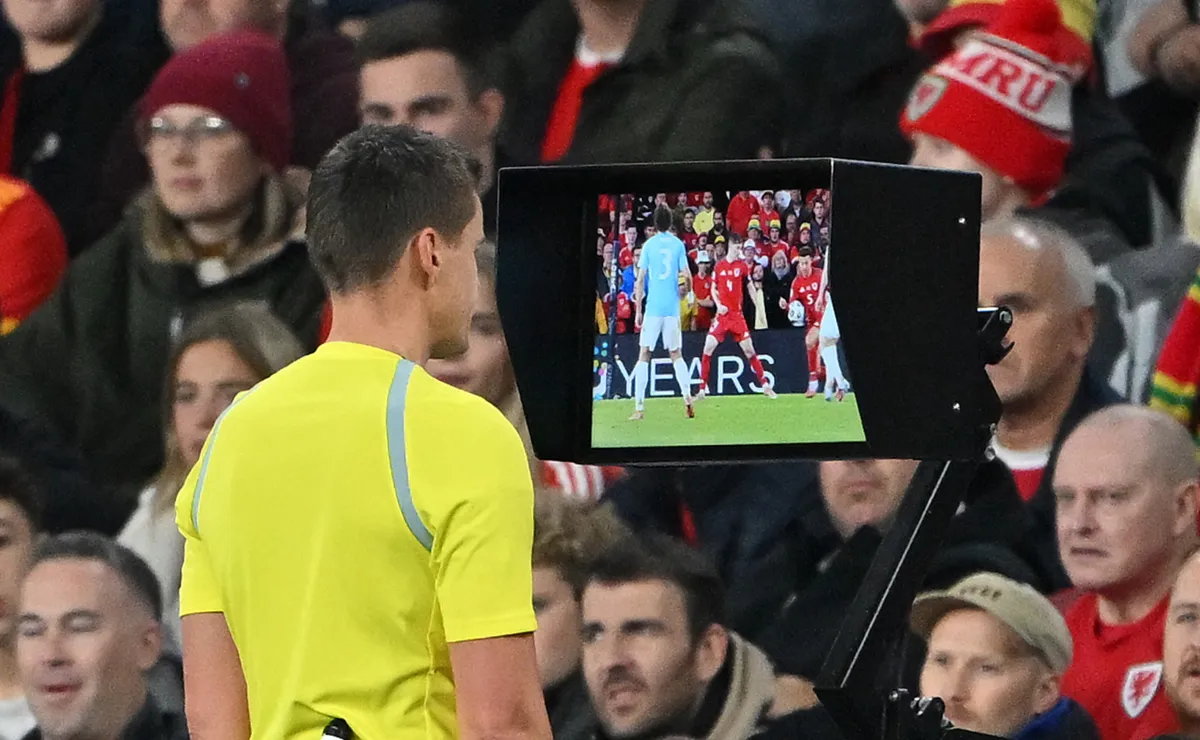
Sixteen cameras per stadium. More than 150 million tracking data points per match. A match ball with a sensor chip firing 500 times a second. That is the machinery FIFA has wired into the 2026 World Cup to solve a problem that has irritated players and fans since video review arrived: the agonizing wait for an offside flag.
Advanced Semi-Automated Offside Technology is live at a World Cup for the first time this summer, and it works by rebuilding every offside incident in three dimensions before a human referee ever has to guess.
How does semi-automated offside technology actually work?
FIFA Director of Innovation Johannes Holzmüller walked through the system during a media briefing from the International Broadcast Centre in Dallas, described in an official FIFA account of the session. Sixteen optical tracking cameras installed in each of the tournament's 16 stadiums follow every player's skeletal position in real time. A sensor embedded in the adidas Trionda match ball logs the exact millisecond of contact. Cross-reference the two, and the system can flag a positional offside without waiting for a human eye to spot it.
Every player at the tournament was 3D-scanned beforehand, according to FIFA, so the broadcast graphics show a recognizable digital avatar rather than a generic mannequin. "This is helpful for officiating, but at the end, also exciting for football fans since we will also improve the broadcasted 3D replays, where the players really look like the players," Holzmüller said.
What changed from the 2022 World Cup version?
The biggest shift isn't the cameras — it's who gets the alert first. At the 2022 tournament in Qatar, offside data went to the video assistant referee before anyone on the pitch. This year, according to reporting by Bolavip US, clear positional offsides trigger an automated audio alert straight into the linesman's earpiece, so the flag can go up immediately instead of after a video review.
The system's precision has also tightened considerably. The version used in 2022 needed an attacker to be roughly 50 centimeters beyond the defensive line before it would flag the play automatically. FIFA has now narrowed that margin to about 10 centimeters — a fivefold increase in sensitivity that catches tight calls the older threshold would have waved through.
Does the technology make the final call?
No — and FIFA has been explicit about that boundary. Holzmüller stressed the system is limited to clear positional offside and does not judge whether an offside player interfered with play, blocked a goalkeeper's line of sight, or gained an active advantage. Those subjective calls stay with the human video assistant referee, who can now pull up a real-time 3D reconstruction of the incident to help decide them — including, per FIFA, a tool that lets an official look directly through a goalkeeper's sightline during a review.
The same camera network does double duty well beyond offside calls. FIFA says the 150 million-plus data points gathered per match also help officials determine whether the ball crossed the touchline before a goal, and feed the same 3D recreation that broadcasters use to show highlights and full matches from angles no single camera operator could catch live.
Why this matters beyond the officiating booth
The stakes are immediate. The tournament is already underway across Canada, Mexico and the United States, and knockout-round margins are razor-thin — Argentina needed a nervy finish just to get past Cape Verde and reach the round of 16 earlier this month. A tighter offside margin and a faster flag change how those matches get officiated in real time, not just how they get reviewed afterward. Faster calls also cut down on the passages of play where players kept sprinting into risky, unnecessary challenges simply because the flag was deliberately held back — a safety benefit FIFA has flagged as much as a fairness one.
The tradeoff is that a five-times-tighter margin will catch marginal offsides that the human eye, and even the 2022 system, would have let go. Expect more decisions in the coming weeks that look correct on the broadcast replay and still feel harsh in the stadium — a sign the technology is doing exactly what it was built to do.