Why No Office Thermostat Setting Ever Satisfies Everyone
The fight over the office thermostat has a real physiological and historical explanation, and it isn't just personal pickiness.
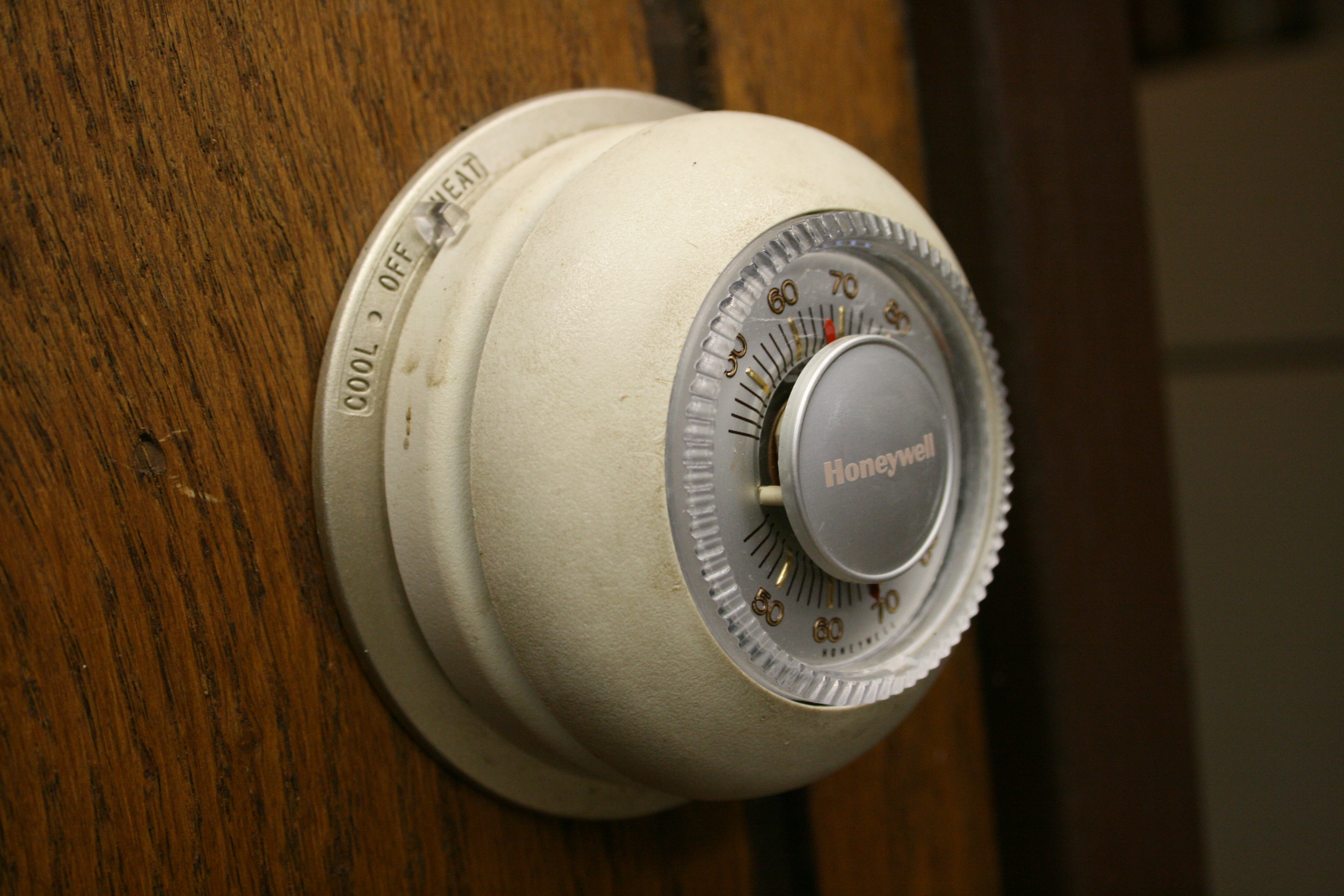
Somewhere in an office building right now, one person is reaching for a cardigan while another quietly props open a window three desks away — in the same room, under the same thermostat. Neither one is lying about how they feel, and neither one is wrong.
\n\nWhy Does the Office Always Feel Cold to Some People and Not Others?
\nThe number on the thermostat isn't really the variable that matters. Comfort depends on humidity, air movement, the radiant temperature of everything a body can "see," and, critically, the person standing in the room: their body size, their metabolic rate, their clothing. Research published in Nature Climate Change by physiologists Boris Kingma and Wouter van Marken Lichtenbelt found that because women are typically smaller and generate less metabolic heat than men, an office calibrated to male comfort standards runs cold for much of the room. By the same logic, an office tuned for European body sizes runs cold for Asian occupants, who weigh on average 30% less than Europeans.
\n\nThat isn't a modern quirk. Reporting by Quartz, cited by Business News Daily, traces the underlying climate-control standard to the 1960s and '70s, when regulators calibrated indoor comfort formulas to the metabolic rate of a 40-year-old, 154-pound man. That baseline is still embedded in how plenty of commercial HVAC systems are tuned today, which is part of why surveys have found men tend to prefer rooms around 72°F while women tend to prefer closer to 77°F.
\n\nIs It Really About Comfort, or Does It Affect Work Too?
\nComfort and performance turn out to be different questions with different answers. The Conversation's review of thermal-comfort research notes that manual dexterity actually improves in a warm 32°C (90°F) room compared with a chilly 20°C (68°F) one, useful if the job involves your hands, while cognitive performance on some tasks drops as body temperature climbs, even before a room feels uncomfortably warm. Children may underperform on classroom learning tasks at a temperature their teacher would rate as "just right," which raises an odd possibility: the smallest people in the building might be the ones best positioned to set the thermostat.
\n\n\n\nWhy Doesn't Facilities Just Fix It?
\nBecause a single thermostat is a blunt instrument for a room with uneven physics. Whoever sits under the supply vent gets a steady stream of cold air regardless of what the wall reading says; whoever sits against a west-facing window absorbs afternoon sun the sensor never sees. Molly Maid USA's Marla Mock told Business News Daily that different zones of an office — a copy room full of heat-generating machines versus an interior space that never gets direct sun — genuinely need different treatment, which is why HVAC zoning, not one setting for the whole floor, is the fix most facilities teams reach for once they can afford it.
\n\nThe U.S. Occupational Safety and Health Administration doesn't mandate an office temperature at all; it only recommends staying between 68°F and 76°F, a wide enough range that plenty of employers just pick a number that suits management and let everyone else adjust. It's why Mark Zuckerberg has kept his own office famously frigid and why other executives interviewed by Business News Daily land anywhere from 65°F to 73°F, then hand out branded fleece vests as the compromise.
\n\nSo What Actually Ends the Thermostat Wars?
\nThe unglamorous answer is clothing, not engineering. The Conversation's researchers argue offices could drop the demand for a single "shirt-sleeve" temperature year-round and instead let people dress for the season indoors the way they already do outdoors — warmer layers in winter, lighter ones in summer — which would let facilities widen the acceptable band and cut energy use at the same time. That matters more than it sounds: heating and cooling in homes and offices together account for roughly 30% of global carbon dioxide emissions, so shaving even a couple of degrees off the extremes of "shirt-sleeve comfort" is not a trivial saving.
\n\nIt's one of several small workplace frictions systems solve for an average that describes nobody in the room, the same logic behind why job postings list such wide salary ranges instead of a single number. Both are least-bad compromises for a population, not answers tailored to a person.
\n\nNone of that will settle the argument by Friday. But the next time a co-worker across the room insists they're freezing while you're perfectly comfortable, the honest answer probably isn't that they're being dramatic. It's that the whole system was built around someone who isn't either of you.