Utah's Kalshi Case: 14 Counts, 12 Bets, 2 Founders Summoned, No Arrests
Utah charged Kalshi, and named its two co-founders as defendants, in a 14-count information over 12 bets worth $114.87. The court dates that matter are elsewhere.

Utah filed 14 criminal counts on Wednesday, Oct. 28, against a federally registered exchange and its two co-founders, and issued no arrest warrants. The charging document is an "information" (the kind of filing at the center of the Comey case), a prosecutor's written accusation that a judge must accept before the case moves forward. Captioned "Co-Defendant Information (Summons)," it was filed in the Third Judicial District Court in Salt Lake City against KalshiEX, LLC, CEO Tarek Mansour and COO Luana Lopes Lara. A summons is a court order to appear on a date the court sets.
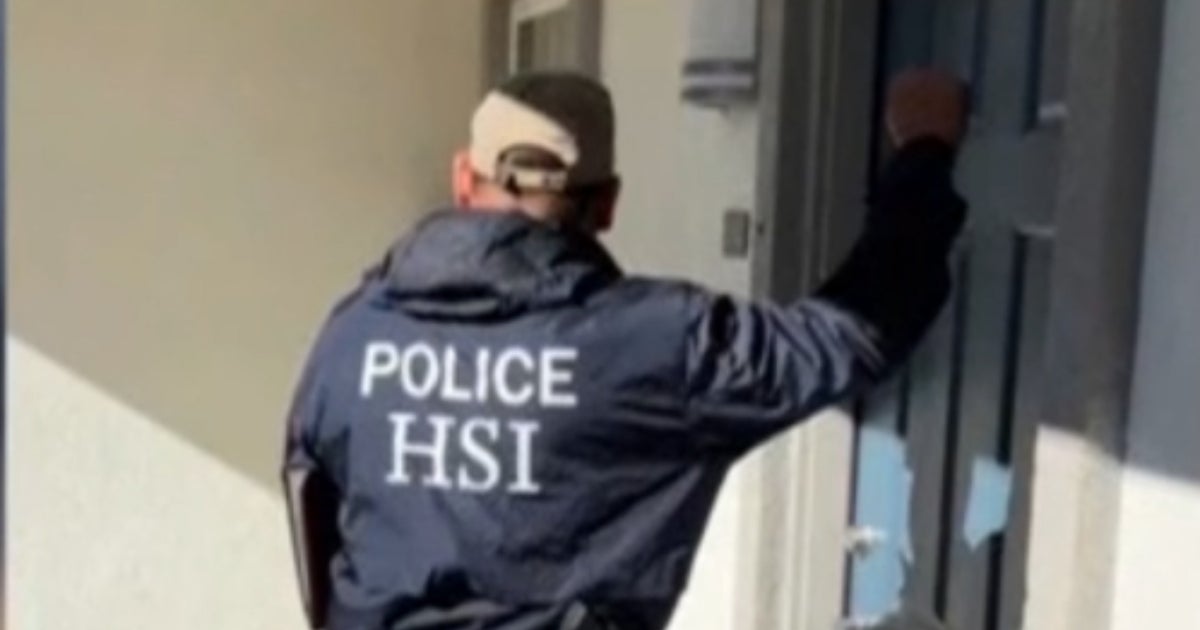
The evidence is small and specific. According to the information, Special Agent Scott Eggerman of the Attorney General's Office opened an account under an undercover name on Sept. 13 and placed 12 sports wagers from Salt Lake and Davis counties through Sept. 24. He staked $114.87 in all. Kalshi's fees on those bets came to $3.36. The largest stake was $30.00; the largest fee was 78 cents, on a $20.00 bet that Troy would win.
A Kalshi spokesperson, who was not named, answered this way: "This is a crazy overreach; Utah is clearly playing politics. We look forward to putting a stop to this in court, just like we did in Arizona." Nobody named in the information has been convicted of anything. What follows is what the state alleges and what the statutes allow.
What the 14 counts allege, and what each can carry
| Count | What the information alleges | Class | Ceiling on conviction |
|---|---|---|---|
| 1 | Pattern of unlawful activity (§ 76-17-407): proceeds from 12 episodes of online gambling promotion, Sept. 13 to 26 | Second-degree felony | 1 to 15 years; court may also order divestiture, restrictions on future activity or dissolution of an enterprise |
| 2 to 13 | Online gambling promotion (§ 76-9-1404): one count per wager, 12 wagers in Salt Lake and Davis counties | Third-degree felony, each | Up to five years each; individual fine up to $5,000 |
| 14 | General gambling promotion (§ 76-9-1405): economic benefit other than winnings from inducing or aiding gambling | Class A misdemeanor | Up to 364 days; individual fine up to $2,500 |
Counts 2 to 13 each say Kalshi "intentionally provided or offered to provide a form of online gambling to an individual in the state of Utah," tracking the online gambling promotion statute, which the Legislature enacted in 2025. There is one count per wager: five tied to Salt Lake County, seven to Davis County. Count 1 is the heavy one: a "pattern of unlawful activity" needs at least three related episodes, and the information lists twelve. Count 14 alleges Kalshi "derived or intended to derive, an economic benefit other than personal winnings," which the probable-cause statement ties to the fee Kalshi charges on each wager.
How do the founders fit? The counts are written against "the defendant, KALSHIEX, LLC." Mansour and Lopes Lara appear in the caption and in probable-cause paragraphs 2, 3, 6, 23 and 24; paragraphs 23 and 24 allege each "acquired or maintained" an interest in or control of Kalshi through a pattern of unlawful activity. The Salt Lake Tribune and KSL report charges against Kalshi and both founders, and FOX 13 and the Deseret News list the same counts as applying to all three. The count-by-count assignment is as those outlets report it.
The link runs through Utah's corporate-liability rule, § 76-2-204, under which a company is responsible when its board or a "high managerial agent" authorized, requested or "recklessly tolerated" the conduct. The agent's sworn statement leans on "several publicly available recordings" in which, he says, Mansour "asserts that he exercises substantial, direct control over Kalshi's business decisions" and Lopes Lara says she oversees "Kalshi's product, design, engineering, markets, and marketing."
What a conviction could carry differs sharply between company and person. For Mansour and Lopes Lara, Count 1 is the one that matters, at 1 to 15 years; the information does not say whether sentences would run together, and sentencing is not in the record. A corporate defendant is summoned rather than arrested at the outset under Rule 6 of the Utah Rules of Criminal Procedure. The $20,000 baseline fine for a company's felony counts is not the full picture for Count 1, which carries its own alternative: a fine of up to twice the net proceeds, plus investigation and prosecution costs and possible restitution. Beyond money, the weight of Count 1 for Kalshi lies in the court's power under § 76-17-407 to order divestiture, to "impose reasonable restrictions on the future activities" of a person, or to order an enterprise dissolved, "to the extent the Utah Constitution and the Constitution of the United States permit." The Associated Press said the office did not immediately specify penalties.
Rule 6 says that once a judge accepts an information, the court sets an initial appearance and issues a summons giving the date, time and courthouse. A judge may issue a warrant instead of a summons only for a non-corporate defendant whose address is unknown, who won't otherwise appear or who is a danger to the community; the rule also allows a warrant if any defendant fails to appear on a summons. The Tribune reports the state "did not issue arrest warrants." None of the coverage reviewed reports an appearance date.
How a state can charge an exchange a federal agency oversees
Start with how Utah wrote the offense. It turns on where the customer is, not on who regulates the seller: providing online gambling "to an individual in this state." That is why the information stresses location: Kalshi "required Agent Eggerman to confirm his location using location services before he was allowed to place this wager," and the agent "truthfully confirmed his location in Utah."
In the federal complaint, the United States and the CFTC argue that Kalshi's event contracts are "swaps," that 7 U.S.C. § 2(a)(1)(A) gives the CFTC "exclusive jurisdiction" over swaps traded on a designated contract market (a federally regulated exchange), and that Utah's laws are therefore preempted, meaning displaced by federal law, "as applied to the trading of event contracts listed on CFTC-regulated DCMs." CFTC Chairman Michael S. Selig put the agency's position this way:
"Congress entrusted the CFTC to be the federal regulator with sole responsibility to oversee these markets."
Michael S. Selig, CFTC Chairman
Utah's federal trial judge read the same statute the other way. In his Aug. 4 order in Kalshi's own suit, U.S. District Judge Robert J. Shelby noted that the "exclusive jurisdiction" clause says it does not "supersede or limit the jurisdiction conferred on courts of the United States or any State," that the Act's express preemption of state gaming law omits sports contracts, that Congress did not occupy the field, and that complying with both regimes is not impossible. His conclusion: "The court concludes the CEA does not preempt Utah's enforcement of its anti-gambling laws against Kalshi."
Attorney General Derek Brown leaned on that ruling when he announced the charges on Oct. 28:
"Calling it a 'prediction market' doesn't change what it is, and being federally registered doesn't put a company above the law."
Derek Brown, Utah Attorney General
Kalshi's own framing is that it answers to one federal regulator. "No single state should have a veto over it," Kalshi spokesperson Jacki McGavick said in a statement last week about the civil suit, as the Deseret News reported. But a federal regulator does not stop a state prosecutor from filing. Its remedy is a lawsuit and, if it wins, a court order; the CFTC's position is that Congress left no room for state law here.
The CFTC's suit is that lawsuit. United States and CFTC v. State of Utah and Derek Brown, No. 2:26-cv-01055, in the U.S. District Court for the District of Utah, carries a court stamp of Monday, Oct. 26 and was announced Tuesday, Oct. 27. Kalshi is not a party. It asks the court to stop "the State's pending enforcement action against Kalshi, as well as any future enforcement actions or investigations against federally regulated DCMs and related entities." The criminal information post-dates the filing by two days, so the charges sit squarely inside what the government seeks to block. As of Oct. 27 the court had not ruled, and none of the coverage reviewed reports a restraining-order motion or a hearing date.
Arizona offers a test. Attorney General Kris Mayes filed 20 misdemeanor counts against Kalshi in March, the first criminal prosecution of a CFTC-registered prediction market operator; Utah's is the second, the Deseret News reports. U.S. District Judge Michael Liburdi issued a preliminary injunction on May 5 at the CFTC's request. It took about seven weeks from the March charges (49 days from the March 17 report of them). "Every time Congress has revisited the federal-state allocation of authority in this area," he wrote, "it has chosen to expand federal control." It is a preliminary injunction, not the "permanent" block one trade site reported, and Arizona is appealing. Utah's record differs: its district judge has already ruled for the state, and the Tenth Circuit on Sept. 8 declined to shield Kalshi while its appeal proceeds, which is not a merits ruling.
What the charges cannot do on their own
They do not shut Kalshi in Utah. A criminal information carries no injunction. The civil suit does the asking: filed Oct. 20 in the same Salt Lake County court (Brown v. Kalshi Inc.), it seeks to stop Kalshi offering bets in Utah, to recover profits, and for a court-approved geolocation provider to enforce the state's gambling laws. It claims Kalshi made between $30.5 million and $61.1 million from bets placed by Utah accounts from February to Oct. 19, per the Deseret News.
Nor do the charges reach users. Utah does have a participating-in-gambling statute, § 76-9-1402, a class B misdemeanor on a first violation (up to six months, fine up to $1,000). No document read and none of the coverage reviewed reports any Utah user charged; the information charges the platform and, per the outlets above, its founders.
For Utah residents the record is plain but narrow. The information alleges Kalshi kept offering sports bets to people in Utah after the Tenth Circuit's Sept. 8 order. Nothing read says Kalshi has stopped serving Utah, and no federal order currently shields it there while the appeal runs. This is not legal advice; the statutes and filings are linked for readers to check.
Kalshi is expected to raise preemption, so a state judge will face the question alongside the federal district court, the Tenth Circuit, the Ninth Circuit and the Supreme Court. Gaming-law attorney Daniel Wallach said in the Associated Press's account that the Utah charges "could be a bellwether for how other states approach Kalshi and Polymarket." The federal government says it has won preliminary injunctions against state enforcement in Arizona, Illinois and Minnesota.
Three appeals courts have ruled, and none of them is Utah's
| Court | Date | Case | Where it stands |
|---|---|---|---|
| Third Circuit | April 6, 2026 | Flaherty (New Jersey) | Divided panel (2-1) affirmed preliminary relief for Kalshi; Supreme Court petition No. 26-299 filed Sept. 2 |
| Ninth Circuit | Aug. 28, 2026 | Assad (Nevada) | Unanimous panel against Kalshi on sports contracts; election contracts remanded; rehearing petition pending |
| Sixth Circuit | Sept. 25, 2026 | Schuler and Orgel (Ohio, Tennessee) | Unanimous panel against Kalshi |
| Fourth Circuit | Argued early May | Maryland | No ruling in the sources checked as of Oct. 18 |
| Tenth Circuit | Order Sept. 8, 2026 | Cox (Utah), No. 26-4100 | Injunction pending appeal denied; appeal pending. District court ruled for Utah Aug. 4 |
The scoreboard is a split with a missing vote: the Third Circuit sided with Kalshi at the preliminary stage, and the Ninth went the other way, with Judge Ryan Nelson writing for a unanimous panel:
"Congress did not take a wrecking ball to all sports gambling regulations built up over decades by federal, state and tribal governments when it amended the CEA."
Judge Ryan Nelson, Ninth Circuit
The Sixth Circuit ruled against Kalshi too, and the Tenth, Utah's own, has not reached the merits; Wallach wrote on X that Utah is "the only state where a federal district court has entered a final judgment on the merits against Kalshi." Above all of them sits the Supreme Court docket, No. 26-299, where New Jersey officials ask the justices to review the Third Circuit ruling. As of Oct. 18 the Court had not granted review.
No appearance date for Mansour, Lopes Lara or the company has been reported, and under Rule 6 the court sets one only once a judge accepts the information. The dates that matter are elsewhere. Kalshi's Supreme Court response is due Monday, Nov. 9, after an extension; the comment period on the CFTC's proposed rule treating event contracts as swaps closes Wednesday, Nov. 18; and the Ninth Circuit rehearing petition and the Tenth Circuit appeal are both pending. The charges came 85 days after Shelby's order and 50 days after the Tenth Circuit's denial.
Twelve bets, $3.36 in fees and one agent's account were enough to open a felony case. Whether they are enough to keep it open will be answered by the Tenth Circuit, the Supreme Court and a federal judge in Utah, and none of them will be the court that sets the first appearance.