Why Store Brands Just Grabbed a Record Share of Your Grocery Cart
Private-label groceries hit a record 21.3% of US dollar sales in 2025, growing nearly three times faster than national brands — and grocers are betting the shift is permanent.
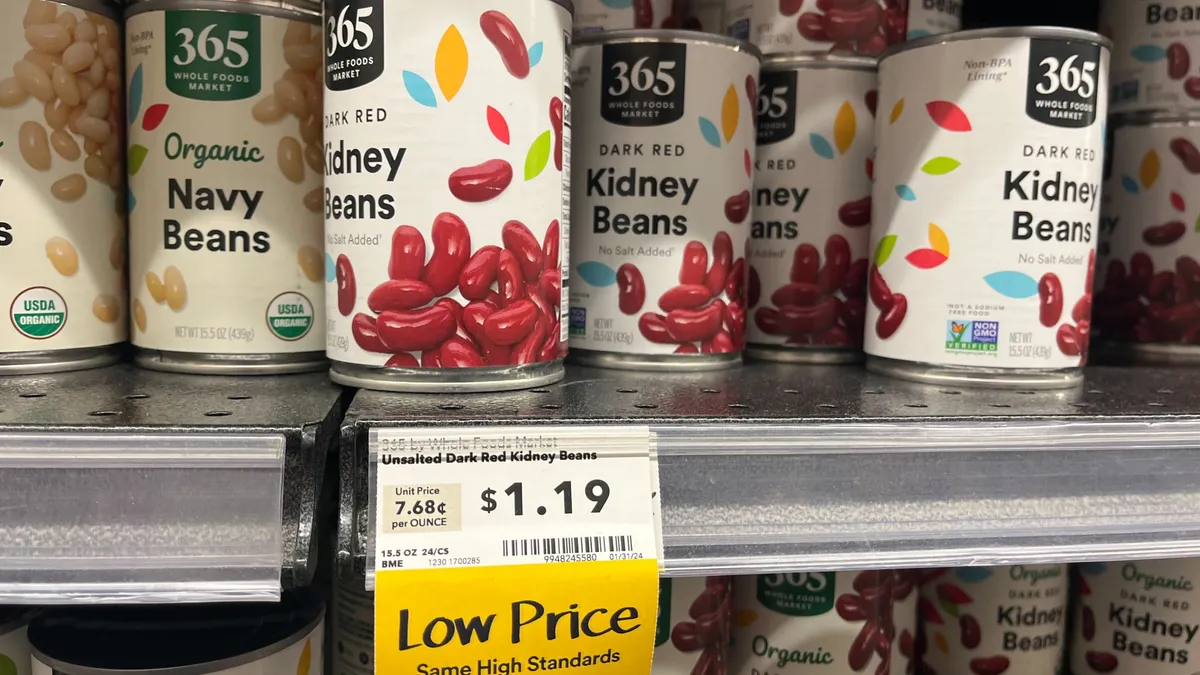
Store brands accounted for 21.3% of every dollar spent on groceries in the United States in 2025, according to Circana data compiled for the Private Label Manufacturers Association — up from 20.9% in 2024, and the highest share on record. Put another way: for every five dollars that crossed a grocery register last year, more than one went to a product carrying the store's own name instead of a national brand's.
The dollar figure behind that share is $282.8 billion, up 3.3% year over year — nearly triple the 1.2% growth rate posted by national brands over the same 52 weeks, according to PLMA figures reported by Retail Dive. Unit sales tell a similar story: store-brand volumes rose 0.6% to 68.7 billion units while national-brand volumes fell 0.6%, pushing private label's share of items purchased to 23.5%, up from 23.3% a year earlier, according to EMARKETER's analysis of the same PLMA data.
Why are shoppers switching to store brands now?
The proximate cause is unglamorous: prices. Grocery bills have not fallen back to pre-inflation levels even as headline inflation cooled, and shoppers have kept trading down category by category rather than cutting back outright. That shows up unevenly across the store. By dollar sales, the categories posting the strongest private-label growth in 2025 were refrigerated (up 6.1%), beverages (up 4.8%) and pet care (up 3.7%) — areas where a shopper can swap brands without much perceived difference in the product, but where the price gap is wide enough to matter on a weekly bill.
It is not purely a recession story, though. A 2024 survey from FMI — The Food Industry Association found that 46% of shoppers said they planned to buy somewhat or much more private label over the following year, compared with just 27% who said the same about name brands. That is a preference shift as much as a budget one, and it is a big part of why retailers are not waiting for inflation to fully unwind before doubling down.
What are grocers actually doing about it?
Investing, not coasting. Kroger, Sprouts Farmers Market and Albertsons all expanded their private-label assortments through 2025, and Walmart is mid-overhaul of its Great Value lineup — a refresh touching nearly 10,000 products across more than 100 categories, its first in seven years. Albertsons has pushed further upmarket with its O Organics line, adding globally inspired, ready-to-use herb blends instead of just cheaper versions of shelf staples. The pattern across all of them is the same: private label used to mean "the cheap version." Retailers now treat it as a margin lever and a loyalty tool, which is a big part of why Kroger's push to buy regional chains like Giant Eagle keeps showing up in grocery deal-making — more stores means more shelf space for a chain's own label.
The trade-off lands on national brands. When a shopper can get an item they perceive as comparable, or better, for 20% to 30% less, the national brand has to either cut its own price and margin or spend more on marketing to justify the premium. That is the quiet subtext behind moves like Kraft Heinz testing novelty, limited-edition products: manufacturers are hunting for reasons a shopper would still pay more for the name on the box, now that the store's own version sits one shelf over.
Does this show up in the official inflation numbers?
Only indirectly. Government inflation data tracks the prices charged, not which brand a shopper actually put in the cart — so as households quietly substitute toward cheaper store brands within the same grocery categories, the inflation households actually feel can run below the price increases retailers report for name-brand products. That is one reason the gap between "inflation is cooling" headlines and "my grocery bill still feels high" complaints has not fully closed: shoppers have been managing their own bill down by switching labels, in a way official price indexes do not fully capture as relief.
Nothing here suggests the trade-down reverses on its own. More than half of consumers, 56%, told the research firm First Insight they now regularly buy private-label groceries, and brand loyalty built on two years of "this tastes the same and costs less" does not unwind just because a price index ticks back down.
.png?crop=100.0p%2C100.0p%2Cx0.0p%2Cy0.0p&auto=webp&width=1200&height=675)