Why Your Smoke Alarm Can Pass Its Test and Still Fail You
A smoke alarm's test button only confirms the horn and wiring work, not whether its ionization or photoelectric sensor can still detect real smoke after a decade of dust, grease, and radioactive decay.
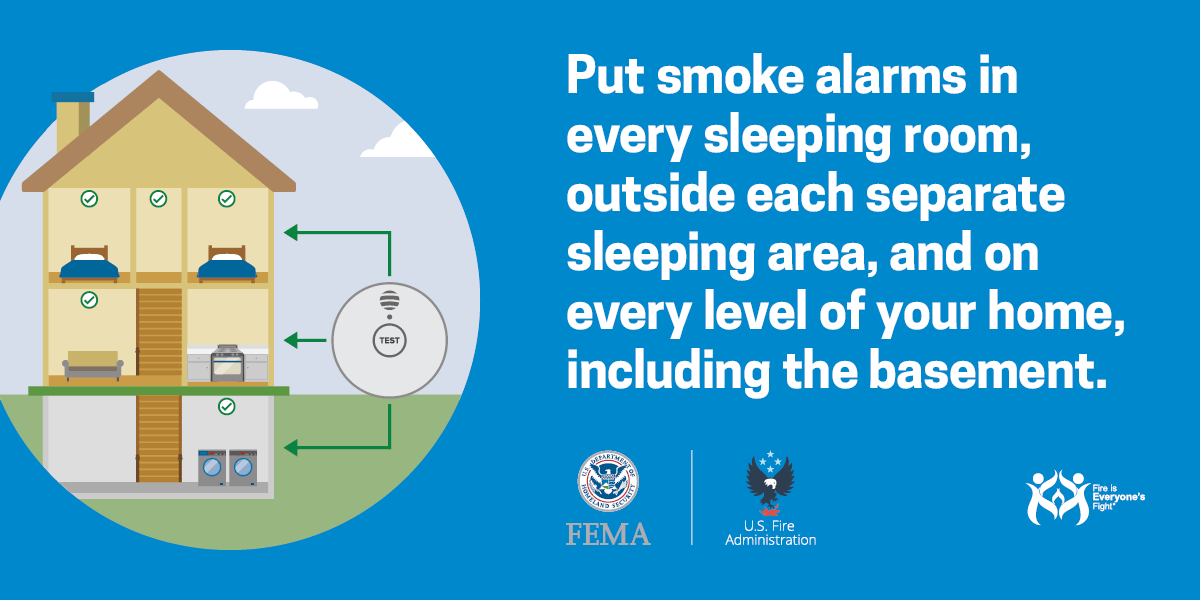
Press the test button on a smoke alarm and it screams right on cue, even if that alarm has been bolted to the ceiling since Obama's second term. That's the trap. A working test button proves the horn and the wiring are fine. It proves nothing about whether the sensor inside can actually still find smoke.
Those are two different questions, and the gap between them is exactly why the U.S. Fire Administration tells homeowners to replace an entire smoke alarm every 10 years from its manufacture date, battery changes and passing test-button checks notwithstanding. The instruction sounds like bureaucratic overcaution until you look at what's actually inside the plastic housing.
Most residential alarms use one of two detection methods. An ionization sensor holds a tiny amount of radioactive material that ionizes the air between two electrodes, letting a small current flow; smoke particles disrupt that current and trip the alarm, which makes ionization alarms fast at catching flaming, fast-moving fires. A photoelectric sensor instead shines a light into a chamber; smoke scatters that light onto a sensor and sets off the alarm, which makes it better suited to smoldering fires, the kind that smolders for hours before flaring up. Combination alarms use both.
Neither one is built to last forever, and neither one fails the way people expect. Over a decade, ordinary household air does the damage: cooking grease, dust, humidity, even aerosol hairspray drift into the sensing chamber and settle there. In a photoelectric unit, that buildup can scatter or block the light path in ways that change how the sensor reads smoke. In an ionization unit, the radioactive source itself decays gradually, and the electronics around it age too. The alarm doesn't necessarily go silent. It just gets slower and less reliable at telling real smoke from clean air, and there's no dashboard light for "sensor drift."
Underwriters Laboratories, the safety-testing organization behind UL 217, sets the technical benchmarks that smoke alarms have to meet to carry that certification label. UL has updated that standard multiple times, most recently tightening requirements around how alarms distinguish real fires from cooking smoke, a change manufacturers are still rolling out into new products. None of those revisions touch the underlying physics of sensor aging, which is why the 10-year clock hasn't moved even as the alarms themselves have gotten smarter.
The federal government's involvement here isn't new, either. Back in 2002, the Consumer Product Safety Commission pushed UL to add reliability testing specifically for the 10-year "long-life" battery alarms that were then hitting shelves, worried that consumers had no way to verify a manufacturer's durability claims. That's part of why most long-life alarms now come with sealed, non-replaceable batteries: it's harder to accidentally pull the battery and disable the whole unit, and it forces the alarm itself to get swapped out on the same clock as the battery inside it.
This is also why the U.S. Fire Administration recommends both detection types in every home, either as two separate alarms or a single combination unit. Since ionization and photoelectric sensors respond fastest to different fire types, and both degrade in different ways, leaning on only one technology means accepting both its blind spot for certain fires and its own specific failure mode as the decade wears on. Interconnected alarms, wired or wireless so that one going off triggers all of them, add a layer of redundancy that has nothing to do with sensor age but matters just as much when seconds count.
Chirping is a different, more immediate problem, and it's worth separating from the 10-year question entirely. A smoke detector that keeps chirping even after a fresh battery is usually flagging a bad electrical contact or an internal fault, not old age. An alarm can chirp on day one out of the box, and a 9-year-old alarm can sit dead silent, sensor already degraded, giving no chirp at all until it's tested against actual smoke.
Every alarm sold in the U.S. carries a manufacture date stamped on the back, usually molded right into the plastic. It's the only number that matters here. Not the install date, not how long the current battery has lasted, not whether the last test button push produced a satisfying screech. If that date reads 2016 or earlier, the alarm is doing less than its buyers think, no matter how confidently it beeps on command.