Red alerts spread across France as Europe's heatwave peaks
Spain braces for 44C, France curbs festival drinking and Britain faces its hottest June day on record as the heat builds toward a Monday peak.
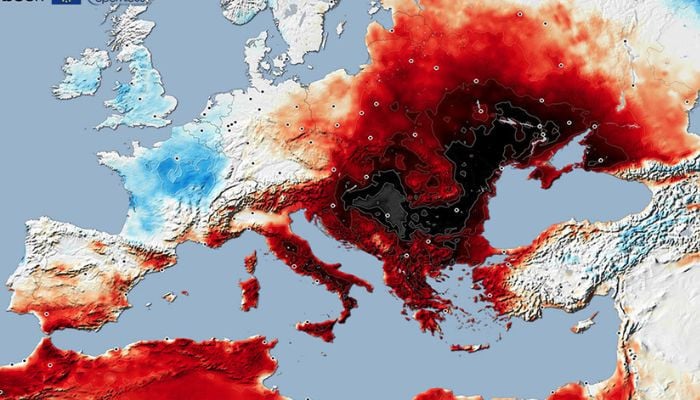
Forty-four degrees Celsius. That is the figure Spain's weather service expects in the valleys of the Tagus, Guadiana and Guadalquivir this week, about 111 Fahrenheit, as a punishing heatwave settles over Western Europe and pushes governments from Madrid to London onto an emergency footing.
France is the epicentre. The national forecaster placed a record 35 departments on red alert on Sunday, a number set to climb to 49 of the country's 96 mainland departments on Monday, roughly half the country. Across the southwest, the Paris region and Burgundy, Sunday temperatures ran to 39-40C, with isolated spots near 41C; Monday's highs are forecast at 37-42C and could break records, according to French meteorologists.
With the heat came an unusual public-order measure. Prefects in the red-alert departments banned drinking alcohol in public during the Fête de la Musique, the nationwide street-music festival held each year on 21 June. The government was blunt about why: the limits were meant to preserve emergency and healthcare services and allow medical staff to focus on caring for the most vulnerable
. French Prime Minister Sébastien Lecornu convened a crisis meeting as red and amber warnings spread across some 80 departments.
Records under threat from Madrid to the Midlands
The reach is continental. Spain declared its first official heatwave of the year, running Sunday through Wednesday, with the AEMET forecaster warning of up to 44C. In Britain, the Met Office issued an amber extreme-heat warning for Monday and Tuesday across east Wales and much of the Midlands, flagged "tropical nights" in which temperatures never drop below 20C, and put the odds of beating the UK's June record of 35.6C at about 40%. Germany cancelled sporting events as forecasters warned June records could fall there too. Britain, France, Spain, Switzerland, Germany and parts of northern and central Italy have all raised their alert levels.
Hospitals and ambulance crews were told to brace for a rise in heat-related illness, and authorities urged people to check on elderly or isolated neighbours, the now-familiar drill on a continent that has learned the hard way how lethal sustained heat can be. The vulnerable, the very old, the very young, outdoor workers and anyone without cool indoor space, carry most of the risk during episodes like this one.
This is the second severe episode in a fortnight; the heat that built over the solstice never fully broke before this one arrived. Forecasters expect the worst on Monday and Tuesday before cooler Atlantic air begins to nudge temperatures down by midweek. The pattern, hotter spikes arriving earlier in the summer and stacking back to back, is exactly the one climate scientists have warned would become routine.