Heat Advisory or Extreme Heat Warning? What the NWS Renamed in 2025
The National Weather Service quietly retired "Excessive Heat Warning" in 2025. Here's what the new terms mean, and the exact thresholds regional offices use to issue them.
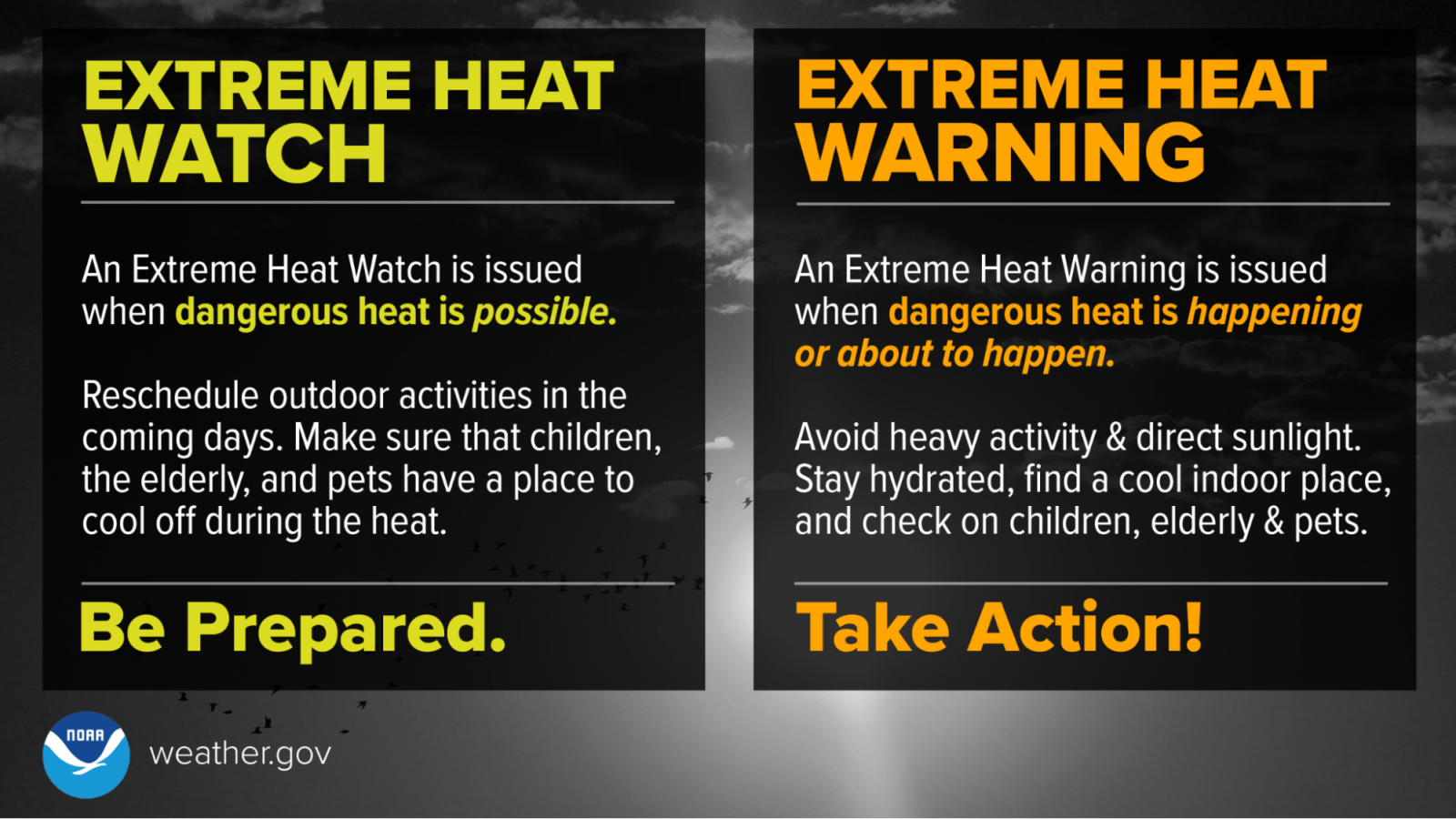
One phrase quietly disappeared from National Weather Service forecasts on March 4, 2025: "Excessive Heat Warning." So did its companion, "Excessive Heat Watch." In their place, forecasters now issue an Extreme Heat Watch and an Extreme Heat Warning, and outside of meteorology circles, almost nobody noticed the swap.
The National Weather Service made the change as part of what it calls the Hazard Simplification Project, an effort built on years of public and partner engagements and social science research
aimed at getting people to actually act on alerts, according to the agency's own announcement. Heat is the most consistent weather killer in the country, and the rename was a deliberate word choice: the agency told reporters that "extreme" registers as more dangerous than "excessive," a word that, if anything, sounds bureaucratic rather than lethal.
Heat Advisory kept its name. That's the one most people will actually see this summer, and it's also the one most commonly confused with its more severe sibling.
What's the difference between a Heat Advisory and an Extreme Heat Warning?
In plain terms: an Extreme Heat Watch means dangerous heat is possible in the coming days and it's worth rearranging outdoor plans. A Heat Advisory means dangerous heat is expected within about 12 hours. An Extreme Heat Warning, the top tier, means that heat is either already underway or about to be, and the National Weather Service wants people out of the sun and into air conditioning immediately.
What actually triggers each one, though, depends heavily on where you live. That's the part almost nobody explains clearly, and it's also the most useful thing to understand before the next stretch of 90-degree days rolls in.
Why do the temperature thresholds change by region?
The National Weather Service delegates the exact numbers to its local forecast offices, because a heat index that's routine in Houston can be genuinely dangerous in Portland, Maine. Bodies acclimate to their normal climate, and alert thresholds are calibrated around that.
| Alert | Central Illinois criteria | New York City-area criteria |
|---|---|---|
| Heat Advisory | Heat index 105-115°F for under 3 hours/day, or nighttime lows above 80°F for 2 straight days | Heat index 95-99°F, or 100-104°F, sustained for at least 2 days in a row |
| Extreme Heat Watch | Heat index above 105°F with nighttime lows at or above 80°F, forecast for 2 consecutive days | Issued 1-2 days ahead of an expected heat index of 105°F or higher |
| Extreme Heat Warning | Heat index at least 105°F for more than 3 hours/day for 2 straight days, or above 115°F for any duration | Heat index of 105°F or higher for at least 2 consecutive hours, issued 24 hours ahead |
Notice the gap. A Heat Advisory near New York City can start at a heat index of 95°F. In central Illinois, that same 95-degree reading wouldn't trigger anything at all, since the advisory threshold there doesn't start until 105°F. Same alert name, same federal agency, genuinely different math.
Why did the National Weather Service change the names at all?
The agency isn't shy about the reasoning. Heat has been the deadliest weather-related hazard in the U.S. every year since 2017, more lethal than hurricanes, tornadoes, or flooding in most of those years. Confusing terminology, the agency argued, costs lives when people tune out an alert that sounds like paperwork instead of danger.
The rename wasn't a one-off, either. The Weather Service made a nearly identical move for cold-weather alerts shortly before the winter of 2024, consolidating and renaming those products under the same Hazard Simplification framework. Heat got its turn a few months later. A Service Change Notification detailing the switch went out in September 2024, giving broadcasters and emergency managers six months to update their scripts before the March 2025 rollout.
Whether the new language is actually landing is a harder question to answer than swapping a word. Plenty of the heat explainers still circulating online, from local news archives to old advisory graphics, still reference "Excessive Heat Warning," which is now simply wrong, not just outdated.
What should you actually do differently?
Functionally, nothing changed except the label. If a phone buzzes with an Extreme Heat Warning, the National Weather Service wants the same response it always did under the old name: stay hydrated, avoid strenuous activity outdoors, seek air conditioning, and check on relatives and neighbors, especially older adults, who make up a disproportionate share of heat deaths every year. A Heat Advisory calls for the same caution at a lower intensity. It's not yet an emergency, but it's also not a normal hot day.
The bigger practical shift is knowing that your own region's numbers are the ones that count. Checking the National Weather Service's local heat safety guidance for your own forecast office, not a national average and not what a friend three states away is experiencing, is the only way to know what an advisory in your ZIP code actually means. According to FOX Weather's breakdown of the change, this summer marks the second full season under the new names, with forecasters hoping the sharper wording finally cuts through.
None of this replaces watching the actual forecast, as detailed in CBS New York's own explainer on regional heat criteria. But the next time a phone buzzes with an Extreme Heat Warning, at least the label will mean what it's supposed to: not paperwork, but a warning worth believing.
For more on how heat behaves once it settles over a region, see Daybreak Wire's earlier pieces on what makes a heat dome dangerous, how wet bulb temperature differs from the heat index, and why air conditioners struggle once humidity climbs.


