Graupel vs. Hail: The Difference Is in How Cold It Got
It looks like hail and sounds like hail — but squeeze it, and graupel crumbles like styrofoam because it forms almost the opposite way.
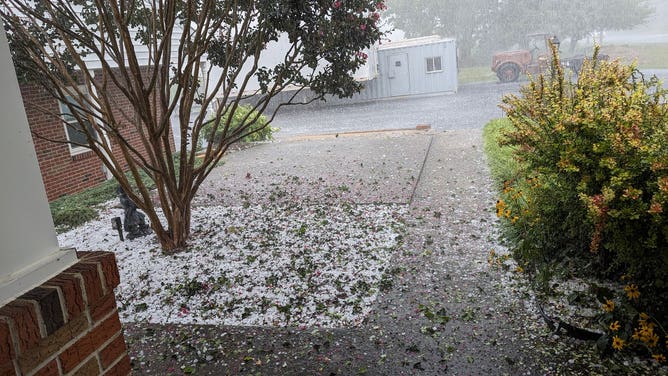
It looks like hail. It sounds like hail hitting the windshield. Scoop a handful off the ground, though, and it crumbles between your fingers like styrofoam — the first clue that what fell was graupel, not hail, and that the two form in almost opposite ways.
Hail needs a thunderstorm's engine. Graupel doesn't.
Hail is built inside strong thunderstorm updrafts, the same violent columns of rising air that produce tornadoes. Water droplets get carried up into the cloud, freeze, fall partway, get caught by another updraft and carried back up, collecting another layer of ice each trip — a cycle that can repeat dozens of times before a stone finally falls, too heavy for the updraft to hold. According to the National Oceanic and Atmospheric Administration, that layered growth is why a cut-open hailstone often looks like an onion, and why hailstones can range from under an inch to more than four inches across in the most violent storms.
Graupel skips the layering entirely. It forms when supercooled water droplets — liquid water that has stayed liquid below freezing, common high in a cloud — freeze onto a falling snow crystal on contact, a process meteorologists call riming. Enough riming buries the original snowflake under a coating of rice-sized ice, and the result falls as a small, roughly round, white pellet. It needs a snow crystal to start with, not a thunderstorm updraft, which is why graupel turns up in ordinary winter and spring showers that never come close to producing hail.
Same sky, different physics
The two also part ways on density and durability. Hailstones are solid ice, packed by repeated freezing under pressure, and stay under 0.2 inches only briefly before growing past it — some reach the size of golf balls or larger and can dent cars and shatter windshields. Graupel stays soft because riming traps air between ice crystals rather than compacting them into solid ice; a piece that grows past roughly 0.2 inches almost always breaks apart under its own structure before it can get much bigger. Pick up graupel and it disintegrates in your palm. Pick up hail from a strong storm and it can leave a bruise.
Surface temperature matters too. Graupel generally needs conditions at or below about 45 degrees Fahrenheit to survive the fall without melting into ordinary rain or slush, part of why it shows up most in late fall, winter and early spring rather than peak summer storm season — even though the thunderstorms that make hail can produce it in the height of summer, since dense hailstones survive a longer fall through warm air before melting.
Why the mix-up is so common
From a car window in a moving storm, small hail and graupel can be genuinely hard to tell apart in the moment — both bounce, both look white, both arrive with little warning. The distinction matters more than it might seem: graupel accumulating on a road creates a slick, marble-like surface that's a driving hazard in its own right, closer to the surprise ice that forms on windshields above freezing than to the blunt-force damage risk hail poses to roofs, siding and parked cars. Insurers and forecasters draw the line for exactly that reason — a graupel event and a hailstorm trigger different warnings and, often, different claims.
The next time something bounces off the hood that looks like hail, the test takes about two seconds: squeeze it. If it survives intact, the sky built it inside a thunderstorm's updraft. If it collapses into a small pile of ice dust, a snow crystal picked up a coating of frozen droplets on the way down — no thunderstorm required.