The Surprisingly Strict Rules for Naming a Wildfire
Bogus Fire. Dinosaur Fire. Not Creative Fire. Behind every odd wildfire name is a strict federal rulebook, and no committee, just whoever answers the call first.
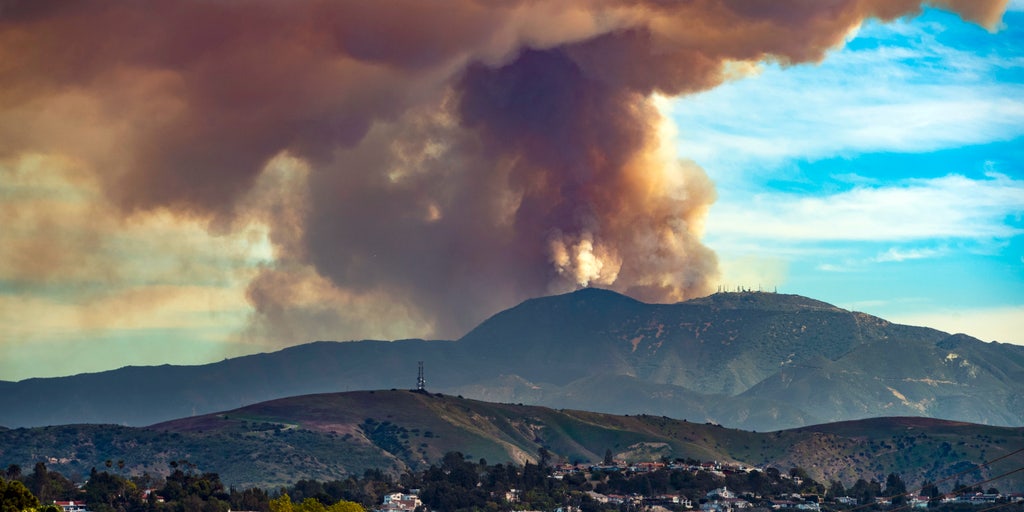
Bogus Fire. Airline Fire. Dinosaur Fire. Every wildfire season, headlines fill up with names that sound like they were pulled out of a hat — because, in a sense, they were. There is no federal naming authority for wildfires the way the World Meteorological Organization assigns hurricane names years in advance. Every fire gets named on the spot, usually by whoever answers the 911 call.
Who actually names a wildfire
Naming a wildfire is left to the fire unit, incident commander or dispatch center in the jurisdiction where the fire started, according to Fox Weather. There's no waiting list, no rotating alphabet, no retirement ceremony for names tied to deadly seasons — just whoever picks up the radio first.
"All fires get a name. That allows the firefighters that are responding to them to quickly understand where they're going, and allows those back in our emergency command centers to prioritize our resources and to quickly track them down," Daniel Berlant, an assistant deputy director at California's Cal Fire, explained in an agency video.
Most names come from geography — the nearest road, creek, ridge or town. The Dixie Fire, California's second-largest wildfire on record when it burned through the summer of 2021, was named for the road where it started, NPR reported. Bogus Fire came from Little Bogus Creek Road. Airline Fire burned near central California's Airline Highway. Dinosaur Fire ignited west of Boulder, Colorado, in an area known for fossil discoveries.
Why do wildfires get such strange names sometimes?
Because speed beats creativity. Dispatchers need a working name within minutes so multiple agencies can talk about the same fire without confusion, and grabbing the nearest landmark off a map is faster than convening a naming committee. The results can be accidental comedy: in 2015, Idaho's 57th wildfire of the year was named "Not Creative" by exhausted firefighters who simply couldn't think of anything else, firefighter Betsy Haynes told NPR's Morning Edition.
Not every fire follows the landmark rule. The Midnight Fire, which burned in New Mexico in 2022, got its name from the clock, not the map. "The Midnight Fire earned its name from the several-hour hike that it took to locate it after it was reported," fire officials told Fox Weather. "Crews didn't arrive on scene until midnight due to the remote and rugged terrain in the backcountry."
The rulebook nobody talks about
What looks like chaos actually runs on a written protocol. The National Interagency Fire Center's Incident Name Protocols lay out a surprisingly long list of what a wildfire name cannot be:
- It can't duplicate a name currently in use anywhere else in the country.
- It can't include generic descriptors like "peak," "creek" or a street suffix — which is how a fire near Bogus Creek Road became simply the Bogus Fire, not the "Bogus Creek Fire."
- It can't be, in the protocol's own words, "potentially prophetic, hyperbolical, or distastefully descriptive such as 'Deadman' or 'Firestorm.'"
- It can't reuse a name already retired after a historic or catastrophic fire — the same logic that retires hurricane names.
- It can't honor a person, unless that person's name already belongs to a location or landmark.
- It can't reference the likely ignition source in a way that implies liability, which is why officials avoid names like "Powerline Fire" even when a downed line is suspected.
- It can't use a private company's name or trademark — no "McDonald's Fire," no matter how close the golden arches are to the flames.
If a name manages to violate more than one of those rules at once, the protocol's guidance is blunt: assign the fire another name and move on.
Why don't wildfires get named years in advance, like hurricanes?
Because a hurricane forms over open ocean with days of lead time and a predictable seasonal list; a wildfire can start from a lightning strike or a spark off a chain in the time it takes to read this sentence. There's no equivalent of the WMO's rotating six-year hurricane name list for fires, because there's no way to know in advance which of thousands of small ignition points will become the next headline. The naming has to happen after the fact, fast, by whoever is closest to the smoke.
Dry ground makes all of this worse and more frequent — the same kind of rapid-onset dryness behind a flash drought is often what turns a small ignition into a fire big enough to need one of these carefully vetted names in the first place. That immediacy is also why fire names tend to stick in a way that feels almost folkloric — the Goose Fire in Montana, the Walrus Fire in Oregon, the Tango Fire and Lava Fire in California all burning in the same stretch of one recent season. None of it is officially whimsical. Every one of those names cleared the same short, strict checklist before a single truck rolled out, which is more bureaucratic order than most people fighting a wildfire have time to appreciate in the moment.


