Wildfire Preparedness Level 5, Explained: Why the Alarm Just Maxed Out
The U.S. hit the top of its five-rung wildfire preparedness scale on July 18, the first time since October 2024. Here's what Level 5 actually changes on the ground.

Twenty-three thousand, one hundred fifty-one firefighters and support staff. Five hundred thirteen crews. Zero geographic regions in the country with meaningful reserves left to lend. That's the picture behind a single decision the National Interagency Fire Center made on July 18: raise the National Preparedness Level to 5, the top of a five-rung scale, for the first time since October 2024.
Most people have never heard of the scale until the year it matters. This is that year.
What Preparedness Level 5 actually means
The National Park Service's own explainer defines it plainly: at PL5, "active Geographic Areas must take emergency measures to sustain incident operations," while "inactive/low activity Geographic Areas are reaching drawdown levels." Translated out of agency language, that means the regions actually on fire are being asked to make do with what they have, because there's nowhere left to borrow crews and engines from — every other region is either busy too or has already sent what it can spare.
The five levels track two things at once: how much fire is burning, and how thin the national pool of firefighters, engines and aircraft has stretched. A Level 1 season means local crews handle everything with no outside help. By Level 4, "national mobilization trends affect all Geographic Areas and regularly occur over larger distances." Level 5 is what's left when that mobilization has nowhere further to go.
"We expect it to remain very active, with the Northwest continuing to have a lot of fire activity. Statistically, we are having a well above-average season."
Stanton Florea, National Interagency Fire Center spokesman, U.S. Forest Service
The numbers behind the escalation
As of July 20, roughly 4 million acres had burned nationally in 2026, against a 10-year average closer to 3 million for the same point in the calendar, Florea told Capital Press. By July 24, the National Interagency Fire Center's own daily situation report put the year-to-date tally at 41,779 fires and 4,010,417 acres — 128% and 125% of the respective ten-year averages. Seventy-eight large fires remained uncontained that morning, with 26 Complex Incident Management Teams committed to running them.
The Northwest is carrying most of the load. Oregon's Rowe Creek Complex — the kind of multi-fire cluster that gets bundled under one name once several ignitions in the same area get managed together — is a cluster of lightning-sparked fires that ignited north of Twickenham in mid-July and had burned more than 151,000 acres with roughly a third contained as of the 24th. The nearby Hay Creek Complex added another 149,000-plus acres. Both are large enough, and stubborn enough, that Oregon alone accounted for the bulk of the 37 uncontained large fires burning in the Northwest region — a region that, on its own, sits at Preparedness Level 5.
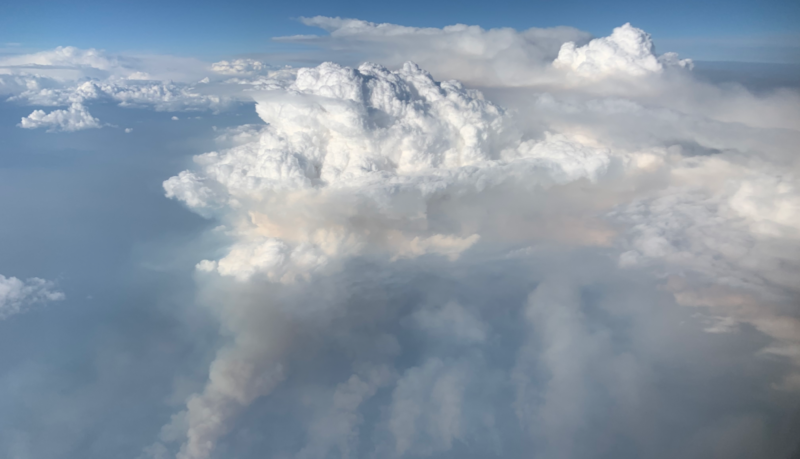
Minnesota is the other pressure point. Florea pointed specifically to the Eastern Area's activity as "mainly due to large fires in northern Minnesota," where half a dozen fires — Sioux, Bear Trap, Camp, Thumb, Chub and Little Knife — have been burning through the Superior National Forest near Ely, forcing evacuations and trail closures in a part of the country that rarely makes the national fire report at all. It's the same corner of the state where wildfires large enough to build their own thunderstorms have shown up in recent summers.
What changes for everyone else when the country tops out
Preparedness Level 5 isn't a warning aimed at any single homeowner — it's a resourcing signal aimed at the agencies themselves. Four MAFFS military airtankers, normally reserved for exactly this kind of squeeze, have been activated: two C-130s from the Air Force Reserve's 302nd Airlift Wing staged at Klamath Falls, Oregon, plus Air National Guard aircraft sent to San Bernardino and Santa Maria, California. Those are federal military assets being pulled into a civilian fire season because the regular contracted air tanker fleet is already spoken for.
It shows up locally in less obvious ways, too. In South Dakota, where no large fires were burning at the time, fire officials still felt the level's effects. Preparedness Level 5 means resources are heavily committed nationally, and departments in areas without active fires may experience a "drawdown" as equipment and personnel are sent to higher-need regions,
said Michael Johnson, public information officer for the Johnson Siding Volunteer Fire Department, near Rapid City. Pennington County Fire Administrator Jerome Harvey put it more simply: It's just a guidance for land management agencies across the country.
That guidance cuts both ways. It tells overworked regions no more help is coming soon, and it tells quiet regions to expect their own trucks and crews might get called away on short notice. Whether a county ever sees its own fire this season, Level 5 already means someone in Oregon, Minnesota or California is short-handed tonight — and there's no deeper bench left to draw from until containment lines start holding.