Why Winter Storms Get Named — and the National Weather Service Won't
The Weather Channel has named winter storms for 14 seasons running, using a population-and-area formula it built itself. The National Weather Service — and the AP — still won't use the names.
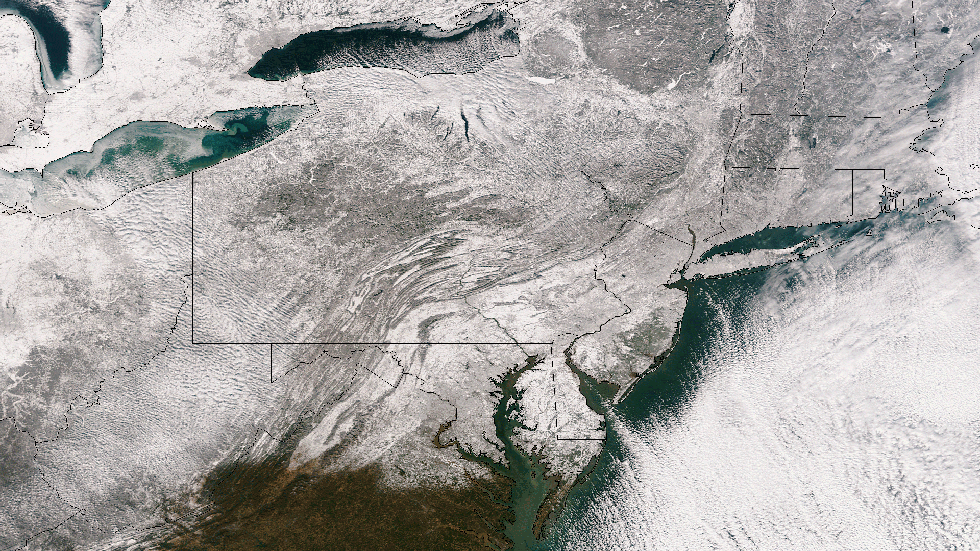
Ask meteorologists at the National Weather Service what "Winter Storm Nova" means and you'll get a shrug. The agency whose warnings actually trigger the name has never used it — and has no plans to start.
Nova, or whatever letter comes next on this season's list, is a Weather Channel product. The 2025-26 season, which opened with Winter Storm Alston, is the 14th consecutive winter the Weather Channel has assigned names to significant snow and ice events — a system built entirely in-house, with no involvement from the government agency that measures the storms in the first place.
The company's stated rationale echoes the one that got hurricanes named in the first place: raising awareness of a storm's hazards — treacherous driving conditions, power outages, falling trees — by giving it a name people repeat instead of a date and a warning code. It's a public-communication tool, not a scientific classification, which is exactly why the National Weather Service has kept its distance.
How does the Weather Channel decide which storms get a name?
The process starts with a daily map briefing among meteorologists at the Weather Channel's Global Forecast Center, where systems that could become winter storms are flagged up to a week in advance. As confidence builds, a three-person naming committee — winter weather expert Tom Niziol, senior meteorologist Stu Ostro and digital meteorologist Jonathan Erdman — holds a call and decides whether to name the storm, a call the company says rests solely with that committee.
Since the 2013-14 season, that decision has leaned on a quantitative tool the Weather Channel calls IMPACT — Integrated Meteorological Population and Area Calculation Tool. It measures how many people and how much area fall under National Weather Service winter storm, blizzard or ice storm warnings, using the government's own warning thresholds (2 inches of snow in 24 hours triggers a warning in Atlanta; it takes 9 inches in Burlington, Vermont). A storm gets a name if those warnings are expected to cover at least 2 million people or at least 400,000 square kilometers — an area slightly larger than the state of Montana.
Why won't the National Weather Service name winter storms?
The National Weather Service doesn't name winter storms the way it names hurricanes, and it isn't shy about explaining why. The National Weather Service does not name winter storms, because a winter storm's impact can vary from one location to another, and storms can weaken and redevelop, making it difficult to define where one ends and another begins,
NWS spokesperson Susan Buchanan has said. A single system can drop a foot of snow in one state and nothing but rain in the next, and can stall, split or regenerate in ways a tropical cyclone rarely does.
Because the National Weather Service won't use the names, neither will the Associated Press or any of its subsidiary newsrooms, according to KXAN's First Warning Weather team — leaving the Weather Channel, sister brand Weather Underground and NBCUniversal-owned outlets as the only major users of the list.
What actually gets named — and what doesn't?
Not every snowfall qualifies. Lake-effect snowstorms and pure arctic cold outbreaks are excluded outright, even when they're disruptive, because the IMPACT formula is built around widespread warning coverage rather than localized totals. Winter Storm Hercules, which barreled from the central Plains to the Northeast in early January 2014, is the case study the Weather Channel itself cites: it put more than 50 million people and over 300,000 square kilometers of the country under National Weather Service winter weather warnings or advisories, comfortably clearing the naming bar.
The list has its own internal rules, too. Per the Weather Channel's own naming criteria, names can't duplicate any active Atlantic or eastern Pacific hurricane name for six years, and retired hurricane names are permanently off-limits. Storm counts have drifted lower over time, from a high of 26 named storms in the 2013-14 season to just 15 in 2024-25, and the season follows a predictable shape: the first named storm typically lands by the second week of November, named storms peak in late January and February, and the season's last storm has arrived anywhere from mid-March to mid-May — with 2021's Winter Storm Xylia the earliest seasonal closer on record.
It's not the only weather-naming system built outside a single government agency's control. Wildfires follow their own patchwork of local and state conventions — a naming quirk this outlet has covered separately — for reasons that turn out to be just as practical as the National Weather Service's objection to winter storm names. Meteorologists there will keep issuing the warnings that decide whether a storm earns a name, without ever using the name themselves.