Supreme Court Rejects Trump's Bid to Limit Birthright Citizenship
A 6-3 court held that the president cannot narrow by executive order a citizenship guarantee the majority located in the Constitution itself.
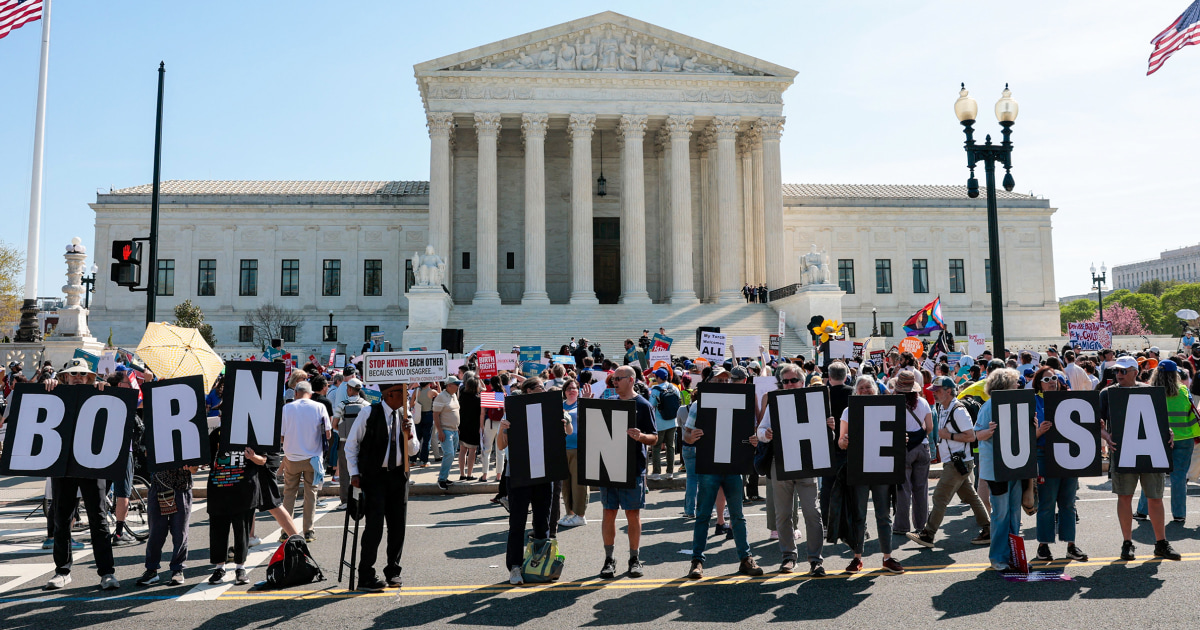
The Supreme Court on Tuesday struck down President Donald Trump's executive order narrowing birthright citizenship, ruling 6-3 that his attempt to rewrite the long-settled reading of the 14th Amendment could not stand.
The order, signed on 20 January 2025 as one of the first acts of Trump's second term, would have denied automatic citizenship to children born on U.S. soil unless at least one parent was a citizen or lawful permanent resident. Babies born to temporary visitors, or to people who entered the country illegally, would not have been citizens at birth. Five justices found the order collided with the Constitution. A sixth, Brett Kavanaugh, agreed it was unlawful but rested his vote on federal statute rather than the amendment.
That breakdown matters more than the headline count. Because five justices reached the constitutional question, the core holding — that the citizenship clause reaches nearly everyone born in the country — carries a majority on its own, not as a coalition stitched together to reach six. Justices Clarence Thomas, Samuel Alito and Neil Gorsuch dissented.
Trump moved the fight to Capitol Hill within hours. Congress should start TODAY to work on ending expensive and unfair to our Country, Birthright Citizenship,
he wrote on Truth Social. The route he named runs straight back into the wall the court just built: a statute cannot shrink a right a majority of justices located in the Constitution, so legislation of the kind Trump wants would face the same fate as the order. The durable path is a constitutional amendment, which needs two-thirds of both chambers and three-quarters of the states.
For the people the order targeted, the practical effect is immediate and concrete. A child born this week to parents on a tourist visa, or to a mother without legal status, is a citizen, as has been true since the court's 1898 decision in United States v. Wong Kim Ark. Hospitals will keep issuing the paperwork they always have; state vital-records offices need change nothing. The order had been blocked by lower courts throughout the litigation, so no child lost status in the interim.
The decision closes a term that handed the administration both wins and losses on the same docket. The justices had already blocked Trump from removing Federal Reserve governor Lisa Cook, at least for now, while separately clearing his administration to end deportation protections for hundreds of thousands of migrants. On citizenship, the reporting from NBC News and the Texas Tribune put it among the sharpest of the defeats, and the BBC counted it alongside several this term.
What the ruling leaves standing is the reading generations of Americans grew up assuming was settled. What it leaves open is whether an administration that lost on the executive order has the votes anywhere else to keep pressing.