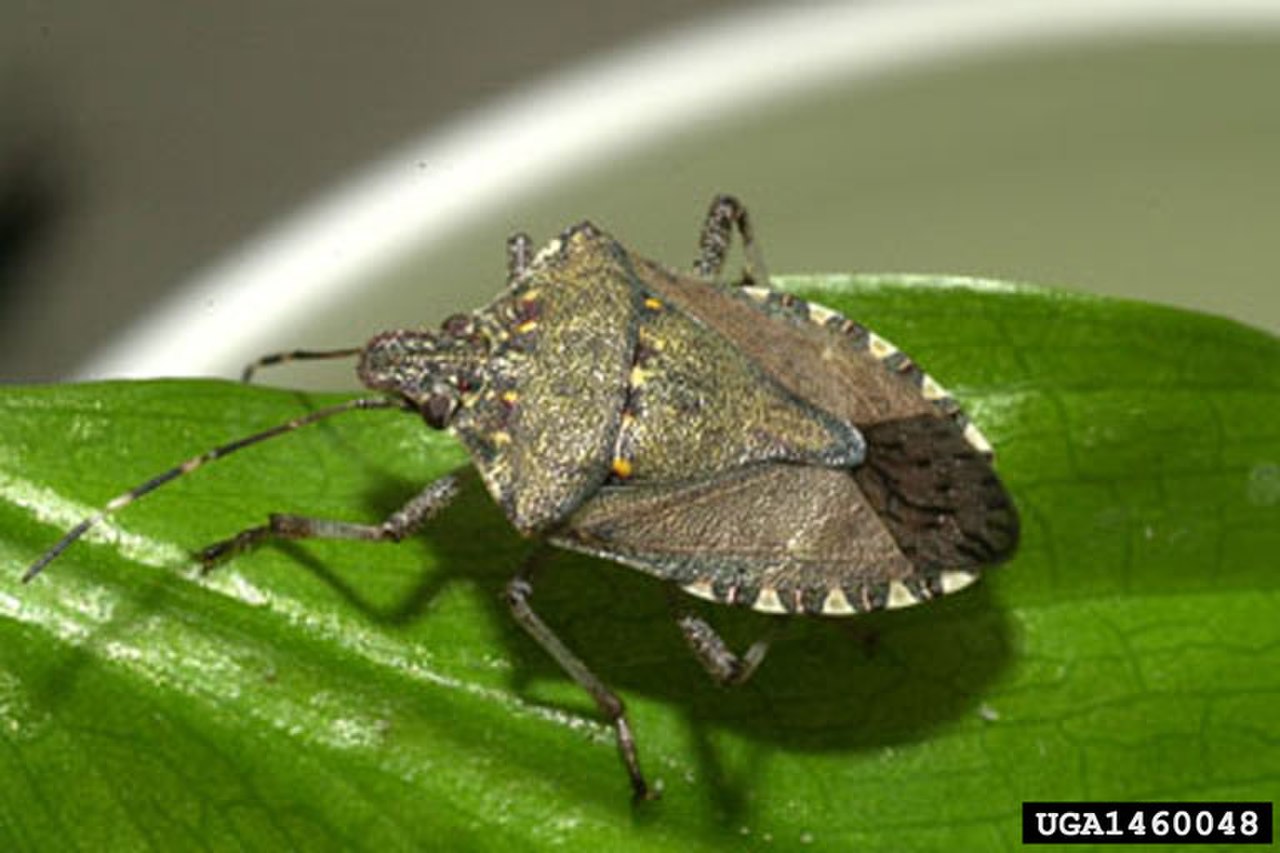
Earth May Hold Up to 20 Million Insect Species, Triple the Old Estimate
Genetic data from 1.6 million tropical insects and a wasp survey in Costa Rica suggest most of the planet's insect life has never been recorded.
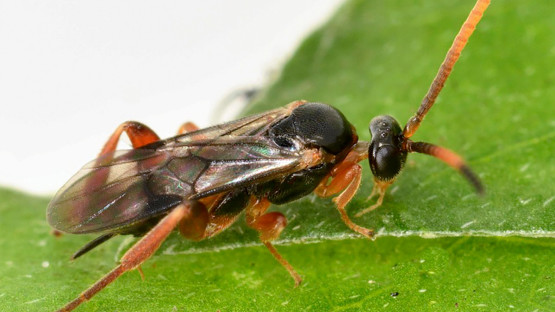
For 40 years, the textbook answer to "how many insect species share the planet with us" was about 6 million. A study published June 29 in the Proceedings of the National Academy of Sciences argues the real figure is two to three times higher: somewhere between 14 million and 20 million, with a midpoint near 17 million. Roughly 1.2 million have been formally named. The rest are out there, unrecorded.
Numbers that large invite skepticism, so the method matters more than the headline. The researchers did not try to count everything. They anchored their estimate in one exhaustively studied group, the family of tiny parasitoid wasps called Microgastrinae, at a single, intensively surveyed site, the Área de Conservación Guanacaste in northwestern Costa Rica, drawing on genetic data from 1.6 million individual tropical insects.
From there they scaled up using a ratio borrowed from botany. Globally there are an estimated 73,000 tree species; the Costa Rican reserve holds somewhere between 1,200 and 1,500 of them. Apply that same local-to-global ratio to the roughly 333,000 insect species the team estimates live in the reserve, and the worldwide total lands in the millions of millions. It is extrapolation, and the authors are candid about that. The PNAS paper frames the result as a lower-bound estimate, not a precise census.
The honest uncertainty is the point, not a weakness. Insects are hard to count for reasons baked into their biology: many species look nearly identical and are separable only by their DNA, and many transform so completely between life stages that a caterpillar and its moth can read as different organisms. Genetic sampling is what now lets researchers see those hidden splits, which is also why the number keeps climbing as the tools improve.
"We cannot protect species if we don't know that they exist, and so to be able to understand the biodiversity on our planet, it's important to know how many there are."
Laura Melissa Guzman, Cornell University entomologist and the study's corresponding author
Guzman, who worked with University of Kentucky entomologist Michael Sharkey and the University of Connecticut's Robert Colwell, was blunt about the limits of the exercise. "We know there are many more to go," she said, "and one of the challenges is the more we sample, the more we discover. It's a question of trying to estimate what is unobserved based on what we know."
That is where an academic-sounding revision turns urgent. If there are three times as many insect species as assumed, then conservation has been working from a map missing most of its territory — and the losses driven by pesticides, habitat destruction, light pollution and a warming climate are erasing species before anyone has named them. You cannot record an extinction you never logged as a life.
The finding does not change how many insects exist; that total was always whatever it was. What changes is how much of it we have admitted we cannot see. The catalogue of life on Earth, it turns out, is mostly still blank, and the blank pages are filling with species we are losing at the same time we are finding them. As others working on the estimate have put it, the count is less an answer than a measure of our own ignorance, and ignorance, where biodiversity is concerned, is expensive.