Snap opens preorders for $2,195 Specs AR glasses
Snap unveiled Specs, its first consumer augmented-reality glasses, at $2,195 with a fall ship date, a costly bet by CEO Evan Spiegel on a future beyond the smartphone.
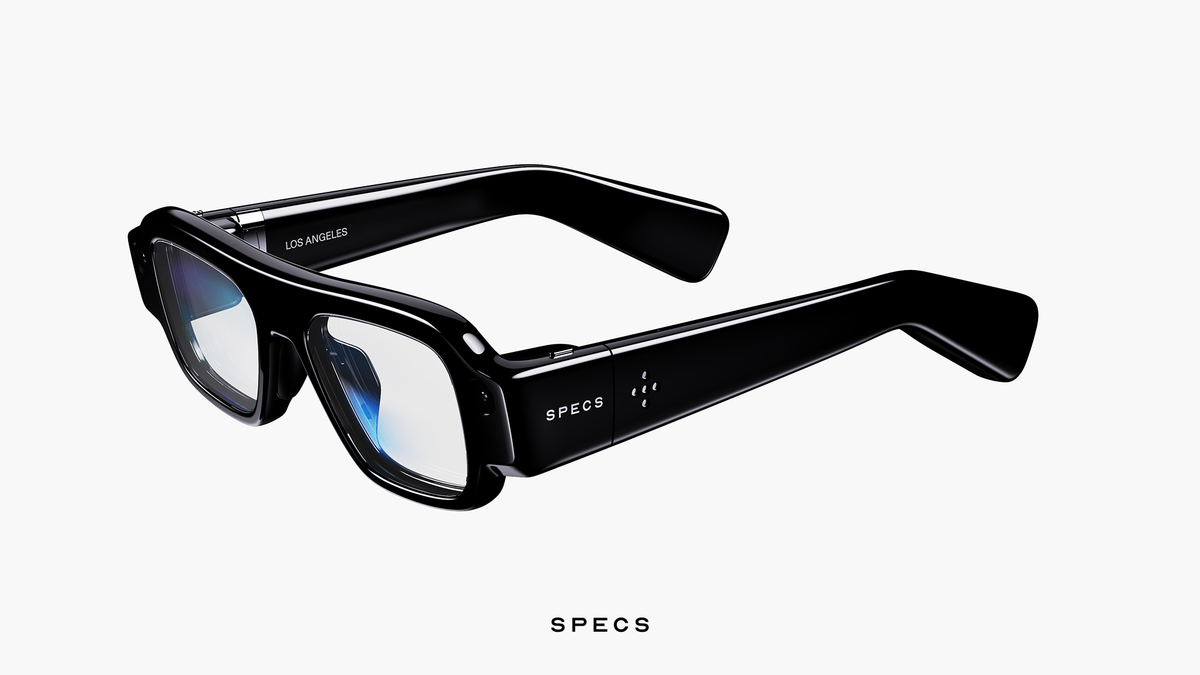
Snap wants you to pay $2,195 to stop staring at your phone. On Tuesday the company behind Snapchat opened preorders for Specs, its first pair of augmented reality glasses built for ordinary buyers rather than developers, and chief executive Evan Spiegel pitched the launch as a bet that the smartphone era has peaked.
"Almost 20 years since the launch of the iPhone, people are ready to think about computing differently," Spiegel said in an interview with CNBC. Unveiled at the Augmented World Expo, Specs are due to ship this fall in the United States, the United Kingdom and France. A preorder takes a $200 refundable deposit.
That price is the first thing to argue with. Specs cost more than 15 times the $130 camera-only Spectacles Snap sold in 2016, a product that never found an audience. This time Snap is selling a true spatial computer, not a novelty, and the question is whether the engineering justifies the leap.
What the hardware can and can't do
The headline numbers are genuinely strong. Specs weigh 132 grams in the smaller 47mm frame and 136 grams in the 51mm, down from the 226-gram developer kit Snap rented out in 2024. They run proprietary liquid-crystal-on-silicon displays built in-house, capable of 16 million colors, with a 51-degree diagonal field of view — roughly the range of Microsoft's old HoloLens 2. Snap claims a motion-to-photon latency of seven milliseconds, the lowest figure it has ever published for this class of device and the difference between virtual objects that sit still in a room and ones that swim when you turn your head.
Two Qualcomm Snapdragon chips do the work, one for the operating system and one for computer vision: head tracking, hand tracking, environment meshing. The electrochromic lenses darken from clear to sunglasses in about 10 seconds, far faster than the photochromic coatings on rival glasses, and they keep working behind a windshield's UV glass. Battery life is close to four hours. Vision correction comes through prescription inserts.
Snap is also coy in ways that matter. It won't name the Snapdragon chips, won't give the display resolution, and won't state how much real-world light the lenses block, the flaw that made the last decade of AR headsets feel like scuba masks. For a device you can preorder today, that is a lot left unsaid.
A premium gamble at a bad moment
Snap has lost money every year it has been public, and Wall Street greeted the reveal by selling: shares slipped about 4% in midday trading. The company is wading into a market where its rivals can afford to lose for a decade. Meta has had real success with its Ray-Ban glasses through EssilorLuxottica, and Google in May showed off AI glasses being built with Samsung, Warby Parker and Gentle Monster. Both fund their hardware habits with enormous ad businesses. Snap does not.
"This is like the worst time for any company to be launching any kind of premium product," IDC research manager Jitesh Ubrani said, noting that Snap's audience skews young and "typically that audience can't afford to spend a lot." The cautionary tale is Apple's $3,500 Vision Pro, which despite a heavy push never became the next iPhone. Spiegel called Specs "the most capable, most aware and most accessible spatial computer that's available today," and waved off audio-only smart glasses as little more than "a phone accessory."
Snap's real hope is the people who write the software. The company is courting developers with an early feature that plugs Specs into Cursor's coding tools alongside Anthropic's Claude Code and OpenAI's Codex, betting that AI-built apps arrive faster than the hardware sells. Spiegel, for his part, says he has been testing Specs at home with his four sons, running around the house playing laser tag, building Lego, learning about dinosaurs through lenses you look up from rather than down into. Whether anyone outside that house pays two grand to do the same is the wager Snap has now placed on the table.