Why Batteries Swell Before They Fail
Deep discharge, heat and a bad charger all break down a battery's electrolyte into trapped gas. Here's the actual chemistry, the real fire risk it creates, and how to stop it in a device sitting in a drawer.

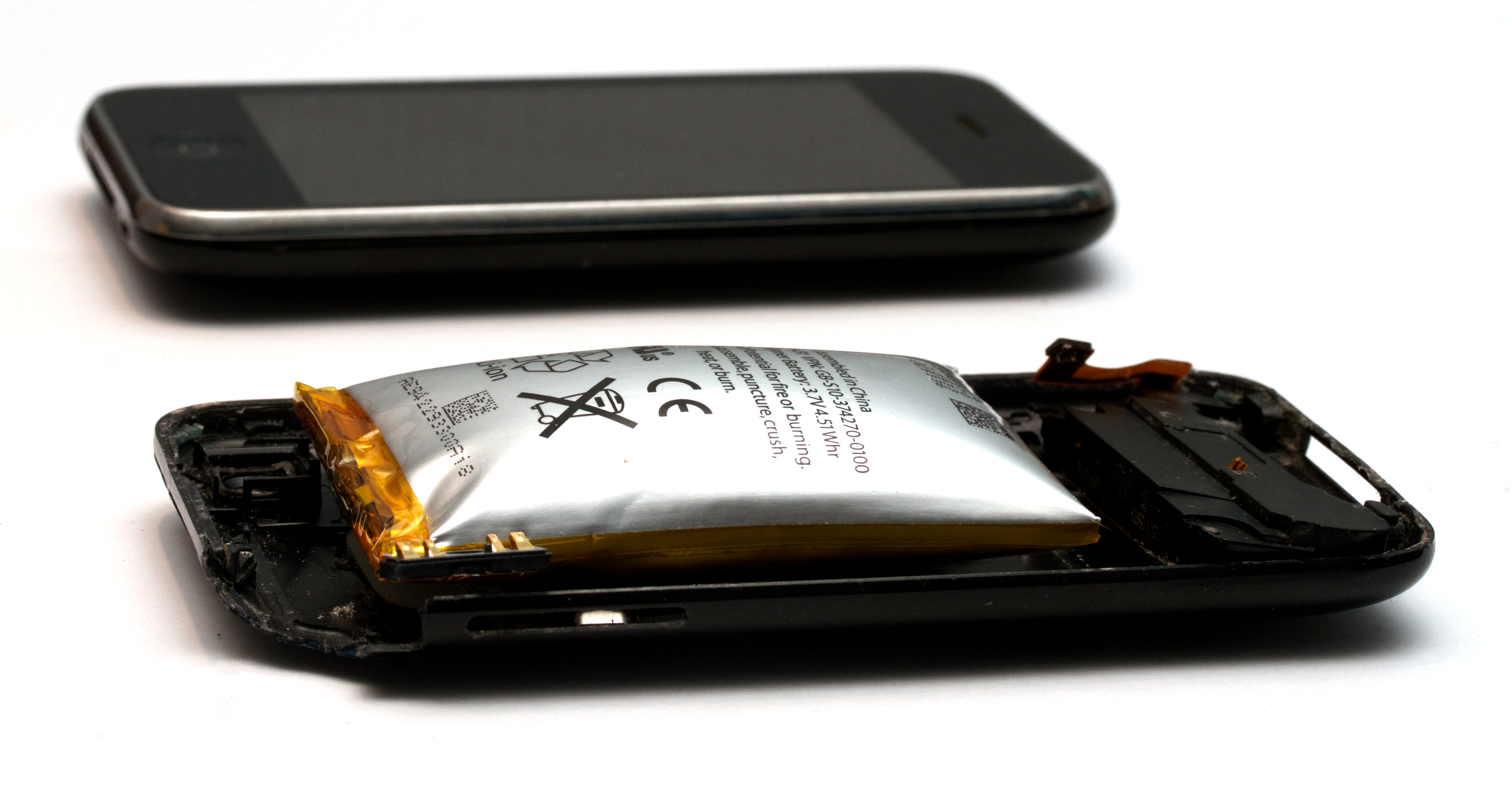
Pull an old phone out of a drawer after a year of neglect and there's a decent chance the back panel doesn't sit flat anymore. Press on it and it gives slightly, like there's something underneath pushing back. That something is gas, and it means the battery is dying in a very specific, very avoidable way.
Battery swelling isn't a manufacturing flaw or bad luck. It's the visible result of a chemical reaction most people never think about until their phone won't lie flat on a table.
What's actually inside a swollen battery
Most phones, laptops and tablets run on lithium-ion polymer cells: a tightly rolled stack of thin metal and plastic layers soaked in a gel electrolyte, sealed inside an airtight aluminum pouch. The electrolyte is what lets lithium ions move between the layers — no ion flow, no charge. In theory the pouch stays sealed and the amount of electrolyte never changes.
In practice, some of that electrolyte breaks down into gas every time the battery charges and discharges, according to repair company iFixit's teardown analysis of swollen batteries. A small amount of gas is normal wear, and the pouch traps it and swells slightly to contain it rather than letting it vent. The battery still works fine at that stage. It's when a significant share of the electrolyte decomposes that the pouch balloons and the cell fails outright.
Why it happens most to devices sitting in a drawer
Four conditions accelerate the breakdown: extreme heat above roughly 90 degrees Celsius, overcharging from an out-of-spec charger, physical damage that shorts the internal layers, and the one that catches almost everyone: being left deeply discharged for weeks or months.
That last one explains why the phone in a junk drawer is more likely to be swollen than the one used every day. Every modern device has a battery management system sitting between the cell and the electronics, and it cuts power well before the battery is actually empty. When the screen reads zero percent, iFixit's research notes the battery is typically still holding 10 to 15 percent of its charge in reserve, a built-in buffer against exactly this failure mode. Draining a phone to "0%" and recharging it the same day does essentially no damage. Leaving it at 0% and forgetting about it for months is a different story: the reserve slowly bleeds away through self-discharge, the cell drops below its safe floor, and the electrolyte starts decomposing in earnest.
The risk isn't just a bulging case
A swollen lithium battery is a genuine fire hazard, not just a cosmetic problem. Battery manufacturer Large Power's engineering team points to documented cases: a Dell laptop battery that distorted its own casing in 2017, a portable MP3 player that caught fire the same year after its cell swelled, and a Kobo Arc tablet that filled a room with smoke after a full charge. More recently, Microsoft logged 257 reports of Surface Pro and Surface Book devices damaged by battery swelling in 2021 alone, and Apple users have reported iPhone 12 screens pushed loose from their housings by the same mechanism.
If the casing ruptures under that pressure, the exposed materials can ignite. That's the reasoning behind the standard advice: stop charging a swollen battery immediately, don't puncture or compress it, and take it to a certified e-waste recycler rather than the regular trash.
Can a swollen battery still be used?
No. Once a lithium cell has swollen, the internal chemistry that makes it work safely is already compromised, and there's no way to reverse the gas buildup. Continuing to charge or use it raises the odds of a short circuit inside the pack. The only fix is replacement.
How to stop it from happening to a stored device
The practical fix is almost the opposite of what feels intuitive: don't let a spare device sit fully drained. Devices with a removable battery should be charged to roughly 80 percent, disconnected, and checked again after about six months. Devices with a sealed battery, which is most phones and tablets today, should be charged to about 80 percent, switched off or put into a low-power storage mode if one exists, and checked every two to four months depending on the size of the battery. It's an easy habit to skip, which is exactly why swollen batteries in stored electronics are so common.
The same battery chemistry, just running in a different direction, is why an iPhone's reported battery health percentage keeps sliding even with careful use, and why a phone that's completely powered off still loses charge over time. Swelling, capacity fade and standby drain are three different symptoms of the same underlying chemistry finding new ways to misbehave, and a device that already shows one of the other two is worth checking for this one too.