Why Smart TVs Have Microphones, and the Tracking Feature That Matters More
The microphone in your TV remote is the obvious privacy worry. The setting regulators keep going after is automatic content recognition, which reports what is on your screen from every source.
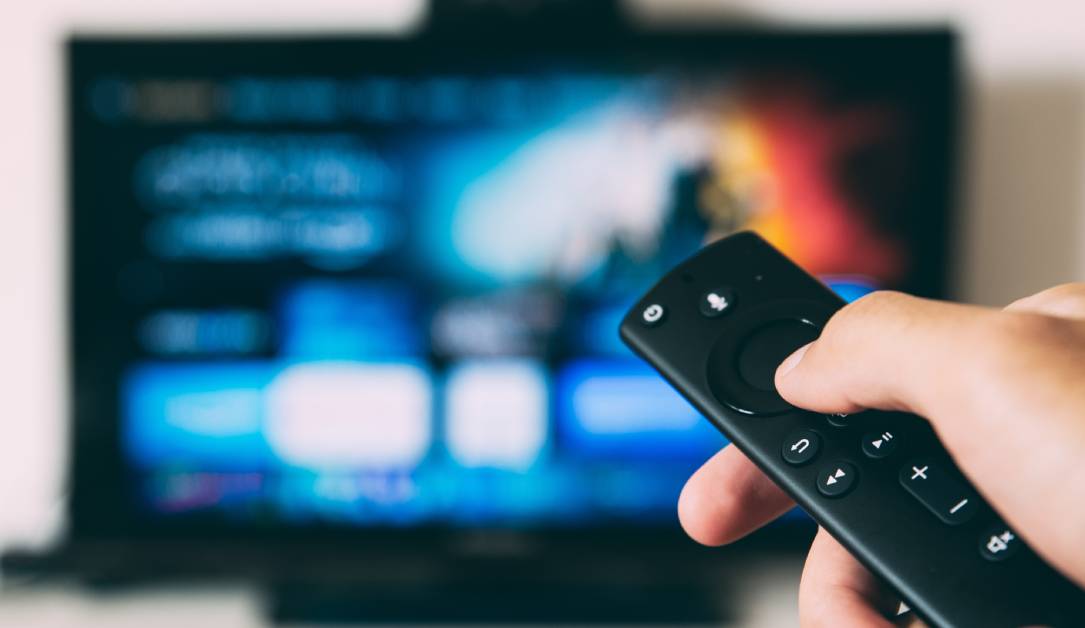
Hold down the button on most modern TV remotes and say "comedy movies," and the TV will do something useful with it. That is the whole reason the microphone is there. Manufacturers add mics to televisions and remotes to enable voice control and keep pace with smart speakers and phones: search for a show, change an input, ask about the weather.
But if you are worried about a smart TV spying on you, the microphone is probably the wrong thing to worry about. The feature that has drawn a federal settlement, a wave of state lawsuits in Texas and a string of consent decrees does not listen to your living room. It watches your screen.
Why do smart TVs have microphones?
Two different kinds of microphone show up in TV setups, and they behave very differently.
The common one lives in the remote. It is push-to-talk: it only records while you hold the voice button, then sends the request off to be processed. Tom's Guide describes the remote's mic as one that works only when pressed, giving you voice control without constant listening.
The second kind is built into the TV itself, for hands-free "far-field" voice assistants that wake on a keyword, the same way a smart speaker does. Those mics are, by design, listening for the wake word. Many sets that have one also have a physical switch to kill it; on Samsung models, according to Tom's Guide, the switch usually sits toward the right side of the bottom edge of the screen.
Neither type is secret. The privacy question is about what the device does with audio and how clearly it tells you. And there, voice features are the visible part of a much larger data operation.
Is my smart TV listening to me, or watching what I watch?
The technology regulators keep circling is called automatic content recognition, or ACR. It works by sampling what is on the screen (frames of video, snippets of audio), turning those samples into a fingerprint, and matching it against a database to identify the show, the channel, the movie or the ad. Malwarebytes' security researchers summarized how one implementation, Sony's Samba Interactive TV, records image and audio every 500 ms regardless of source
, whether that source is broadcast, a streaming app or a PC plugged in as a monitor.
Read that again: regardless of source. ACR is not limited to the TV maker's own apps. Texas's lawsuits allege the technology can capture what plays through HDMI-connected devices, screen casting and even home security camera feeds.
The commercial logic is ad targeting: knowing what a household watches, and matching it to the ads it later sees, is worth money. The Federal Trade Commission's 2017 case against Vizio showed how far that can go. Vizio, the FTC said, collected a selection of screen pixels on a second-by-second basis
, gathered as many as 100 billion data points each day from millions of TVs
, and provided consumers' IP addresses to data aggregators who matched them to households and details such as age, income and marital status. The setting that enabled it was labelled "Smart Interactivity." Vizio paid $2.2 million to the FTC and New Jersey to settle.
What Texas is doing about it
On Monday, Dec. 15, 2025, Texas Attorney General Ken Paxton sued five of the biggest TV makers (Sony, Samsung, LG, Hisense and TCL) under the state's Deceptive Trade Practices Act, alleging they collected viewing data without meaningful consent through disclosures buried in legal language, The Record reported. The complaints also allege the data could be combined with other information to infer sensitive traits.
Post by @KenPaxtonTX
When families buy a television, they don't expect it to spy on them,
Paxton said when announcing the cases.
The companies have not all responded the same way. Samsung settled in late February 2026 and agreed to stop collecting ACR data from Texans without explicit, informed consent and to rewrite its on-screen privacy prompts. LG followed in May with an opt-in consent requirement and a clearer opt-out, according to a July summary by the privacy-compliance firm SecurePrivacy, which noted that neither settlement carried a monetary penalty. As of that summary, Hisense, Sony and TCL were still litigating.
How do I turn off ACR on my TV?
Every brand buries it under its own name. These are the paths Malwarebytes published; menus vary by model year, so treat them as a starting point:
| Brand | What ACR is called | Where to find it |
|---|---|---|
| Samsung | Viewing Information Services | Settings → Support → Terms & Privacy → Privacy Choices |
| LG | Live Plus | Settings → All Settings → General → System → Additional Settings |
| Vizio | Viewing Data | Menu → System → Reset & Admin |
| Sony | Samba Interactive TV | Settings → All Settings → Privacy |
| Roku | Use info from TV inputs | Settings → Privacy → Smart TV Experience |
On Roku, Malwarebytes also suggests unchecking "Personalize ads" under the same Privacy menu.
Should I turn off the microphone too?
If you never use voice search, there is little reason to leave a far-field mic on. Flip the hardware switch where one exists, or look under the voice or privacy settings: Samsung puts voice recognition options under General, and LG puts its controls in privacy and assistant settings, with some models hiding them in the user agreements section, per Tom's Guide. If you like voice search, the remote's push-to-talk button is the more contained option.
Worth keeping in proportion, though. Switching off the mic changes what the TV can hear. Switching off ACR changes what it can report about everything you watch, from every device you plug into it. For most households, the second setting is the one that matters. The same pattern runs through other "convenience" features that rely on cameras and sensors, from TVs to Google's wave-at-your-webcam CAPTCHA: the useful part is visible, and the data trade sits in the fine print.
The irony is that the TV that does the most watching is often the one advertised as the smartest. A new set will ask you to accept a stack of agreements during setup. That screen, not the microphone button, is where most of the privacy decisions get made.