Bulgaria Ship Strikes Now Hit 5 Miles Outside Its Territorial Waters
In one week, drone strikes on merchant ships moved from 70 to 80 nautical miles off Bulgaria to just past its 12-mile line, the edge of the only waters insurers left off the war map and a gap NATO's treaty does not clearly cover.
The distress call reached the maritime rescue centre in Varna at 1:30 a.m. on Tuesday, Oct. 13. It came from the Chelsea 3, 18 nautical miles east of Byala. Three aerial drones had struck its deck and side, the crew said. A Border Police crew took all 15 people off and brought them ashore. Farther north, 17 nautical miles east of Krapets, a second ship was hit and sank.
Drones struck two merchant ships off Bulgaria overnight into Tuesday, Oct. 13, sinking one and leaving 11 sailors missing as of Tuesday, according to Bulgarian officials. It was the second attack in Bulgaria's exclusive economic zone in exactly a week, and this time the strikes landed 17 and 18 nautical miles offshore, just 5 to 6 nautical miles outside the country's territorial sea.
That distance is the story. On Tuesday, Oct. 6, ships were hit 70 to 80 nautical miles out; this week, at roughly a quarter of that. Bulgaria's territorial sea, the strip of water a coastal state treats as its own, ends 12 nautical miles from shore, and the Krapets sinking lies about 9.3 km beyond it.
The latest attack on merchant ships in the immediate vicinity of Bulgarian territorial waters is absolutely unacceptable,
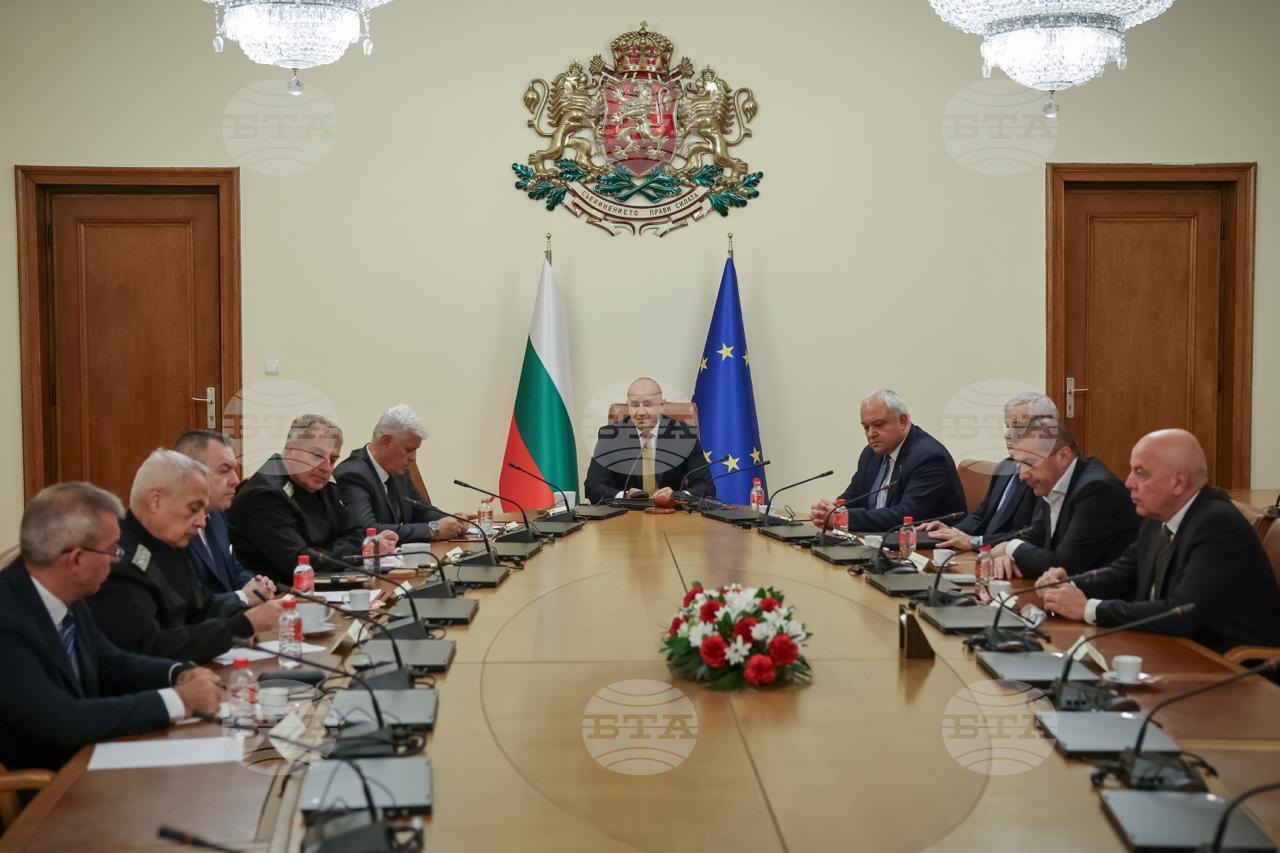
Prime Minister Rumen Radev said in Radev's statement to the Security Council, which he called into emergency session. He spoke with NATO Secretary General Mark Rutte and summoned Russia's ambassador, Eleonora Mitrofanova.
The Chelsea 3 flies Malta's flag, is registered in Odesa and is Ukrainian-owned. It was bound for Giurgiulești, Moldova's Danube port, with seven Ukrainians and eight Azerbaijanis aboard. Five needed treatment for injuries believed minor. Three went to Varna's Naval Hospital with burns, Novinite reported; the Defense Ministry said their lives are not in danger. The crew heard three explosions before abandoning ship, Interior Ministry chief secretary Lyubomir Nikolov said. The Chelsea 3 stayed afloat, drifting with no one aboard.
Radev's own account of the distress call, posted Tuesday:
Post by @RumenRadevPM
The Krapets ship is harder to pin down. Radev first said one crew member had been rescued; later on Tuesday, officials including the Dobrich regional governor said five were rescued and 11 were missing. Most of the crew were Syrian and three were Egyptian, Lyubomir Nikolov said. That count may still change, and behind it are 11 people whose families are waiting for news.
Even the ship's name is disputed. Bulgarian media identified it as the Azov Concord, a Turkish-managed cargo ship, but the Interior Ministry could not definitively confirm that the Azov Concord had sunk. A Turkish report says it was not hit, and broadcaster bTV, citing its own sources, reported that the sunken ship is the HS Dignity. Until officials settle it, both names remain claims.
Five ships in eight days, the last two closest to Bulgaria's shore
Oct. 6 brought the first known drone attack on commercial ships in Bulgaria's waters or economic zone since the war began. At about 3 a.m., sea and aerial drones hit two ships off Byala. The Togo-flagged Alfa Watan, built in 1976 and bound for Sulina, Romania, sank. There is no trace of the sailors,
said Rumen Nikolov, head of the maritime rescue centre, on Oct. 7. Reuters reported the 10 crew as nine Syrians and one Egyptian; the search was halted.
The Palau-flagged Able, carrying wheat, caught fire, and the Bulgarian ferry Dioscuria rescued all 18 crew. A day earlier, on Monday, Oct. 5, the Turkish-owned Royad Mammadov sank outside Romania's territorial waters; Romanian authorities said two people died.
Add it up: five merchant ships hit in the western Black Sea in eight days, three sunk, and 23 people dead, lost or missing, a total that depends on a Krapets count still in motion.
The ships are this close to Bulgaria because the war pushed them there. Russian bombing of Ukraine's Black Sea ports has forced Ukraine to lean more on Danube river ports and on routes near the coasts of NATO members Bulgaria and Romania, Reuters reports.
The Danube is still a side door. Figures reported by Ukrainian outlet UNN show the Danube ports handled about 8.3% of port cargo in January–July 2026, with Greater Odesa carrying the rest. Each strike on Odesa pushes more trade, much of it grain, into the coastal lane, which is why a sinking off Krapets is felt far beyond Bulgaria.
Russia has campaigned against Ukraine's export corridor, the risk firm Ambrey notes, while Ukraine has struck Russia-linked merchant ships since late November 2025. The crews caught in between belong to neither navy.
Where the war-risk map stops
On Sept. 16, the Joint War Committee, a body of the Lloyd's Market Association and the International Underwriting Association, extended its Black Sea "Listed Area" to the whole sea except the territorial waters of Türkiye, Romania, Bulgaria and Georgia. The Joint War Committee's Sept. 16 listing, known as JWLA-035, does not set prices. It puts underwriters on notice, which can mean an extra premium.
Early, unconfirmed broker estimates from B.G. Shipping, reported by Beinsure, put that extra premium at about 0.10–0.20% of a ship's insured value. For a Handysize bulker insured at about $12 million, that is roughly $12,000 to $24,000 before no-claims discounts, and the cover stops once a ship reaches territorial waters. As in the Gulf's tanker lanes, the premium is where danger first shows up on paper.
Ambrey counted 45 merchant vessels struck outside the old listed area in the 12 months to Sept. 21, against none in the year before. Now the seam: a ship inside Bulgaria's 12 miles sits outside the listing; past 12, it is inside. Both strikes on Oct. 13 landed 5 to 6 nautical miles beyond the edge of the only waters the market left out. The exclusion of adjacent territorial waters should not be read as an absence of risk,
Ambrey wrote. Trident Risk & Advisory was blunter: A water outside the Listed Area is simply outside that definition; that is not a statement that it is safe or low risk.
Consultation is all Article 4 promises
Any allied response starts with a name, and Bulgaria has not officially given one. We do not have solid and clear evidence to bring accusations against any of the parties. However, as I have already stated, the logic of the situation suggests that the outcome benefits the Russian Federation,
Radev said.
Others go further. The opposition Democratic Bulgaria says the heads of Bulgaria's three intelligence services had no doubt that it was Russia attacking.
Co-leader Ivailo Mirchev said after the Oct. 7 council: I don’t remember there being people at the table who doubted whether the drones were Russian.
A Chelsea 3 survivor told journalists in Varna the attack came from Russia, Balkan Insight reported, and Ukraine's foreign minister, Andrii Sybiha, blamed Moscow too.
But the record has gaps. Russia had not publicly responded to Tuesday's strikes in available reports, and after Oct. 6 both Russia and Ukraine denied involvement. No drone debris was recovered from Oct. 6; Radev asked the EU and NATO for technical help on Monday, Oct. 12. And Radev, Balkan Insight notes, has long kept up a balancing act, often resisting criticism of the Kremlin. Coming from him, the "logic" line is a real step, and still short of an accusation.
Suppose Bulgaria named Russia outright. Article 4 of the North Atlantic Treaty says the allies will consult together whenever, in the opinion of any of them, the territorial integrity, political independence or security of any of the Parties is threatened.
Consult. That is the whole promise. Bulgaria joined seven other eastern allies in invoking it in 2022.
Andrei Gyurov, an opposition-backed presidential candidate, wants it invoked again. I urge the government to immediately request consultations under Article 4 of the Nato Treaty and to present a concrete plan for the protection of the Bulgarian coast and shipping,
he said. The president's national security council had already rejected the idea on Oct. 7:
"Convening consultations under Article 4 at this stage is unproductive, since discussing such incidents was an approach that was adopted only to be considered within the framework of the North Atlantic Council and will not lead to new measures."
Conclusions of President Iliana Yotova's Consultative Council on National Security
Both have a point. A formal request would make 32 allies look at Bulgaria's coast together; a meeting with nothing new at the end could advertise the alliance's limits.
Article 5, the mutual-defense clause, is a harder door. Article 6 confines it to attacks on the territory of any of the Parties
or on the forces, vessels, or aircraft of any of the Parties.
Under the UN Convention on the Law of the Sea, an economic zone gives Bulgaria rights over resources, not sovereignty, and every state may sail through. None of the identified ships flew a NATO flag, either. Read from the texts, a treaty-based response is hard to trigger here, and this year's fights over Washington's appetite for NATO don't make it easier.
Rutte said in a social-media post after speaking with Radev that NATO had reinforced its presence on the eastern flank, would keep monitoring and would adapt its posture as necessary. He named no new measures. Lyubomir Nikolov said plans have been outlined with partners for anti-drone systems on the coast. Border Police director Anton Zlatanov offered the sober arithmetic, per Novinite: countermeasures cost more than drones and run a step behind them.
EU leaders meet Thursday and Friday, Oct. 15–16, and Bulgaria's own security council wanted the Black Sea on the agenda. The talking is two days away. Danube-bound freighters still have to cross the same waters, 5 miles past the line, where the Oct. 13 strikes landed.


