The U.S. Government Is Now Insuring Oil Tankers in a War Zone
War risk premiums for Hormuz tankers have jumped 40-fold since February, so Washington is now backstopping up to $40 billion in oil and LNG shipping insurance itself.
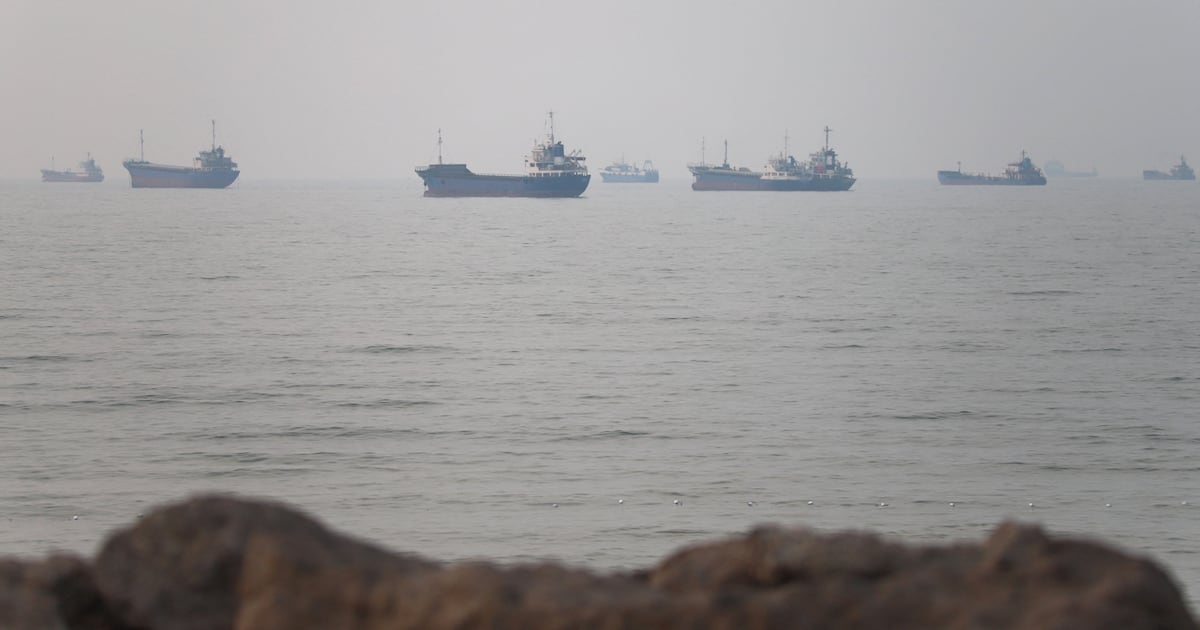
A $100 million oil tanker crossing the Strait of Hormuz right now pays as much as $10 million just to insure the trip. Before the war between the U.S. and Iran started in February, the same policy cost about $250,000.
That gap is the real reason a Qatari-loaded LNG tanker, the Gaslog Shanghai, was still sitting dead in the water off Oman's coast this past weekend after a projectile knocked out its power. Private insurers have mostly stopped pricing this route like a normal shipping lane and started pricing it like what it is: a war zone. So the U.S. government has stepped in to do something it has never really done before — insure commercial oil and gas shipments sailing through active combat.
The agency doing it is the U.S. International Development Finance Corporation, or DFC, a body most Americans have never heard of because its normal job is backing infrastructure and energy projects in poor countries. In March, at President Trump's direction, the DFC tapped Chubb to lead a maritime reinsurance facility covering losses up to $20 billion on a rolling basis for tankers moving oil, gasoline, LNG, jet fuel and fertilizer through the strait. By April 3, six more American insurers — Travelers, Liberty Mutual, Berkshire Hathaway, AIG, Starr and CNA — had joined, doubling the facility to $40 billion.
DFC chief Ben Black framed it as a rescue of a market that had simply walked away. DFC is proud to welcome Travelers, Liberty Mutual, Berkshire Hathaway, AIG, Starr, and CNA as additional reinsurance partners for our joint $40 billion Maritime Reinsurance plan,
he said when the expansion was announced, calling it a way to help restore confidence in maritime trade.
Chubb CEO Evan Greenberg put the stakes in blunter terms: The commerce passing through the Strait of Hormuz plays a vital role in the global economy, and providing vessels with insurance protection is essential for resuming trade flows.
The Strait of Hormuz carries roughly a fifth of the world's oil and gas. When war risk premiums jump 40-fold, as they effectively have, either shipping costs get passed down the chain to fuel buyers or ships stop coming, which is its own kind of price shock. Marcus Baker, global head of marine, cargo and logistics at the insurance broker Marsh, said war rates have been "on a roller coaster mirroring the development of the price of oil" — spiking, easing when a ceasefire framework holds, then spiking again the moment it doesn't.
That gap is exactly what worries some budget watchers. Clemence Landers, a senior policy fellow at the Center for Global Development, called the program a "profound departure" from DFC's usual work bankrolling growth projects in the developing world. Basically, this is the public sector subsidizing potentially a massive payout to private investors,
she told CBS News, noting the agency's total statutory risk exposure stood at $205 billion as of last December — meaning a bad month in the Gulf could eat a meaningful share of everything DFC is legally allowed to be on the hook for. Texas Rep. Joaquin Castro raised a different objection, posting that the plan certainly looks like the United States will be subsidizing and protecting oil shipments to China
— since Chinese refiners are among the biggest buyers of the oil that transits the strait.
Post by @JoaquinCastrotx
Whether the insurance is even doing its job is an open question this week. The Gaslog Shanghai was hit Saturday, and it wasn't the only vessel in trouble: a Gaslog sister ship, the Gaslog Salem, had been struck by a drone days earlier while docked in Egypt, and the UK Maritime Trade Operations agency separately logged a tanker reporting an explosion nearby in the strait, though that one wasn't damaged. Qatar, the world's second-largest LNG exporter, had already paused shipments through Hormuz for three weeks in early July after a similar strike. Oil and gas cargoes were briefly trading near pre-war levels when a ceasefire framework looked like it might hold; that window keeps closing every time Tehran resumes firing.
None of this means the $40 billion facility is wasted money — insurers involved say it's already keeping some ships moving that otherwise wouldn't sail at all, and Chubb, not the government, still sets pricing and handles claims. But it does mean the arithmetic behind cheap gas and LNG right now runs through a U.S. government balance sheet, not just an oil market. If Hormuz stays this hot, the next number to watch isn't the price of Brent crude. It's how much of that $40 billion has actually been paid out — and to whom.