Switzerland Votes Sunday on a First-of-Its-Kind 10 Million Population Cap
Swiss voters decide on a far-right proposal to cap the population at 10 million — a measure with no precedent anywhere, and one that could force the country out of its EU free-movement deal.
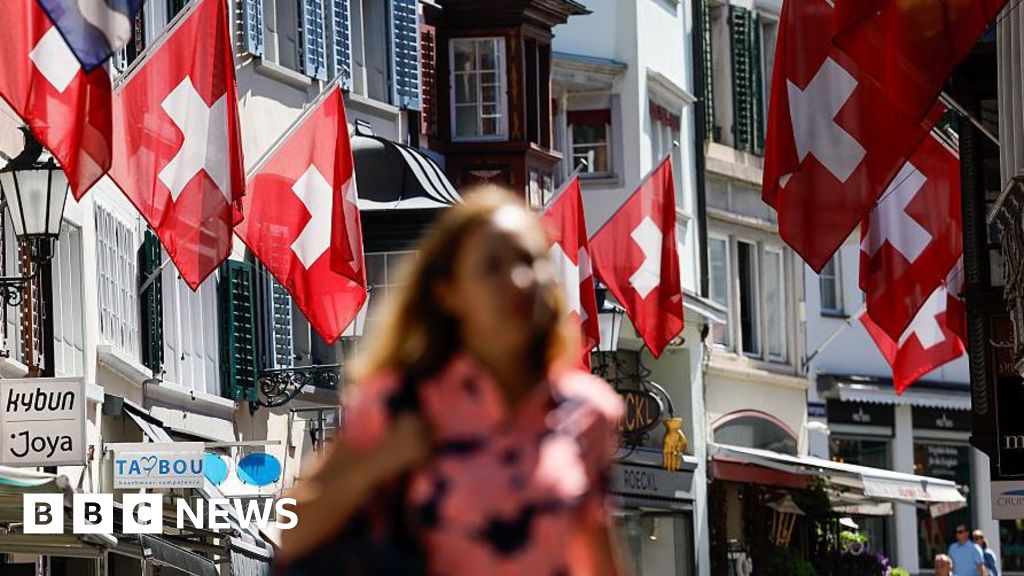
Can a wealthy country simply decide it has enough people? On Sunday, Switzerland becomes the first nation to ask voters that question directly, in a referendum on whether to cap its population at 10 million.
The proposal, brought by the right-wing Swiss People's Party (SVP), would force the government to act if the permanent resident population approaches the limit before 2050. It is the kind of test that other European governments have argued about for years without ever putting to a national vote — which is why the result will be read far beyond the Alps.
Switzerland's population sat at 7.3 million in 2002, the year it opened its borders to European Union workers under a free-movement agreement. It has since climbed to just above 9.1 million, with about 27% of residents holding foreign passports. Trains are crowded, apartments are scarce and expensive, and health-insurance premiums keep rising. The SVP, the largest party in parliament since 1999, has gathered all of that frustration under a single number.
What the cap would actually do is less tidy than the slogan. The initiative orders the government to tighten immigration once the population passes 9.5 million at any point in the next 24 years, with asylum and family-reunification programs first in line for cuts. If the count still breaks 10 million, Bern would be obliged to walk away from its free-movement deal with the EU — and with it, guaranteed access to the bloc's single market. The SVP frames the limit as a brake, not a wall; the party says even with the cap, roughly 40,000 people could still move to Switzerland each year.
The government, every other major party, the trade unions and the country's main business groups are against it. They call it a "chaos initiative" and warn it would strip hospitals and hotels of staff and isolate a small, export-dependent country in a turbulent moment for Europe.
"It sells the illusion of a free lunch, and will not solve our housing or traffic problems."
Rudolf Minsch, chief economist at Economiesuisse, the country's main business federation, quoted by Reuters and CNBC
Economiesuisse — whose 100,000 members include Roche, Google, Amazon Web Services and Johnson & Johnson — argues that Swiss prosperity rests on openness and on the bilateral agreements with the EU, and that rigid caps would weaken the pharmaceutical, technology and healthcare sectors that depend on foreign specialists. About 1.4 million EU citizens live in Switzerland, and another 340,000 cross the border each day to work there, according to CNBC's reporting.
The campaign has split the country along lines that don't map neatly onto age or background. The BBC profiled two young Bern politicians from immigrant families who land on opposite sides. Nils Fiechter, a 29-year-old SVP representative, told the broadcaster that "unchecked immigration is leading to Switzerland no longer being Switzerland." Helin Genis, a 31-year-old Social Democrat on the city council, rejected the framing outright: "It is not migrants who determine rent levels. It is not migrants who raise health insurance premiums." Viewing every problem through migration, she said, "does not lead to solutions, but to division."
That divide is mirrored in the polling, which is why nobody in Bern is calling it. Surveys cited by the Guardian and CNBC put opposition at around 52% and support at about 45%, with enough undecided voters to swing it either way.
Switzerland's direct democracy makes these moments routine: gather 100,000 signatures within 18 months and any idea, however unprecedented, earns a national vote. The SVP has used the tool before to push deportation of foreign criminals and, in 2020, an unsuccessful attempt to end free movement outright. What is different this time is the bluntness of the instrument — a single ceiling on human beings, enforced by treaty withdrawal.
For the rest of Europe, the appeal of a hard number is exactly what makes Sunday worth watching. A yes would hand every anti-immigration party on the continent a finished slogan and a precedent; a narrow no would suggest that even in the country most willing to legislate by referendum, voters balked at pricing out the workers who keep the place running. The ballots close Sunday, and a country that has spent two decades growing faster than its neighbors will finally say whether it wants to stop.


