Yerevan: OECD Counts $16.8B Against Nature's $20B Goal; Fund Decision 2028
The UN biodiversity conference ended Oct. 31 with a donor-list invitation and a 2028 date to decide the permanent mechanism's form, while the Cali Fund had pledges of $10,565 and the OECD's 2023 count sat $3.2 billion under the $20 billion milestone.
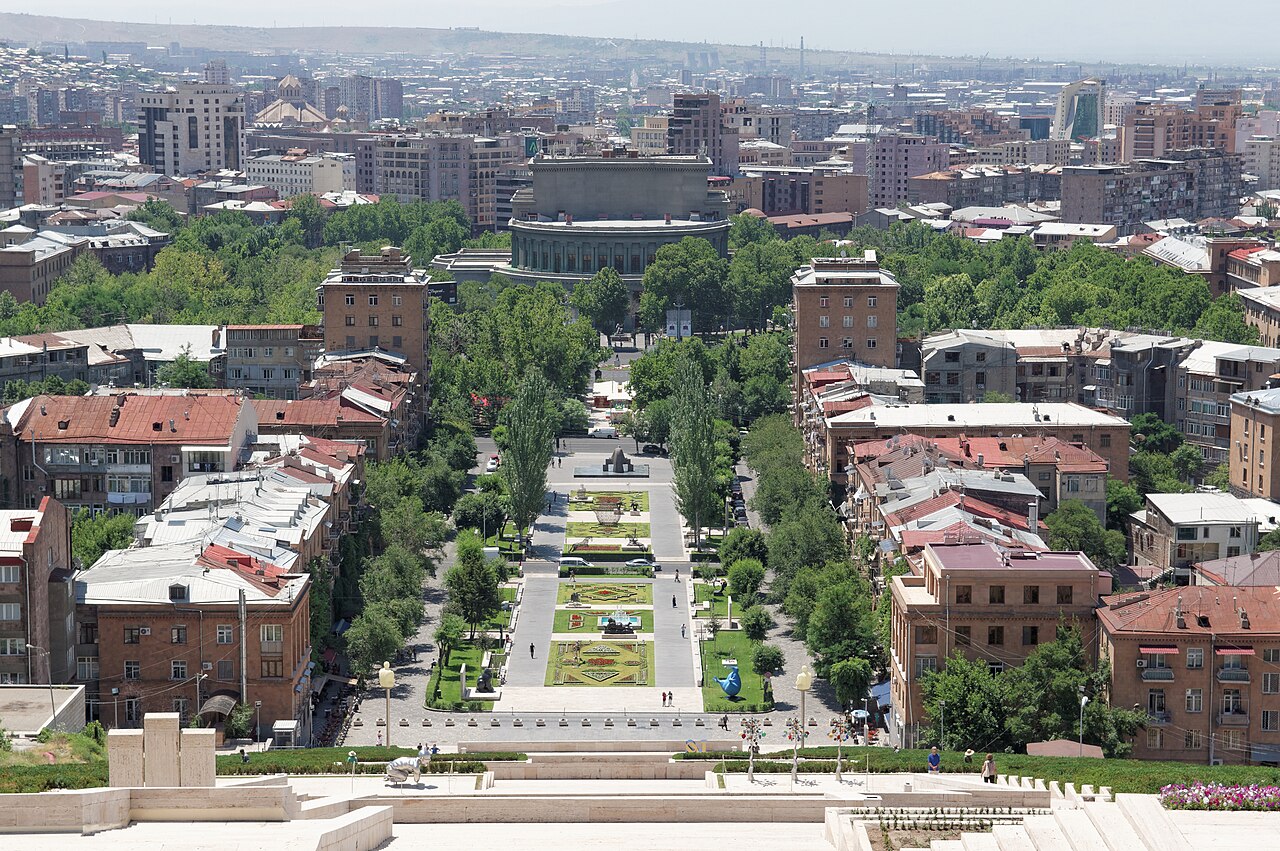
At 5:25 a.m. on Saturday, Oct. 31, the plenary hall in Yerevan was emptying in the seventh hour of a final plenary that Carbon Brief called nearly 12 hours long, and it still burst into applause. Delegates had just adopted, without objection, a decision on the Cali Fund, meant to collect money from companies that profit from nature's genetic data. As Carbon Brief's outcomes explainer reports it, the fund may pay out "on an exceptional basis" once contributions reach $150 million. It held $10,565 in pledges.
The UN biodiversity conference in Yerevan, Armenia, ended Saturday, Oct. 31, after an overnight session, with a "Yerevan Pathway" meant to speed up the 2022 nature targets. As Carbon Brief and Climate Home report the finance decision, it invites emerging economies to signal interest in donor status, sets criteria for a permanent financial mechanism, and leaves that mechanism's form to COP18 in Ecuador in 2028. The latest count of money reaching developing countries is about $16.8 billion for 2023, against a $20 billion goal for 2025. The organizers announced $1.8 billion to nearly $2 billion in new money, though the UK's £330 million GEF-9 contribution was a reaffirmation, the Global Environment Facility said.
Read as a ledger, the result, as Carbon Brief reports the decision, is plain: Yerevan decided who may be asked to pay and when the question of a permanent fund returns, not how much anyone pays. The 2023 shortfall against the 2025 milestone is $3.2 billion, or 16.0% of the goal.
The decision invites donors and defers the fund
The Yerevan Pathway sits inside the first global review of the Kunming-Montreal Global Biodiversity Framework, the 2022 deal with 23 targets for 2030. The UN's State of Biodiversity Action report is the review's evidence base; Carbon Brief and Mongabay count 22 of the 23 targets behind schedule. By Xinhua's account, the Pathway "focuses on how countries can step up efforts to meet those already agreed upon" rather than setting new targets.
On money, the first piece is the donor list. Article 20 of the convention says developed countries "shall provide new and additional financial resources," while others "may voluntarily assume" the same obligations. Carbon Brief says the list was last amended in 2006. The EU and other developed countries sought to "broaden the contributor base," which could reach emerging economies such as China, Saudi Arabia and India.
The outcome is an invitation, not an addition. Carbon Brief says countries that want to be listed may "signal interest" through confidential bilateral consultations before COP18, and that nothing happens without a country's explicit consent. Climate Home News adds that the secretariat will repeat the invitation at each later COP.
The second piece is the permanent fund. Per Carbon Brief, countries agreed criteria for "a new, permanent financial mechanism to protect nature after 2030" under the COP's governance, a key ask from developing countries. But the decision "defers decisions on what form this mechanism would take - whether this would be a new fund or based on existing arrangements - until COP18." There is no new nature fund yet.
That date was not improvised. Decision 16/34, adopted Feb. 27, 2025 when COP16 resumed in Rome, already said that by or at COP18 a decision would establish a new entity or confirm an existing one. Yerevan kept to that schedule, though Reuters reported some delegates found progress too slow.
Was the $20 billion missed? It depends on the ruler
Target 19 asks that "total biodiversity-related international financial resources" reach developing countries, "at least 20 billion dollars per year by 2025." Two counts give very different answers. The first is the narrower count. The UN report says developed countries reported $5.2 billion in international public finance in 2023, a figure it calls a minimum. The OECD, whose analysis covers the broader flows in Target 19, estimates about $16.8 billion, a figure the Defra dashboard below labels biodiversity-specific. Both "fall below the US$ 20 billion milestone," so the 2025 milestone "was likely not met." The OECD figure is 84.0% of the goal.
The second is biodiversity-related money, the wording Target 19 uses. In a UK Defra dashboard, the 2023 related total is $29.8 billion. On that ruler the milestone is cleared by $9.8 billion. Roughly $13.0 billion of that total is, by subtraction, money where biodiversity was a secondary aim; the sources do not say how much is grants.
The UN report flags the open question itself: a "definitive assessment will only be possible once complete data for 2024 and 2025, the milestone year, have been reported." Both series roughly doubled from 2019 to 2023, so the direction is not in doubt. The level is, and the 2024 and 2025 data will settle it. The OECD's 2023 to 2025 average, per Carbon Brief, is around $16.1 billion, nearly $4 billion short; Mongabay likewise says 2025 likely fell $4 billion short. Carbon Brief's pre-conference finance analysis is a companion read.
The 2030 goals are further off. Reaching $30 billion needs another $13.2 billion a year. The $200 billion goal covers all sources, public and private, domestic and international, and parties reported $32.7 billion for 2023, or 16.4% of it.
Who held the line on what
The donor list consumed the most oxygen: the finance text "swelled to 112 brackets," Carbon Brief reports.
The EU's case is that the world moved and the list did not. Christopher O'Sullivan, Ireland's nature minister, spoke for the EU delegation:
"Our position isn't that we want to pull back in terms of contributing...but it's been 20 years since that list was added to, times have changed and there are new realities. We just simply want those new realities reflected. I don't fully understand why there's so much opposition to that."
Christopher O'Sullivan, Ireland's nature minister, speaking for the EU, to Carbon Brief on Oct. 28
The opposing case rests on the treaty's wording and on who caused the problem. The Arab Group strongly opposed the EU proposal, Climate Home says. Lim Li Ching of the Third World Network called the push for others to "assume the obligations" of developed countries "sheer hypocrisy," and added:
"If you want to generate more funding for biodiversity, let's look at sovereign debt burdens and rules, which are inequitable for developing countries. But if you can fund wars, and provide resources for your defence industry, then you know where the priorities are."
Lim Li Ching, Third World Network, to Carbon Brief
Each side has a fact behind it. The list is two decades old, but an earlier route failed too: decision 16/34 "notes that no Party responded" to the notifications the executive secretary issued under Article 20.
The text survived because delegations warned that reopening it could unravel it. Brazil's delegation told the closing plenary, per Carbon Brief, "If we open this text, we will never close it again."
Climate Home reports that Saudi Arabia said it had expected "a lot less" and the EU called the donor outcome "timid." A Chinese negotiator said, "We welcome this balanced document." Switzerland's Gabriela Blatter put it best: "if we're mutually unhappy, it's probably the closest we can get."
Subsidies followed the pattern, and one analyst read it as a shift of motive. A $500 billion cut is 27.8% of the "as much as $1.8tn" governments spend yearly on potentially harmful support, Carbon Brief's base. The final text, Carbon Brief says, only "encourages" countries to accelerate Target 18 "in accordance with national circumstances," after earlier drafts "urge[d]" it. Saudi Arabia and Russia opposed a subsidy paragraph, and "near the end of the negotiations, India also proposed removing this paragraph." Carbon Brief's July analysis found 84% of countries missed the 2025 deadline even to identify harmful incentives.
"Something is different now. Governments are taking this seriously for the first time and, honestly, it may not be for environmental reasons. It is because they are out of money."
Farooq Ullah, senior policy advisor, International Institute for Sustainable Development, to Carbon Brief
Who is left holding the gap
The new money does not close it. On Oct. 26, conference president Hambardzum Matevosyan said "COP 17 is enabling a total mobilization of more than $1.8 billion from all sources." The convention secretariat's closing release says "nearly US $2 billion," itemising $560 million for GEF-9, $500 million for the Species Recovery Alliance and over $330 million for the Value Nature Fund. Those add to $1.39 billion, so about $0.6 billion is not itemised, and the alliance pledge came on Oct. 16, before the conference opened.
The sources do not say over what period it is to be spent. Taken whole, $1.8 billion is 9.0% of a single year of the $20 billion milestone. The Global Environment Facility said GEF-9 pledges are close to $4.4 billion, against $5.33 billion for GEF-8, 17.4% lower in nominal terms by our calculation, using GEF's June 2022 figure for GEF-8.
Then there is the Cali Fund, created at COP16 in 2024 so companies using digital sequence information (DSI), genetic data from nature, would pay in. It held $6,000 at the start. Carbon Brief says pledges ended at $10,565, with less than $9,000 deposited, and "not a single large company among the sectors identified as reliant on DSI has contributed." Payments are voluntary, indicatively 0.1% of revenue or 1% of profit.
Post by @aruna_sekhar
A Grantham Research Institute working paper, via Carbon Brief, estimates the fund could raise $3.6 billion a year if all 21,690 eligible firms paid by the rules, or $929 million under realistic uptake. Pledges are 0.007% of the $150 million that unlocks exceptional payouts. Dr Siva Thambisetty of the London School of Economics told Carbon Brief, "The Cali Fund is on life support." Astrid Schomaker, the convention's executive secretary, conceded it "has not been as successful as we had hoped."
For developing-country governments, the gain is institutional: the post-2030 mechanism sits under the COP. The cost is time. Some were wary of the review's call for "increased ambition" because it requires more finance, Carbon Brief reports, and the Pathway tells countries to revise plans "subject to available funding," per Climate Home.
For Indigenous peoples and local communities, the picture is mixed. The secretariat says rules for a permanent body on Article 8(j), the "Sevan Guidelines," were agreed. But Joji Carino of the Forest Peoples Programme called the repeated phrase "actors other than national governments" a "major regression," and bracketed mentions of Indigenous peoples were removed from the marine text after Russia contested them, Carbon Brief reports. At least 50% of Cali Fund proceeds are meant for them, so that balance is their problem too. Defra counts $1.1 billion of bilateral biodiversity-related finance reaching them in 2023.
For conservation programmes, the trend runs the wrong way. A Campaign for Nature analysis, via Mongabay, found money to set up and manage protected areas fell "from $1.2 billion in 2023 to $1 billion in 2025," down 16.7%. The OECD says net development aid fell 8.5% in 2024 and 23.1% in real terms in 2025, though "this did not happen for biodiversity" in 2024.
The calendar shows when each question returns.
| When | What is due | Who says |
|---|---|---|
| Before COP18 (2028) | Countries that want donor status "signal interest" through confidential bilateral consultations; secretariat invites at each later COP (Climate Home) or every alternate COP (Carbon Brief) | Carbon Brief; Climate Home |
| At or before COP18 (Ecuador, 2028) | Decision on the post-2030 fund: new entity or existing arrangements; Cali Fund payouts method applies after COP18 | Carbon Brief; decision 16/34 |
| By COP19 at the latest | Permanent financial mechanism's institutional structure determined | Decision 16/34 |
| May 2027 | First in-person meeting of the "friends of target 18" on subsidy reform | IISD via Carbon Brief |
| 2030 | Deadlines for $200 billion a year from all sources, $30 billion a year to developing countries, $500 billion a year of subsidy reform | Decision 16/34 |
Schomaker herself put the test elsewhere: "Ultimately, the test is not what governments agreed in Yerevan, but what they change when they return home."
The UN report says a definitive verdict on the $20 billion milestone waits for complete 2024 and 2025 data. The next UN climate talks, COP31 in Turkey, open Nov. 9, eight days from today. The sharpest number out of Yerevan is still the smallest: pledges of $10,565 to a fund that may make exceptional payouts only once it holds $150 million.