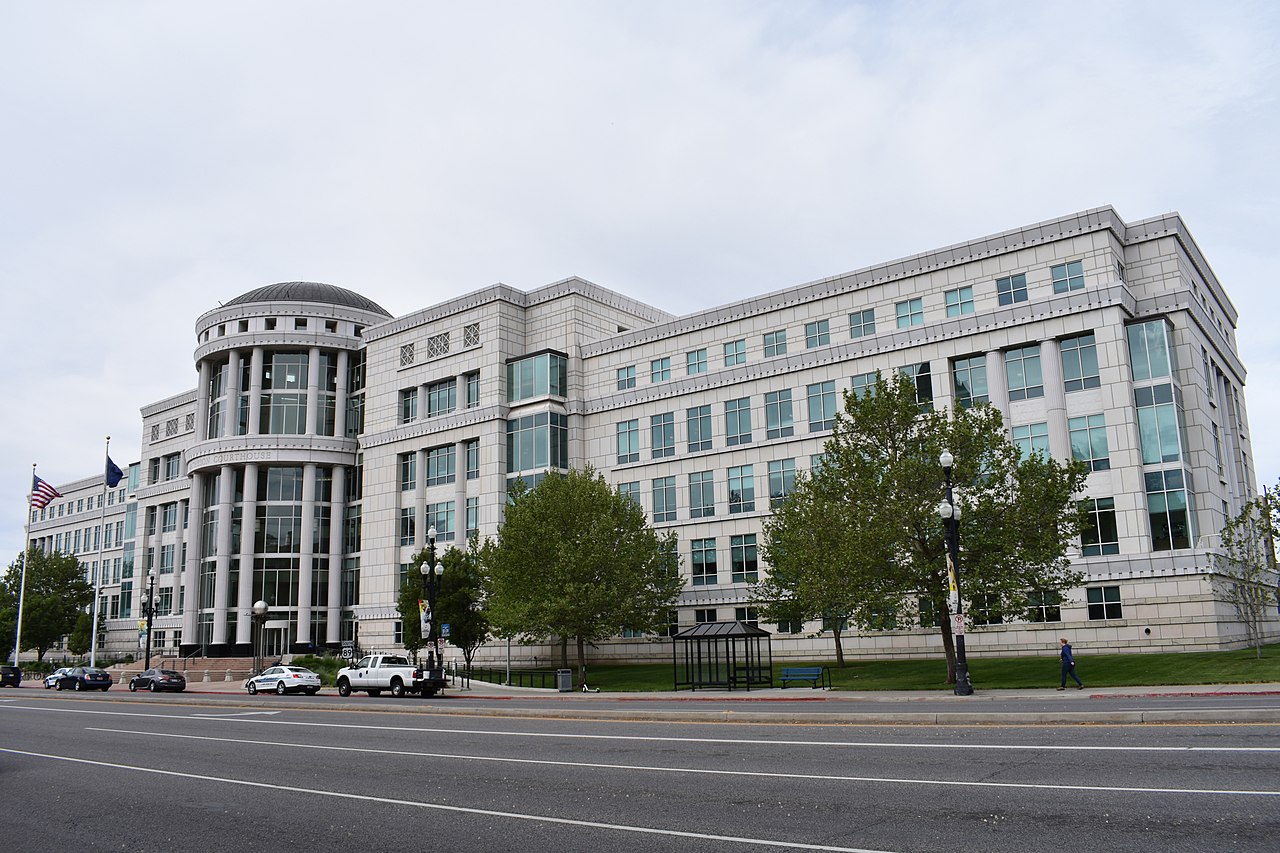
Trina Thompson's Order Bars DOJ Ballot Threats, Not Subpoenas, to Nov. 16
Judge Trina Thompson's temporary restraining order has six operative paragraphs that name no state, and the first two turn on the phrase "solely on the basis." Read paragraph by paragraph, it does not bar DOJ's subpoenas or the Nov. 4 grand-jury testimony.

One phrase carries most of the weight in the first two operative paragraphs of the order U.S. District Judge Trina L. Thompson signed on Friday, Oct. 30: "solely on the basis." The Justice Department may not demand, or threaten workers over, the handling of a ballot solely on the basis that it belongs to a voter the department alleges is ineligible. Without it, the order would read very differently.
In Service Employees International Union, AFL-CIO, et al. v. United States Department of Justice, et al., No. 3:26-cv-12800-TLT, Thompson, of the U.S. District Court for the Northern District of California, granted a temporary restraining order without hearing from the government. The eight-page order binds the Justice Department and the Department of Homeland Security, and it expires at 5:00 p.m. on Monday, Nov. 16. A preliminary-injunction hearing, the longer-lasting next step, is set for Friday, Nov. 13 at 11 a.m. As written, the order stops one lever, a demand paired with a threat of prosecution and tied to the department's list of alleged noncitizens. It does not bar subpoenas, grand-jury testimony or prosecutions (paragraph (6) only requires the department to tell the court about pending ones), and the department appealed to the Ninth Circuit on Saturday, Oct. 31, according to NBC News.
On Oct. 13, department letters to California Secretary of State Shirley Weber and Los Angeles County registrar Dean Logan demanded that they set aside the ballots of about 20,000 registered voters it "believe[s]" are "likely" noncitizens, with 48 hours to review. When both refused, the department sued, as the Justice Department's suit over the 20,000 names reported at the time. Thompson's case is about something else: not the ballots themselves, but what federal officials may demand of, and threaten, the people counting them.
Six paragraphs, four prohibitions
The operative text is six numbered paragraphs, and they are not all one kind of command. Four are prohibitions. Two are duties.
Paragraph (1) bars threatening, intimidating or coercing officials "to demand that they halt processing the ballots of any registered voter solely on the basis that the ballot belongs to an individual alleged by Defendants to be ineligible to vote." Paragraph (2) bars demands to remove specific voters from the statewide list, refuse them ballots, or segregate or not count their ballots on Nov. 3, again "solely on the basis" of the allegation. Paragraphs (3) and (4) bar threats of criminal prosecution, for refusing such demands or for counting ballots in compliance with state and federal law "on the basis that a ballot belongs to an individual alleged by Defendants to be ineligible to vote."
Paragraph (4) drops "solely" and says only "on the basis that," so the boundary is clearest in paragraphs (1) and (2). Read as written, the qualifier is the boundary: a demand grounded in something other than the department's say-so about eligibility is not described. That is a reading of the text, not a holding.
The two duties are disclosure. Paragraph (5) orders the defendants to tell any state, county or local government that received a covered letter that "the demands and threats of prosecution to election officials and workers reflected in that letter have been enjoined." Paragraph (6) orders the department to tell the court about "any pending search warrant applications, grand jury subpoenas, or other demands to access election materials or ballots" tied to its list, "or compel testimony related thereto." It does not stop a warrant or subpoena; it asks to be told.
The sentence many readers will remember is not among the six. It sits in the court's reasoning just before them:
"When state and local government employees perform the work of distributing, processing, or counting ballots or otherwise administering the 2026 midterm election in the manner required by their state and federal laws governing the administration of elections, they do not violate federal criminal law even if a particular ballot belongs to a registered voter alleged by Defendants to be ineligible to vote."
Judge Trina L. Thompson, order of Oct. 30
The complaint, in paragraph 174, asked the court to declare something close to that. The order states the proposition as reasoning but does not enter it as a declaration.
On the merits, the judge's Section 11(b) finding was hedged with "likely." She wrote that the defendants "likely violated Section 11(b) of the Voting Rights Act," which bars attempts to intimidate, threaten or coerce people who help others vote. She wrote that the defendants "exceeds their authority under the Elections Clause" without that qualifier. The court did not reach the Fifth Amendment or Administrative Procedure Act claims "at this time," though the order's conclusion also lists them among claims the plaintiffs "established" are likely violated.
What set it off
| Date | What happened | Source |
|---|---|---|
| Jul. 7 | DOJ letters to all 50 states and D.C. say officials who knowingly retain noncitizens on voter lists could be prosecuted for aiding and abetting | Plaintiffs' filing |
| Oct. 13 | DOJ letter to California's Secretary of State and the L.A. County registrar demands ballots of about 20,000 voters be set aside, 48 hours to review | The order; Votebeat |
| Oct. 15 | DOJ sues California and L.A. County (C.D. Cal., No. 2:26-cv-12025) | Daybreak Wire report |
| Oct. 23 | Letters to county officials across California, delivered by DHS officers | The order; ABC |
| Oct. 26 | Letter to Washington State's Secretary of State | The order |
| Oct. 28 | Judge Carter denies DOJ's request: "these threats must stop" | CalMatters; CBS |
| Oct. 29 | Unions and civil rights groups file this suit; DOJ preservation letters dated this day appear to go to all 50 states; Orange County subpoena delivered | Complaint; Votebeat; CalMatters |
| Oct. 30 | Ninth Circuit denies DOJ's request, 2-1; Judge Thompson grants the TRO | AP; the order |
| Oct. 31 | DOJ files its appeal | NBC |
| Mon. Nov. 2, noon | DOJ's response due | The order |
| Tue. Nov. 3 | Election Day; California polls close 8 p.m. | California Secretary of State |
| Wed. Nov. 4 | Three L.A. County employees ordered to testify before a grand jury | CalMatters |
| Thu. Nov. 5, noon | Plaintiffs' optional reply due | The order |
| Fri. Nov. 13, 11 a.m. | Preliminary-injunction hearing | The order |
| Mon. Nov. 16, 5 p.m. | TRO expires | The order |
The order's background section says its facts "are drawn from Plaintiffs' Ex Parte Motion for Temporary Restraining order and Complaint." So what the court recites about the letters is the plaintiffs' account, before the department was heard. That includes the recital that the Oct. 23 letters "were delivered by armed DHS officials." NBC reported letters to officials in 57 of California's 58 counties. As quoted in the plaintiffs' filings, they said: "If persons knowingly tabulate ballots cast by individuals identified by federal agencies as noncitizens, they risk becoming aiders and abettors to a federal crime."
The subpoenas ran on a parallel track, and they pre-date the order. CalMatters reported that at least four California election workers had received federal grand-jury subpoenas in the prior week. One, delivered Thursday, Oct. 29 to the Orange County Registrar of Voters by Homeland Security agents, sought unredacted records for 60 people. In Los Angeles County, three Registrar-Recorder employees were summoned to testify on Nov. 4, "the day after the election." No outlet reviewed describes a subpoena or new threat issued after Thompson ruled.
The order has no state line, and it has a gap
Some headlines say the order protects California officials. CBS, the New York Times and Bloomberg put the state in theirs; Newsweek's said "Blocked Nationwide." The six paragraphs name no state. They cover "state or local elections officials or workers" (paragraph (1)), and paragraph (5) reaches "any State, county, or any other local government" that received a covered letter. CNN read that to mean the department and Homeland Security "cannot demand that election officials in any state segregate ballots, purge voters from voter rolls, or halt ballot processing." The order does not discuss geographic scope, and a court may yet be asked to.
The gap is easier to see. As written, no paragraph bars investigating, issuing grand-jury subpoenas, seeking search warrants or prosecuting anyone. Kiersten Pels, a Justice Department spokesperson, told CalMatters: "Receiving a subpoena doesn't mean you are a target. In fact, generally, the DOJ doesn't subpoena targets." The order does not bar the Nov. 4 testimony; paragraph (6) would have the department tell the court about demands to compel testimony tied to the list.
Then there are the preservation letters. Votebeat reported that letters dated Oct. 29 and signed by Trent McCotter, an acting deputy attorney general, "appear to have been sent to all 50 states." They remind officials of a 22-month duty to keep election records and say "It is a crime to willfully fail to comply with Section 20701." Joshua Douglas, a University of Kentucky election-law professor, said: "I have never seen the DOJ send this kind of letter across the country in the days before the election." Justin Levitt, a Loyola Law School expert, said the letter "is not itself improper," but also that it "certainly looks like it's meant to intimidate rather than to inform."
Do they fall under paragraph (5)? Common Dreams read the order as requiring the department to go back to their recipients. But paragraph (5) covers letters "regarding the processing and counting of ballots," and neither the order nor any other outlet reviewed addresses whether a records reminder qualifies. It is an open question.
The best case on each side
Start with the department's, since the court has not heard it. Its spokesperson told CBS News on Saturday: "The judge issued an order against the federal government without even waiting to hear from the United States, while in other cases the Department's own urgent election claims are delayed by judges until after Election Day. That is a two-track system of justice." On substance, a Justice Department spokesperson said in a statement quoted by the AP: "Federal law prohibits noncitizens from voting. Enforcing that law is not an agenda item. It is the Department's job."
Judges have pointed to the criminal route too. Carter said in court on Oct. 27, "If it's this big, you've got a remedy for goodness sakes. Go out and indict." In dissent from the Ninth Circuit's ballot ruling, Judge Patrick J. Bumatay wrote: "California says it can do nothing to prevent illegal voting." And the order's wording helps the department: it reaches only demands made "solely on the basis" of the list, which, as a reading of the text, leaves charges built on other evidence outside it.
The plaintiffs' case rests on a written record: warnings dated July 7, Oct. 13, Oct. 23 and Oct. 26, built on an aiding-and-abetting theory they say reaches anyone who processes a flagged ballot, and Carter's statement on Oct. 28 that "these threats must stop." Then there are the declarations filed Friday, reported by ABC News. San Benito County Registrar Francisco Diaz wrote of a letter delivered by Homeland Security officials: "I did not know whether I might be arrested or what might happen next." The order's background section, reciting the complaint, says the defendants' actions "are likely to have the effect of interfering with election administration and disenfranchising lawful voters."
Neither case has been tested as a preliminary injunction would test it. A restraining order holds the status quo "just so long as is necessary to hold a [preliminary injunction] hearing and no longer," the order says, quoting the Ninth Circuit. It was signed four days before Election Day; the hearing falls 10 days after it. The department's response is due by noon on Monday, Nov. 2. NBC does not say whether it asked the Ninth Circuit for a stay, no outlet reviewed reports a ruling on one, and as of Sunday morning, Nov. 1, the order is in effect.
What changes before the polls close Tuesday
For election workers, the order as written covers demands to set aside ballots and threats tied to the list. It does not bar a subpoena or the Nov. 4 testimony. For voters, nothing in the order or any report reviewed says a voter on the list will be stopped from voting or have a ballot discarded on Nov. 3. California's rules are the Secretary of State's: mailed ballots must be postmarked on or before Nov. 3, and polls are open from 7:00 a.m. to 8:00 p.m. Voters can check their status with the voter-status tool.
How reliable is the list? Thompson did not decide that. One outside look comes from a different case. The AP reported that two UCLA Voting Rights Project analysts, in a Saturday filing, found that 8,880 of the 20,930 names, "42% of the entire list," "do not correspond to anyone in California's current voter file," and that "at least 22 are U.S. citizens." It is one analysis, filed by the plaintiffs' side in another suit, and it is not before Thompson.
Both sides agree that noncitizen voting is a crime. What the order leaves open is who may say so to a county clerk, and with what attached, while ballots are still being counted. The judge wrote without hearing from the department. The department's side of the argument is still to be heard.