Why One Nostril Always Breathes Better Than the Other
It's not congestion and it's not your imagination: nearly everyone breathes mostly through one nostril at a time. Here's the automatic cycle behind it, and how to tell it apart from a real blockage.
Breathe out slowly onto a cold window or a phone screen and look closely. One side of the fog patch will almost always be bigger than the other. That's not a fluke of how you exhaled. Most people move roughly three-quarters of their air through one nostril at any given moment, and the other nostril is doing comparatively little.
"At any given time, people do about 75% of their breathing from one nostril and 25% from the other," said Dr. Michael Benninger, a head-and-neck physician at the Cleveland Clinic, in comments cited by Live Science. The dominant side switches throughout the day without a person noticing. Doctors call it the nasal cycle, and it happens in the large majority of healthy adults.
What's actually swelling and shrinking inside your nose
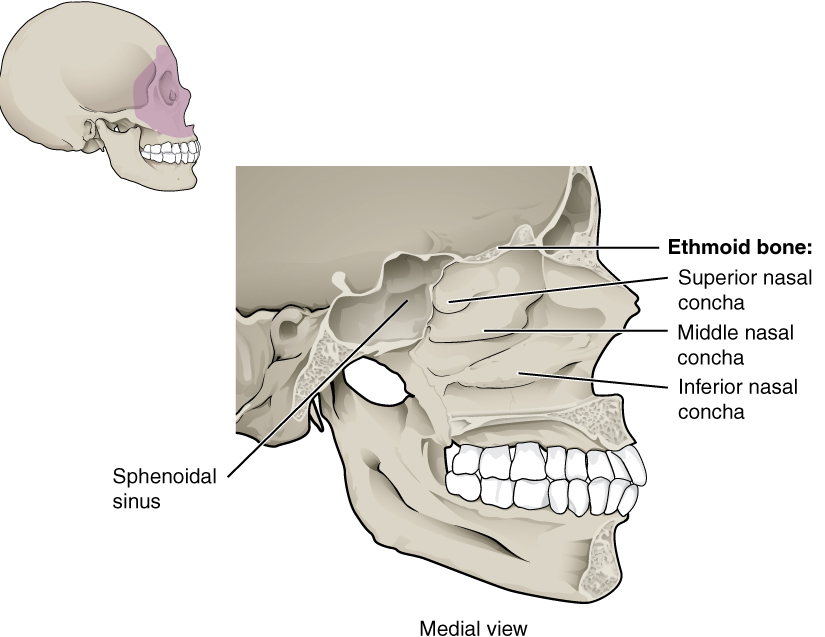
Nothing about the nasal cycle is visible from the outside. Inside each nostril, tissue lined with blood vessels can fill with blood and swell, narrowing that side's airway, or drain and open back up. The autonomic nervous system, the same wiring that governs heart rate and digestion without any conscious input, controls the switch. When one side congests, the other decongests to compensate, so total airflow through the nose barely changes even though the split between nostrils does.
A 2016 study in PLOS One that monitored 33 healthy, right-handed adults for 24 hours found the cycle averaged about two hours per side while people were awake, roughly 2.02 hours, and slowed to around 4.5 hours per side during sleep. Every participant favored the left nostril slightly more often than the right: about 2.63 hours of left-side dominance against 2.17 hours on the right, on average. Nobody has nailed down exactly why the body bothers. Benninger pointed to one working theory:
"Some people have speculated that it has to do with allowing moisture to build up on one side so that it doesn't get too dry."
Dr. Michael Benninger, Cleveland Clinic, to Live Science
How often does the dominant nostril switch?
Roughly every two hours while a person is awake, slowing to closer to four and a half hours per side during sleep, per the PLOS One measurements above. Medical News Today notes researchers have identified at least four distinct patterns of the cycle: a classic even swap between sides, a "parallel" version where both sides congest and decongest together, an irregular version with no set rhythm, and an acyclic pattern where volume barely shifts between nostrils at all. Most people never notice any of it.
Is it a problem if one nostril is always blocked?
Sometimes, and this is the distinction worth knowing. The nasal cycle alternates; a structural problem doesn't. Medical News Today lists a deviated septum, nasal polyps, and, less commonly, tumors as causes of a blockage that sits on the same side day after day rather than swapping back and forth, a pattern closer to why cold sores keep resurfacing in the exact same patch of skin than to the nasal cycle's constant rotation. A cycle that keeps rotating normally is nothing to worry about. A blockage that never moves, especially alongside facial pain, nosebleeds, or a lump that won't heal, is worth a doctor's look rather than a guess.
Does the nasal cycle explain a stuffy nose during a cold?
No, and this is where the two get confused. A cold or sinus infection typically inflames both nostrils at once, so a person feels blocked no matter where the nasal cycle happens to be that hour. Benninger told Live Science that decongestant sprays, exercise, and, in a detail backed by a 2021 study in the Ear, Nose & Throat Journal, sex can each temporarily open both nostrils at once. None of that resets or stops the underlying cycle; it just overrides it for a while.
The cycle also has a practical downside that shows up specifically at night. Lying on one side lets gravity pool extra blood in the lower nostril, congesting it further, which the PLOS One researchers noted directly: side-sleeping was linked to greater airflow through the opposite, upper nostril. If the nasal cycle has separately made that upper nostril the congested one at that hour, a person can end up with both sides partly blocked and wake up breathing through their mouth, in the same family of small, easily misread nighttime annoyances as why insect bites seem to itch worse after dark. Switching which side you sleep on is a low-effort fix worth trying before reaching for a spray.
None of this is a disorder to manage or a wellness hack to exploit, whatever certain breathing-technique corners of the internet claim about consciously controlling it. It is closer to a heartbeat: automatic, mostly silent, and only interesting the moment you actually stop to notice it, the way a fogged-up window on a cold morning makes it impossible not to.