Perseverance Finds Complex Organic Carbon in Martian Mudstone
The rover's laser found large carbon molecules sitting in ancient riverbed rock. What made them, biology or chemistry, is exactly what no one can yet say.
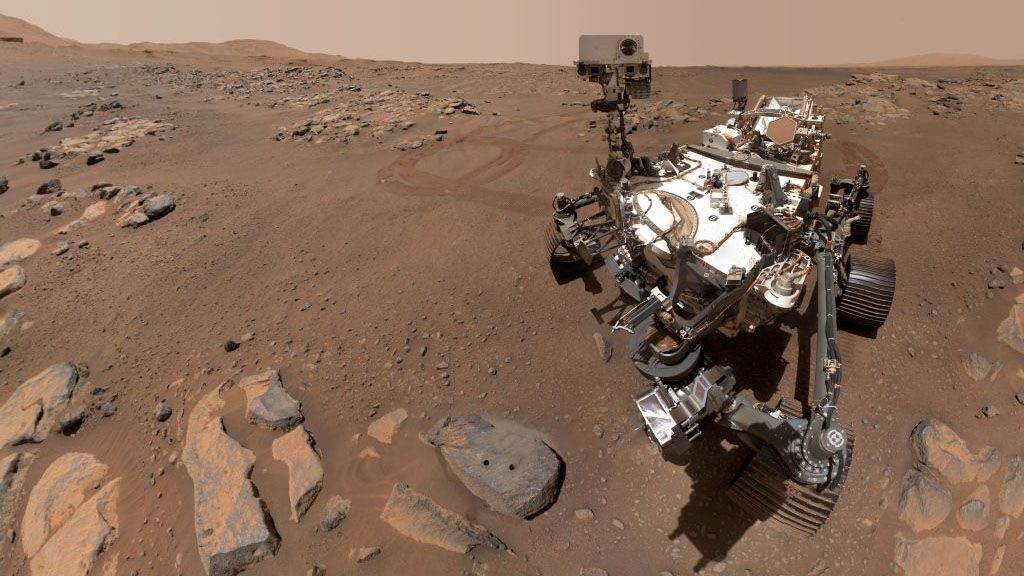
NASA's Perseverance rover has found intact, complex carbon molecules tucked inside two ancient mudstones in Jezero Crater, the strongest detection of organic material yet reported from the site. It is a real result, published Wednesday in Science Advances. It is not evidence of life, and the scientists who did the work are the first to say so.
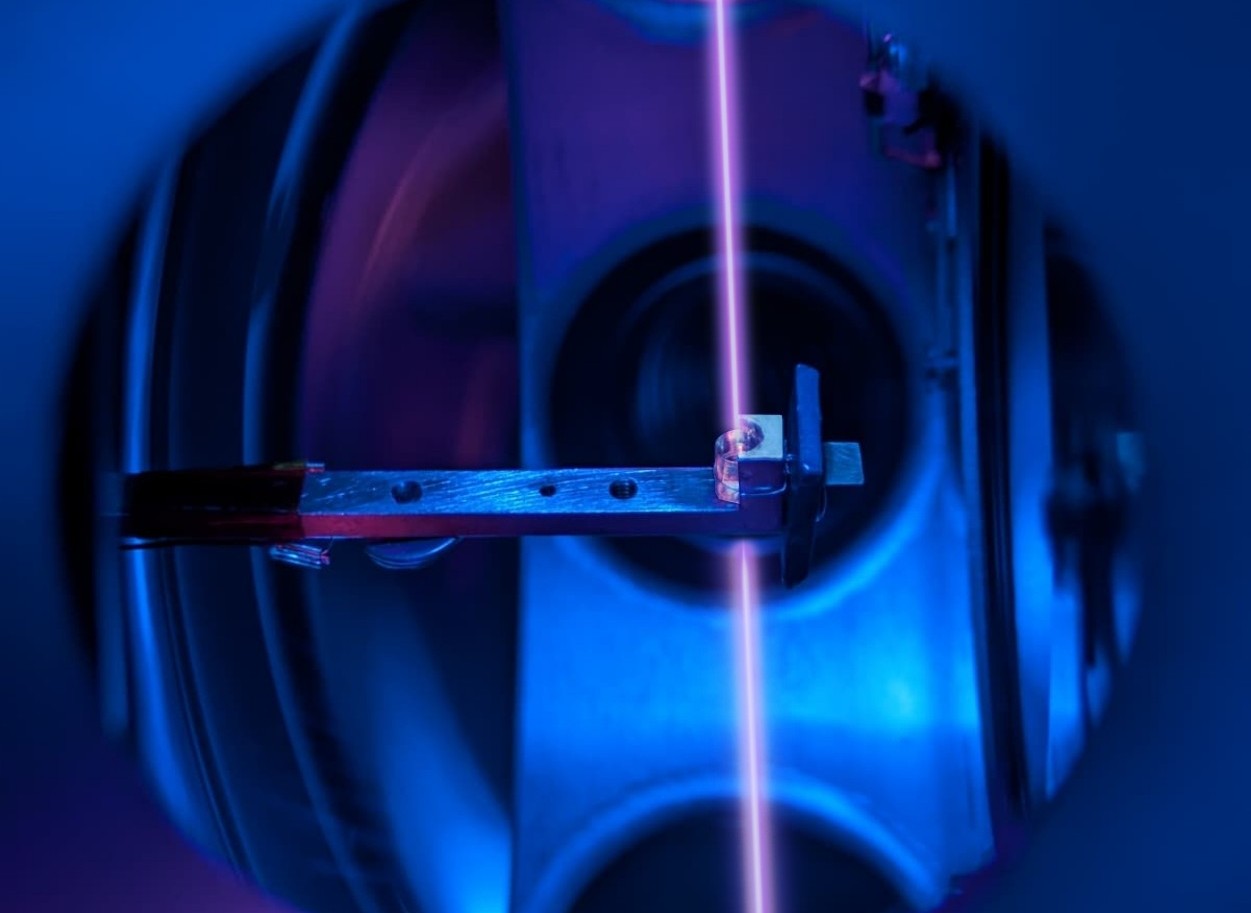
Here is what the rover actually measured. Its SHERLOC instrument, which fires an ultraviolet laser at rock and reads the light that scatters back, identified macromolecular carbon, or MMC, in two rocks in the Bright Angel outcrop: one nicknamed Cheyava Falls, the other Walhalla Glades. MMC is a large, tangled form of carbon-based molecule. On Earth it turns up around microbial fossils. It also forms with no biology involved at all, baked out of rock by hydrothermal heat, or delivered ready-made by meteorites.
That ambiguity is the whole story, and the researchers do not paper over it.
"This work shows that MMC is present in ancient Mars rocks," Adrian Broz, a planetary scientist at Purdue University and a co-author, told Eos. Still, he added, "it is unclear where or how these molecules originated."
Why it matters is a question of firsts. The Curiosity rover detected organic carbon years ago, but in ground-up bulk samples from Gale Crater. MMC had shown up only in Martian meteorites and at a single point of igneous rock in Jezero. This is the first time intact MMC has been identified at multiple spots on the Martian surface, and the first time in mudstones, the fine-grained rock that forms in standing water and is good at preserving chemistry. Billions of years ago Jezero held a lake; the Bright Angel rocks sat in a river valley that fed it.
Location is doing real work in the argument. In September 2025, scientists reported potential biosignatures resembling "leopard spots" at the same Bright Angel outcrop, which NASA science chief Nicola Fox called "the closest we've actually come to discovering ancient life on Mars." The new carbon detections overlap that evidence in space, and Broz wrote that the overlap "lends credence to the idea" that the MMC could be a potential biosignature too.
The caveats are not boilerplate. SHERLOC tells you carbon is there and something about its texture; it does not tell you the molecule's full structure or its origin. "It is possible that Mars had a way of abiotically manufacturing these types of features," Broz wrote, which is why he points to laboratory work, modeling and, ultimately, hauling the rocks home. Returning a sample to Earth, he said, is "ultimately required to fully address the question."
That is the rub. The samples Perseverance is caching are exactly the ones this debate needs, and the program meant to fly them back to Earth remains unsettled on cost and schedule. For comparison, the wider hunt for habitable worlds keeps widening: telescopes are reading the atmospheres of distant planets while the closest evidence sits in a tube on Mars, waiting for a ride.
For now the careful sentence is the honest one: the carbon is real, the lake was real, and the question of what wrote those molecules into the rock is still open.