Solar Cycle 25 Is Fading. The Auroras Might Not Be Yet
Solar Cycle 25 hit its peak in October 2024, but the history of two previous cycles suggests the biggest flares — and the biggest light shows — can still be ahead in 2026.
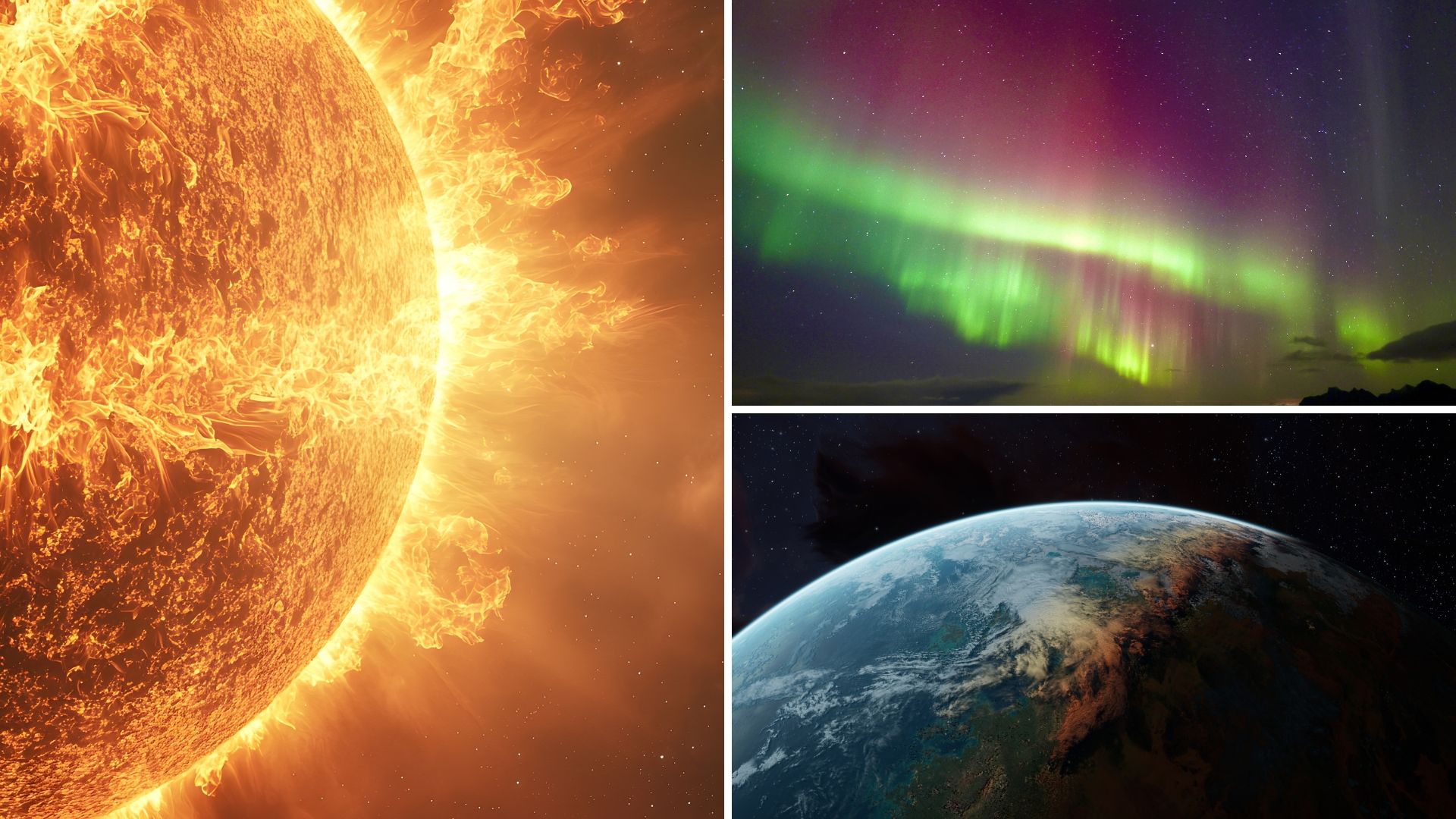
The sun's most explosive stretch in two decades is technically over. Solar physicists say Solar Cycle 25 reached its peak — solar maximum — back in October 2024, and every month since has been part of the slow decline. Nobody appears to have told the aurora.
Two of the past three solar cycles saved their single strongest flare for years after the "peak" had already passed, and skywatchers are being told that mid-March 2026 could be the last great window this decade to see the northern lights at lower latitudes — a mix of fading-but-real solar activity, a new moon, and orbital geometry that only lines up twice a year.
What does "solar maximum" actually measure?
The sun runs on an activity cycle of roughly 11 years, alternating between solar minimum, when sunspots, flares and coronal mass ejections can vanish for months, and solar maximum, when they spike. Solar Cycle 25 — the 25th tracked since astronomers began numbering them in 1755 — officially began at the last solar minimum in December 2019, according to solar physicist Ryan French, writing for Space.com. Solar maximum itself isn't one dramatic month; researchers define it after the fact, as the point where a 13-month rolling average of sunspot counts peaks. That point is now believed to have been October 2024.
That makes 2025 — and by extension 2026 — the declining phase: fewer sunspots, fewer flares, fewer coronal mass ejections, the plasma eruptions that go on to trigger geomagnetic storms when they strike Earth's magnetic field.
Are the flares actually getting weaker?
The numbers back up the decline. As of Dec. 10, 2025, the sun had produced 19 X-class solar flares — the most powerful category — for the year, only four of them above the X2.0 threshold, and the strongest an X5.1-class event on Nov. 11, 2025. In 2024, the sun produced more than 50 X-class flares, 20 of them at or above X2.0, including an X9-class flare on Oct. 3, 2024 that remains the strongest Earth-facing flare of the entire cycle.
Geomagnetic storms tell a similar story. The Nov. 11, 2025 flare triggered a G4, or "severe," geomagnetic storm — the third-strongest of the cycle so far. 2024 produced two storms stronger than that: a G5 "extreme" storm in May and a second G4 in October. Widespread aurora were reported around the world after both.
Why the decline isn't the end of the story
History is the reason forecasters aren't writing off 2026. Solar Cycle 23 peaked in 2001, but its most extreme flares came later: 10 flares stronger than X10-class occurred after the peak, spread across 2003, 2005 and 2006. The largest, in 2003, is estimated at roughly X40-class — so strong it exceeded the sensitivity of the era's detectors — and it fed back-to-back G5 "extreme" geomagnetic storms around Halloween 2003 that pushed aurora to some of the lowest latitudes seen in recent decades, two full years into that cycle's decline.
Solar Cycle 24 followed the same pattern in miniature. It peaked in 2014, but its two largest flares — an X13.3 and an X11.88 — didn't erupt until September 2017, more than three years later. Those particular flares weren't Earth-directed, so they produced no aurora display at all, a reminder that timing and aim matter as much as raw strength.
The takeaway solar physicists draw from that pattern: the total number of solar flares will keep falling through 2026, but individual flares can still be powerful, and if one lines up with Earth the way October 2024's or November 2025's did, a strong aurora display is still very much on the table.
Why is March 2026 the window to watch?
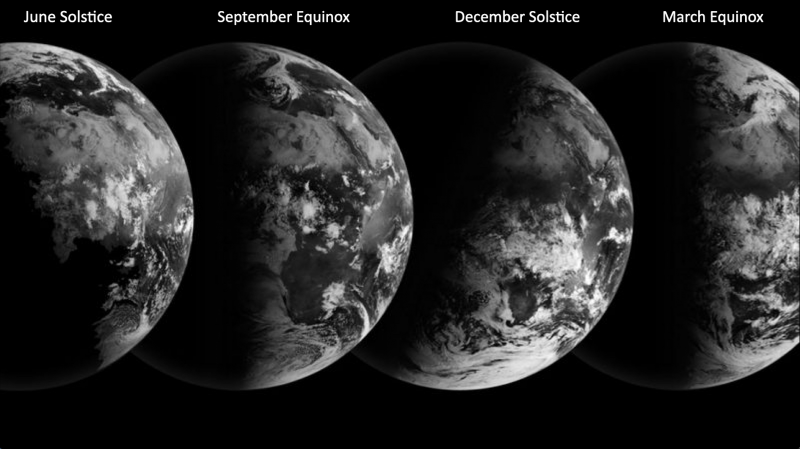
Skywatchers have circled a particular window: the nights around March 19, 2026, when a new moon leaves skies free of moonlight, days before the spring equinox on March 20. That timing isn't a coincidence of convenience — it's physics. Geomagnetic activity has long been observed to run stronger around the equinoxes, a pattern known as the Russell-McPherron effect after the 1973 paper that first described it: near the equinoxes, the sun's magnetic field aligns in a way that connects more easily with Earth's, letting more charged particles through and driving more intense storms.
NASA has called the geomagnetic storm of May 2024 — the same G5 event referenced above — the strongest at Earth in two decades, and possibly in 500 years. The next solar maximum isn't expected until the mid-2030s, which is why forecasters writing for Forbes are framing March 2026 as a plausible last, best chance of this decade for aurora to reach far outside their usual Arctic range.
None of it is guaranteed. Aurora forecasting still runs on short notice — a day or two once a coronal mass ejection is confirmed Earth-bound — and a quiet stretch of weeks is entirely possible even in a historically active cycle. But the mechanism that produced 2024's record-breaking storms hasn't switched off. It's just throwing fewer punches, on a slower clock.