Why Solar Storms Can Throw Your GPS Off by Yards
A burst of radiation from the sun can scramble the atmosphere GPS signals pass through — in 2024, it sent tractors and ships drifting off course.
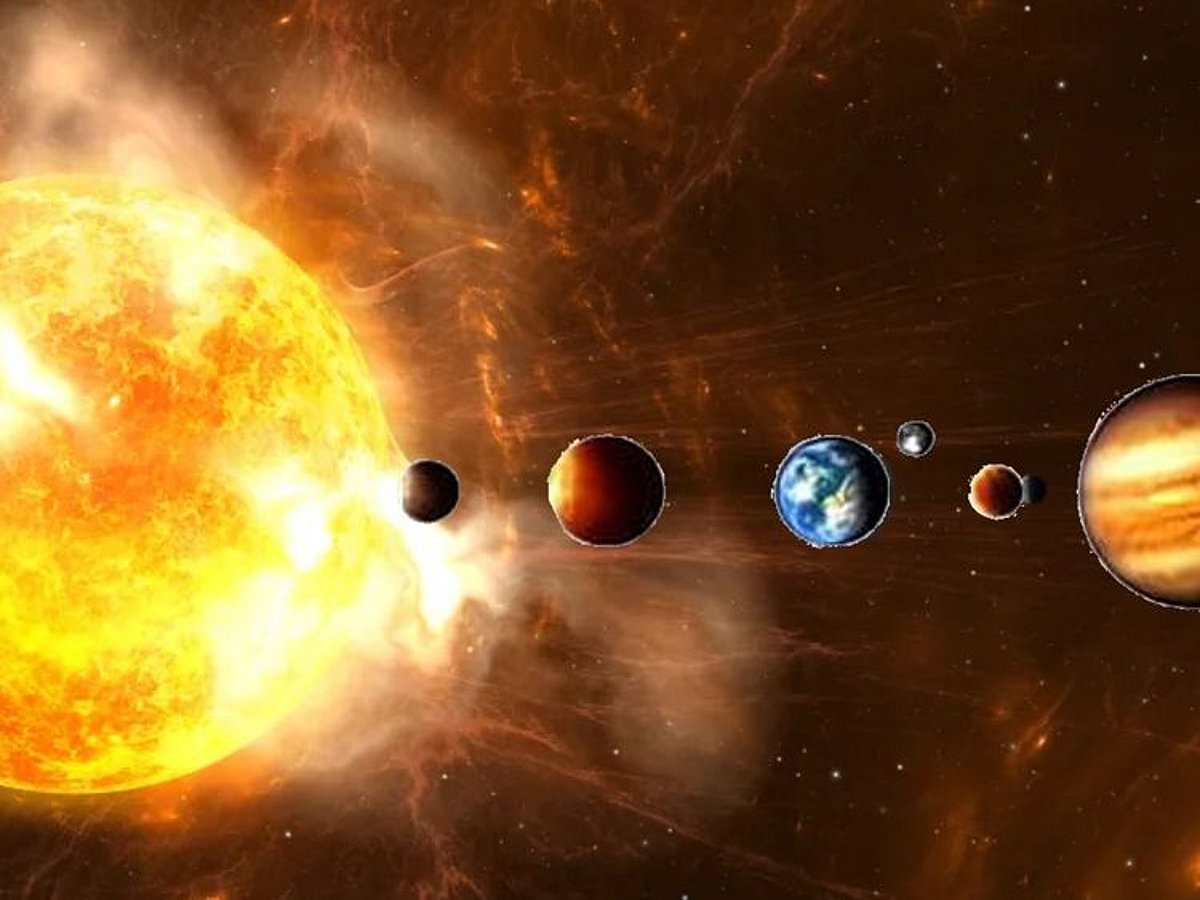
In February 2024, in the middle of planting season, GPS-guided tractors across the American Midwest started drifting off their rows. Nothing was wrong with the machines. Two solar flares, rated R3 on NOAA's space weather scale, had reached Earth and disturbed the layer of atmosphere GPS signals pass through on their way down.
Farmers noticed because autosteer systems are precise to inches; a few meters of drift is obvious in a freshly planted field. Everyone else's GPS drifted too — phones, ships, aircraft — but most people never had a straight row to compare it against.
The signal isn't blocked. It's delayed and bent.
GPS receivers work by timing radio signals from satellites roughly 12,500 miles up. The math assumes those signals cross the ionosphere — the electrically charged layer of atmosphere between about 50 and 400 miles up — at a predictable speed. A solar flare's burst of ultraviolet and X-ray radiation reaches Earth in about eight minutes and ionizes that layer far beyond normal, changing its electron density and, with it, the speed of the signal passing through.
The delay itself is usually small. What does more damage is a related effect called scintillation: rapid, irregular fluctuation in a GPS signal's amplitude and phase as it crosses a disturbed ionosphere. A receiver can lose lock on a satellite for a few seconds, long enough to throw off a position fix that depends on continuous tracking.
Flares arrive in minutes. The bigger threat takes days.
A solar flare is light — it reaches Earth in about eight minutes and is gone. A coronal mass ejection, or CME, is a different animal: a cloud of magnetized plasma that can weigh billions of tons and takes 15 hours to three days to arrive. When a CME hits Earth's magnetic field, it can trigger a geomagnetic storm, and geomagnetic storms are what do the real damage to navigation and infrastructure — a distinction this site has broken down separately; this piece focuses on what the storms do to GPS specifically.
The clearest recent case is the Gannon Storm of May 10-12, 2024. At least four Earth-directed CMEs, launched within roughly a day of each other, caught up with one another in space and merged — scientists call it a CME pile-up — arriving as one compressed, unusually powerful disturbance. NOAA rated it G5, Extreme, the top of its five-step scale and the first storm to reach that level since 2003.
GPS users across multiple continents reported positioning errors during the Gannon Storm; precision agriculture and marine surveying were hit hardest because those applications need centimeter- to meter-level accuracy, not just "close enough to find a street."
Past the peak doesn't mean past the risk
NASA and NOAA place the peak of the current 11-year solar cycle, Cycle 25, in late 2024. By the middle of 2026, researchers describe the sun as entering the cycle's declining phase — but they're careful to say that doesn't mean the threat has passed. Solar maximum is identified only in hindsight, using a smoothed 13-month average of sunspot counts, so nobody can point to a single day and call it the peak. The more visible byproduct of an active sun, aurora reaching unusually far south, is a separate story from the GPS problem, though both trace back to the same eruptions.
History isn't reassuring on timing, either: the Halloween Storms of 2003, among the most disruptive on record, hit during the declining phase of the previous cycle, not at its height. Solar Cycle 25 is expected to wind down toward a solar minimum around 2029 or 2030, with flares and CMEs gradually growing less frequent in the meantime. "Gradually" is doing a lot of work in that sentence — isolated severe storms remain possible with little warning until the cycle is essentially over.
What actually fixes it
Receiver manufacturers can't stop a CME, so the mitigation happens downstream. GNSS chipmakers build in algorithms that model ionospheric delay and flag when a fix has degraded past a usable threshold, rather than silently reporting a wrong position as a confident one. Aviation and maritime operators increasingly pair GPS with backup navigation — inertial systems, ground-based beacons — precisely because a multi-day CME watch gives them time to switch modes, even if it doesn't give them time to stop the storm. For a Midwest farmer mid-planting, the fix is blunter: check the accuracy readout, and if it's degraded, wait it out or drive the row by eye.