Why Aluminum Foil Has a Shiny Side and a Dull Side
The shiny and dull sides of aluminum foil come from a manufacturing quirk, not a cooking rule — and lab tests show almost no difference between them.
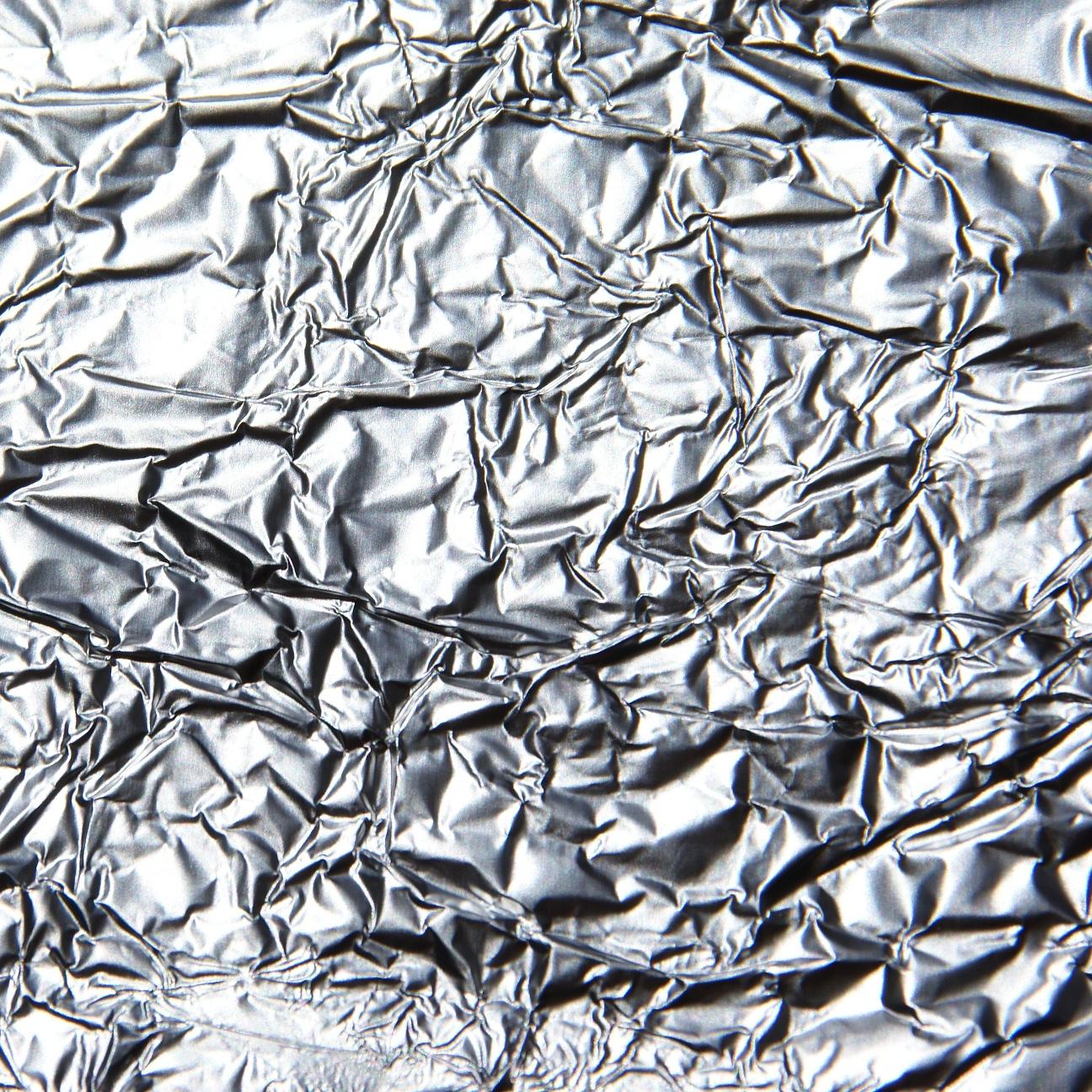
Every roll of aluminum foil ships with a built-in mystery. One side gleams. The other is matte. Cooks have argued for decades about which side belongs against the turkey, and the honest answer is that almost nobody making that argument has checked with the people who actually manufacture the stuff.
The people who manufacture the stuff have checked, repeatedly, and they say it doesn't matter.
Why does aluminum foil have a shiny side and a dull side?
It comes down to a step called milling. According to Reynolds Kitchens, the company behind the best-known household foil brand, sheets of aluminum start thick and get rolled progressively thinner between heavy steel rollers under tension and heat. By the final pass, the metal is so thin it would tear apart on its own — so mills run two layers through the rollers stacked together, doubled up for strength.
"Where the foil is in contact with another layer, that's the 'dull' side. The 'shiny' side is the side milled without being in contact with another sheet of metal. The performance of the foil is the same, whichever side you use."
Reynolds Kitchens, quoted by Reader's Digest
Peel the two sheets apart after milling and you get one side that touched polished steel rollers directly — mirror-bright — and one side that touched another sheet of soft aluminum instead of hardened steel, which comes out slightly matte. Same alloy, same thickness, same metal. The only difference is which surface a roller happened to press against on the last pass.
Does it matter which side of aluminum foil you cook with?
Cook's Illustrated, published by America's Test Kitchen, didn't take Reynolds' word for it. They ran three side-by-side experiments: two identical potatoes baked at 350 degrees, one wrapped shiny-side-out and one shiny-side-in; two beakers of 71-degree water, foil-wrapped the same way, baked 30 minutes; and two pans of cold mashed potatoes, covered and reheated for 45 minutes.
The potatoes hit the exact same internal temperature, 198 degrees, after an hour, regardless of which side faced out. The water test showed a 2-degree gap between the two setups. The mashed potatoes showed the same 2-degree gap. That's the entire performance difference between the sides of a sheet of foil: two degrees, in a test built specifically to find one.
A representative from Reynolds Consumer Products told America's Test Kitchen flatly that there's "no performance difference" between the two sides for standard foil, and the U.S. Department of Agriculture backs the same conclusion: both sides heat food equally well.
Is there any foil where the side actually matters?
Yes — non-stick foil, which is a different product entirely. Manufacturers coat only the dull side with a non-stick layer, since that's the side milled to be slightly rougher and better able to hold a coating. Use the wrong side of non-stick foil and food sticks exactly like it would to plain foil, because the coating simply isn't there. Non-stick rolls are labeled to say which face is which; standard foil, by contrast, has no correct orientation at all.
Should you worry about aluminum leaching into food?
This is where the science gets more interesting than the shiny-side debate, and where it actually pays to be careful. A 2019 study in Food Science & Nutrition, cited by Reader's Digest, baked 11 foods wrapped in foil at 425 degrees for 40 minutes and found that salmon, mackerel and duck breast absorbed the most aluminum of the foods tested. Separate Italian research in 2020 found aluminum migrating into beef, chicken and fish cooked wrapped in foil at 356 degrees for an hour. Acidic marinades and salt both appear to accelerate the transfer.
None of the researchers behind those studies are recommending panic. The amounts involved are small, and dietary aluminum exposure from foil is a minor slice of the aluminum most people already take in from food, water and cookware generally. But for anyone roasting fish or meat at high heat regularly, switching to a stainless steel pan or a parchment-lined sheet for those specific dishes is the one piece of foil advice from this whole debate actually worth adopting. Which side faces up is not.