Why Stink Bugs Smell Like Cilantro: The Shared Molecule Explained
The comparison is not in your head. Stink bugs and cilantro share an odor molecule, and the same chemistry helps explain why some people think the herb tastes like soap.
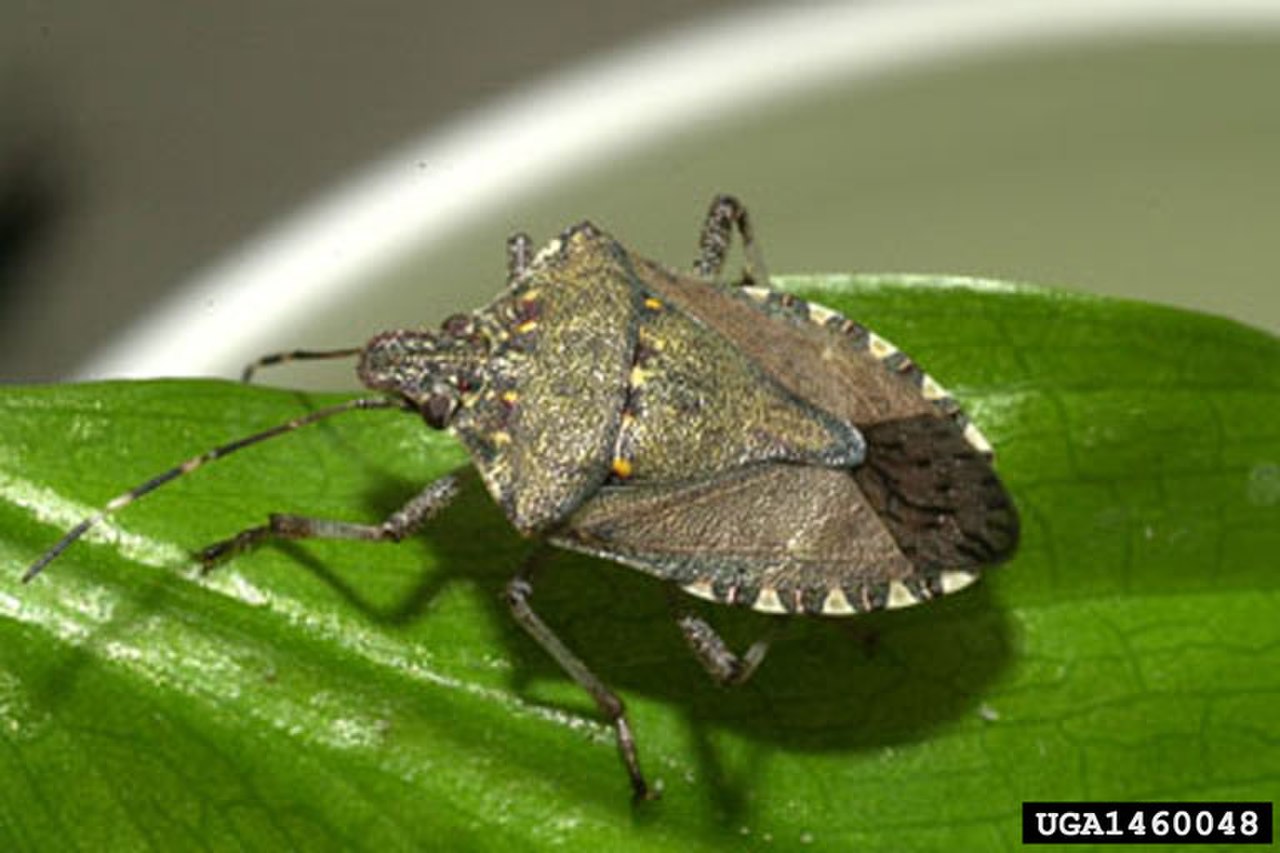
Flick a stink bug off the curtain in October and you may catch a smell that is weirdly familiar. Not rotten, not quite chemical. Green, sharp, a little soapy. Plenty of people land on the same comparison without being prompted: it smells like cilantro.
That is not a coincidence or a trick of the nose. The brown marmorated stink bug and the cilantro plant share at least one of the same odor molecules, and the overlap explains both why the bug smells the way it does and why some people can't stand the herb.
Why do stink bugs smell like cilantro?
Because both lean on a family of compounds called aldehydes, and one of them shows up in both places.
On the bug's side, researchers have identified two "alarm" aldehydes as the main source of the stink. A 2016 paper in the Journal of Pharmacognosy & Natural Products by Sagun and colleagues put it plainly: Trans-2-octenal and trans-2-decenal are the major alarm aldehydes responsible for the scent of Halyomorpha halys, the brown marmorated stink bug.
(The full study is available here.)
On the herb's side, cilantro's signature aroma also comes from aldehydes. A genetics study led by researchers at the consumer DNA company 23andMe described the key aroma components as "various aldehydes, in particular (E)-2-alkenals and n-aldehydes," and singled out (E)-2-decenal and (E)-2-dodecenal as the ones people describe as "soapy, fatty, 'like cilantro', or pungent" (Eriksson et al., 2012).
Here is the link. Trans-2-decenal and (E)-2-decenal are two names for the same molecule. Chemists use "trans" and "E" interchangeably for this kind of double bond. So when your nose files a crushed stink bug under "cilantro," it is not being fanciful. It is recognizing a shared ingredient.
The two odors are not identical, of course. The bug's blend leans on trans-2-octenal as well, and cilantro carries a broader mix of aldehydes. But the shared note is strong enough that the comparison comes up again and again.
What is the stink actually for?
Defense, mostly, with a twist. Stink bugs are one small corner of a vast group whose size is still being argued over; scientists keep revising how many insect species Earth holds. Earlier work had shown the aldehydes are antifungal and drive off predators. The Sagun team wanted to know whether they also fight bacteria, and in lab tests they did: the compounds "significantly inhibited the growth" of methicillin-resistant Staphylococcus aureus (MRSA), E. coli and Pseudomonas aeruginosa in vitro. Mealworm beetles coated in the aldehydes also showed a substantial reduction in bacterial colonization compared with untreated ones.
The authors' reading is that the smell does double duty: a warning to anything that wants to eat the bug, and a chemical coating against microbes. Those are lab results with bacteria in dishes and beetles in a controlled setting, so they say nothing about stink bug odor being good for people. But they explain why a bug would invest in such a pungent chemistry.
Why does cilantro taste like soap to some people?
The same aldehydes again, plus genetics.
The 23andMe study surveyed 14,604 participants of mainly European ancestry about whether cilantro tasted soapy, and 1,994 of them said yes, roughly one in seven. The researchers then hunted for genetic differences between the two groups and found a single variant significantly associated with detecting the soapy taste, confirmed in a separate group of 11,851 people asked simply whether they liked cilantro.
That variant sits in a cluster of smell-receptor genes that includes OR6A2, a receptor with "a high binding specificity for several of the aldehydes that give cilantro its characteristic odor," the authors wrote. Their proposal: OR6A2 "may be the olfactory receptor that contributes to the detection of a soapy smell from cilantro in European populations."
The dislike is old, too. The paper quotes the English herbalist John Gerard, who called cilantro a "very stinking herbe" with leaves of "venemous quality." Gerard would have had no way to know about aldehyde receptors, but he was apparently describing the same experience as anyone who picks every leaf out of their tacos today.
Why are stink bugs coming into the house now?
Because it is October. The brown marmorated stink bug is native to East Asia (China, Japan and Korea) and was "first collected in Allentown in 1998, although it probably arrived several years earlier," according to Penn State Extension. In fall, the adults are "attracted to the outside of houses on warm fall days in search of protected, overwintering sites."
Penn State is reassuring on the main worries: the bugs "will not reproduce inside structures or cause damage," and they don't bite. It is the same seasonal movement that sends other creatures indoors, though the popular belief that spiders move indoors every fall turns out to be mostly a myth.
Two practical notes follow straight from the chemistry. First, don't crush them barehanded. Penn State warns that if the insects "are crushed or smashed against exposed skin, they can produce dermatitis." Second, a vacuum works, but it will remember. If many bugs are vacuumed up, "the vacuum may acquire the smell of stink bugs for a period of time." That lingering odor is the aldehydes doing exactly what they evolved to do.
Which leaves one question nobody seems to have tested. If a single receptor helps some people pick out cilantro's aldehydes as soap, do those same people find stink bugs more offensive than everyone else does? The molecule is shared. The study hasn't been done. Anyone who hates both is welcome to consider themselves a data point.