Crimea's Gas Stations Run Dry as Ukraine Squeezes Every Supply Route
Rationed to 20 liters a week and watching pumps run empty, Russian-occupied Crimea is living through its worst fuel crisis since 2014 as Ukrainian drones close the peninsula's supply routes one by one.
Twenty liters a week. That is how much gasoline a car owner in Russian-occupied Crimea is allowed to buy under rationing imposed at the end of May: 5 1/3 gallons, secured with prepaid coupons that sold out almost the moment they appeared on an official messaging app channel.
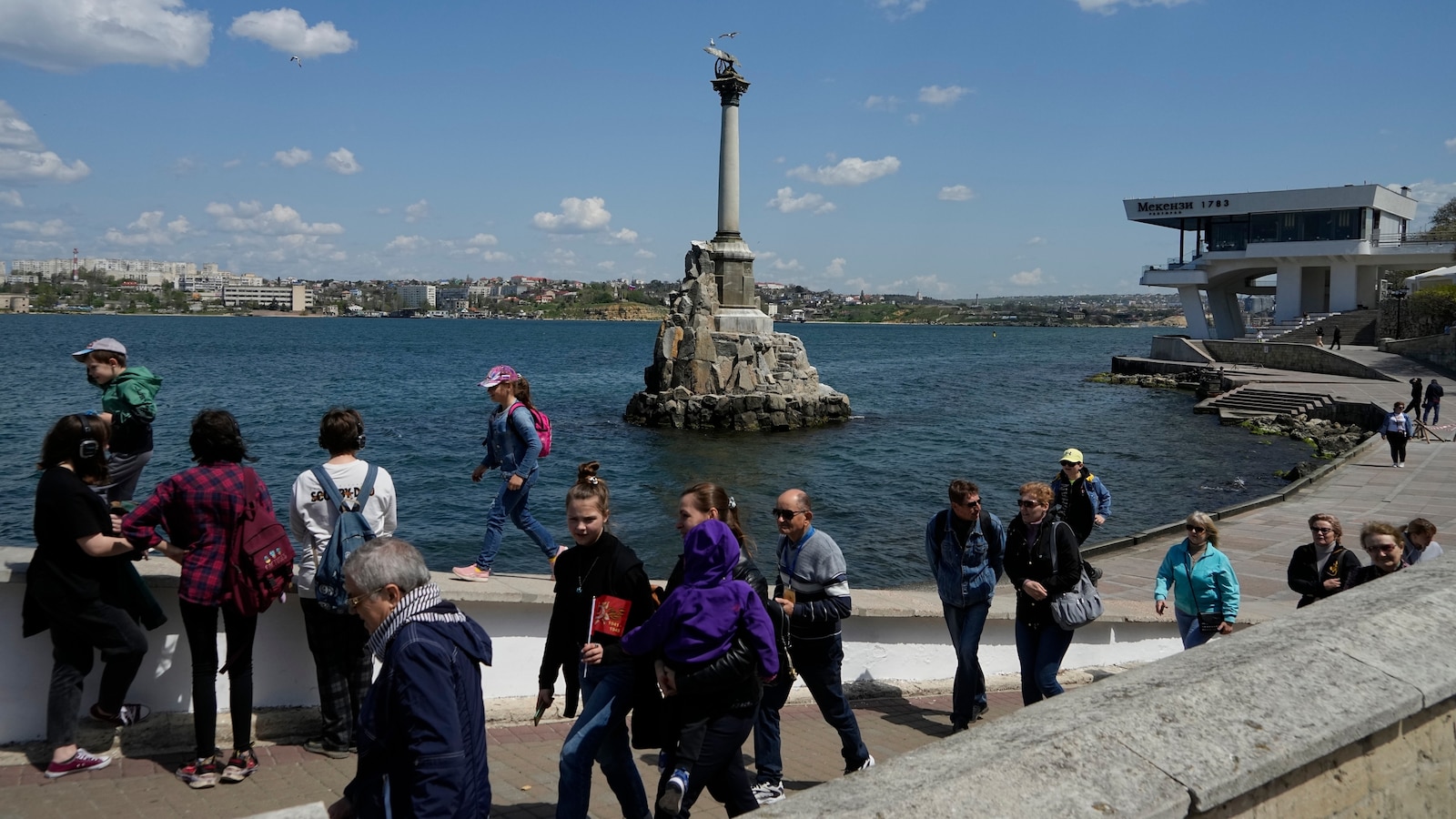
Even that ration is now hard to honor. Fuel stations across the peninsula ran out of petrol on Thursday, June 11, Reuters reported, with witnesses describing empty pumps at most stations in Sevastopol, Crimea's largest city, and a long line outside the only working station in the resort town of Yevpatoriya. The Associated Press calls it the worst fuel crisis Crimea has seen since Russia annexed the peninsula in 2014, the product of a methodical Ukrainian drone campaign against the refineries, depots, bridges and highways that keep the territory supplied.
The Kremlin, which rarely concedes that anything is wrong behind its own lines, has acknowledged this one. Spokesman Dmitry Peskov said this week that measures were being taken
to deal with the shortages.
How the routes closed, one by one
Crimea is fed by two lifelines: the Kerch Bridge from Russia and the road and rail corridor through occupied territory along the Sea of Azov. Ukraine has spent months working through both.
- Fuel shipments over the Kerch Bridge have long been suspended for security reasons after repeated attacks. A truck bomb in October 2022 killed five people and dropped two road sections; more strikes followed in 2023 and 2025.
- An oil terminal in Feodosia, which received fuel by barge, was struck in April, disrupting that route.
- Last month, drones began hitting tanker trucks on the Azov coast highway that Moscow had considered safe, leaving dozens of vehicles burning. Ukrainian commanders and open-source analysts say military cargo traffic on the R-280 route, which Russian forces call "Novorossiya" and Ukrainian troops call the "highway of death," has dropped by up to 71 percent in recent weeks, according to the Kyiv Post.
- This week, drones repeatedly hit the Chonhar Bridge linking Crimea to the occupied Kherson region, along with crossings over the North Crimean Canal and routes near Perekop and Armiansk. Authorities deployed pontoon bridges.
The Washington-based Institute for the Study of War sees the deep strikes on Russian refineries and the mid-range strikes on transport working in tandem.
"The long-range strike campaign is therefore reducing Russia's production capacity, while the midrange strike campaign is hurting Russia's ability to transport the gasoline Russia is still able to produce."
Institute for the Study of War analysis
A tourist season evaporates
The timing lands squarely on the peninsula's economic core. Friday is Russia Day, the holiday that traditionally opens the summer vacation season, and Crimea's beach resorts attracted nearly 7 million tourists last year. The business daily Kommersant reported that nearly 80% of hotel bookings were canceled in late May and early June. Some hotels began offering free gasoline as a booking bonus; the offers were quickly snapped up.
Travelers have other reasons to hesitate. A Ukrainian drone attack this week on a passenger train running from Moscow to Crimea injured the driver and killed his assistant, briefly halting service. An earlier strike on a commuter train in Crimea killed one person and injured three others, pushing authorities to limit daytime service.
Motorists who bring their own fuel over the Kerch Bridge are limited to 100 liters per vehicle, about 26 1/2 gallons, and some speculators are reselling gasoline at double the market price, the AP reported. Authorities have opened a hotline for tourists who find themselves stranded.
The strain is not confined to the peninsula. Fuel shortages have been reported in around a dozen Russian regions, according to Reuters, and Deputy Prime Minister Alexander Novak said the government is building a regional forecasting system to spot fuel-market bottlenecks. State-owned Sberbank has warned that rising fuel prices add to Russia's inflation risk.
On Thursday, the full-scale war passed its 1,569th day — longer than World War I.
That leaves the ferries. With the bridge shut to fuel and the highway under fire, more of Crimea's gasoline now has to cross the Kerch Strait by sea, a slower and more exposed route that Russian military bloggers want guarded by escorts. The Defense Ministry has said nothing about the strikes on the land corridor. Sevastopol's Moscow-installed governor, Mikhail Razvozhayev, offered the plainest measure of the squeeze: even the rationed petrol could not be handed out on schedule this week, because the trucks carrying it could not get into the city.