Indonesia's Dry-Ice Haze Trial Will Be Hard to Judge, and Harder to Scale
Palembang's airport read 50 meters of visibility on the morning Indonesia's first dry-ice flight was due. A cheap experiment is worth trying, but haze that swings on its own and 1.5 tons of ice against a city's worth of air make success hard to prove.
At 5 a.m. local time on Thursday, Oct. 15, Palembang's Sultan Mahmud Badaruddin II Airport logged visibility of 50 meters, its worst reading for flights this fire season, Kompas reported. Between 6 and 8 a.m. the Ampera Bridge all but vanished into the smoke. Drivers crept through intersections on headlights and horns.
That was the morning Indonesia's first dry-ice plane was due. Cessna aircraft were to scatter 1.5 tons of frozen carbon dioxide over Palembang and an adjacent district. A day earlier, the Coordinating Ministry for Political and Security Affairs said the operation is expected to raise visibility from about 1,000 meters to 5,000 meters or more
(translated from Indonesian). Thursday's starting point was not 1,000 meters. It was 50.
On Thursday, Oct. 15, 2026, Indonesia began testing whether dry ice dropped from small aircraft can puncture the temperature inversion that traps wildfire smoke over the South Sumatran capital, on President Prabowo Subianto's order and in the country's worst fire season in more than a decade. It is a cheap, low-risk experiment worth running. But as it is set up, it will be very hard to tell whether it worked, and the physics suggests it will be harder still to scale.
The BBC reported that aircraft were deployed on Thursday to scatter the pellets. Results had not been published by Thursday afternoon.
According to BMKG data reported by Kompas, PM2.5 (the fine particles that reach deep into the lungs) hit 1,134.5 micrograms per cubic meter at 2 a.m. WIB, Palembang's highest in two months. Visibility stayed below 1,000 meters on average until 1:30 p.m. By 7 a.m., seven flights had been disrupted.
A cold trick aimed at a warm lid
Normally air gets colder with height, so smoke near the ground can rise and thin out. In a temperature inversion, a warmer layer sits on top like a lid and holds the smoke down. Budi Harsoyo, director of weather-modification operations at BMKG, Indonesia's meteorology agency, told Bloomberg that the dry ice is meant to break that lid. In theory, he said, it rapidly cools the surrounding air and disrupts the inversion so the pollution can disperse.
Wandayantolis, BMKG's climatology chief in South Sumatra, told Kompas the pellets are CO2 frozen to minus 70-something degrees Celsius, aimed at an inversion layer 6,000 to 7,000 feet above the ground. If suitable clouds happen to be present, the cold can also freeze droplets.
So this is not the cloud seeding the region has watched for weeks. Indonesia's usual operations scatter salt into potential rain clouds, and South Sumatra has run more than 70 of them, Bloomberg reported. Malaysia has flown 11 cloud-seeding missions since late August. Unlike conventional seeding, Bloomberg reported, dry ice needs no clouds and is not meant to make rain. (The mix-up has deep roots: in 1946 the American researcher Vincent Schaefer found that dry ice could make ice form inside clouds, the origin of "dry ice cloud seeding.")
The approach came from Thailand. South Sumatra Governor Herman Deru said the plan grew out of Indonesia–Thailand cooperation, with priority for airports and military airfields. That focus is the design's best feature. Harsoyo said crews will work upwind of airports, where clearer air could let water-bombing and cloud-seeding planes fly again. A few clear hours at a runway could matter more than any gain over a neighborhood.
View this post by Indonesia's Coordinating Ministry for Political and Security Affairs on Instagram
Yet the ministry's yardstick sets a strange bar. Going from about 1,000 meters to 5,000 is a fivefold gain. From Thursday's 50 meters, it would be a hundredfold one. Harsoyo himself said the technique's effectiveness against wildfire haze in tropical conditions had yet to be established
, Bloomberg reported.
1.5 tons against a sky's worth of air
A rough energy budget shows why expectations should stay modest. Dry ice skips melting and turns straight into gas, a change called sublimation (why dry ice never melts explains it), and that change soaks up heat. Each kilogram absorbs about 573 kilojoules just turning to gas, and about 657 once the gas warms to air temperature.
So 1.5 tons absorbs roughly 0.86 to 0.99 gigajoules. Spread through a slab of air 1 kilometer square and 100 meters thick at about 2,000 meters up, which weighs about 100,000 tonnes, that cools it by less than one-hundredth of a degree Celsius. The whole load could chill a block of air about the size of a 100-meter cube by 1°C. A city is many thousands of such blocks.
That Daybreak Wire estimate is not a knockout. Proponents do not claim to cool the whole sky; the idea is a local puncture that lets trapped air mix upward through the hole. But that is exactly why any result will be local, and why it needs careful measurement. Neither Indonesia nor Thailand has published a controlled evaluation in the material available.
Then there is the supply of smoke. South Sumatra's fire-control system logged 2,142 hotspots by 2 p.m. WIB Thursday, Kompas reported, and satellite analysis points to burning peat around Cengal and Pangkalan Lampam as the main source. Peat fires smoulder beneath the surface and can re-emerge, Berton Panjaitan, a spokesperson for the disaster mitigation agency, said, Reuters reported.
"Weather systems are all moving from east to west. So if you're in a town under that and you clear the smoke, there's gonna be more blowing all the time."
Rick McRae, adjunct professor, University of New South Wales bushfire research group (to the Guardian)
Thailand shows how success gets scored
Thailand's Royal Rainmaking department has flown this play since 2024. AFP reported in January 2025 that it sends aircraft up twice a day to spray cold water or dry ice into the warm layer, climbing to around 1,500 meters with a tonne aboard. A flight can cost up to $1,500. That is cheap, and it is why the idea deserves a fair trial.
"This is not the usual cloud seeding."
Chanti Detyothin, head of Thailand's dry-ice programme (AFP, January 2025)
But critics say there is little to no evidence it works, AFP reported, and the scorekeeping shows why. According to The Nation, the department compares readings at 8 a.m. with readings after later operations, and those comparisons reportedly show consistent improvement. The same report noted that pollution there typically peaks between midnight and 2 a.m. A morning baseline is already past the worst.
Deputy Director-General Rachen Silparaya credited one improvement partly to strong winds from a high-pressure system out of China, and said stopping the burning is the most effective solution. Ekbordin Winijkul of the Asian Institute of Technology put it plainly: Before we try to do something
… at least we should have confidence in the data first
.
Singapore's readings show the trap
Western Singapore's one-hour PM2.5 reached 288 µg/m³ at 3 p.m. Singapore time on Wednesday, Oct. 14, the peak of six hours in the "Very High" band of Singapore's National Environment Agency. By 4 a.m. Thursday it read 76.
That is a 73.6% drop in 13 hours, by a Daybreak Wire analysis of NEA's hourly data, with no intervention over Singapore at all. Then the haze returned: central Singapore climbed to 205 by 5 p.m. Thursday. Had a plane dropped dry ice over western Singapore on Wednesday evening, its crew could have claimed a cut of nearly three-quarters.
The slower gauge tells the season's story. Western Singapore's 24-hour PSI crossed 200 into "very unhealthy" at 9 p.m. Wednesday, the first time any region had done so since Aug. 1, and peaked at 212 at noon Thursday.
Palembang's readings swing within a day too, on a different clock: its worst readings came between 1 and 5 a.m., and visibility improved through the morning. Any comparison that starts at dawn will flatter the dry ice.
"We will first assess the results and, if effective, this method could potentially be implemented in other areas."
Dudung Abdurachman, coordinating minister for political and security affairs (ABC/AFP)
If the trial succeeds, Dudung said, Central Kalimantan would be next, the BBC reported. A fair assessment would compare readings under the drop zone with a similar area that got no ice, at the same hours. Without that, the result will be a story, not a finding.
What the numbers mean downwind
Palembang's peak was 3.94 times Singapore's this week and 2.41 times Singapore's national record from the 2015 fires.
| Place, time | Reading | What it means |
|---|---|---|
| Palembang, 2 a.m. Thu Oct. 15 | PM2.5 1,134.5 µg/m³ | BMKG data; highest in two months |
| Western Singapore, 3 p.m. Wed Oct. 14 | PM2.5 288 µg/m³ (1-hour) | NEA "Very High" (≥251) |
| Western Singapore, noon Thu Oct. 15 | 24-hour PSI 212 | NEA "Very unhealthy" (201–300) |
| Western Singapore, October 2015 | PM2.5 471 µg/m³ | national record |
| Central Kalimantan, Wed Oct. 14 | ISPU index above 1,200 | four times "hazardous" (300); an index, not µg/m³ |
NEA's rule of thumb: check the one-hour PM2.5 for the next few hours and the 24-hour PSI forecast for tomorrow. Under NEA's activity guide, "High" (151 to 250) means avoiding strenuous outdoor activity for the next hour, and "Very High" (251 or more) means minimising all outdoor activity. The elderly, pregnant women, children and people with chronic lung or heart disease should avoid outdoor activity entirely at either level. Since Monday, Oct. 12, Singapore has revived haze medical subsidies last used in 2015 and is handing out N95 masks to eligible residents.
East Timor began a three-day nationwide school closure on Thursday and urged families to keep children indoors. AFP described a yellow-tinged sky over Dili, with most people masked.
"This pollution is very dangerous, it can make us sick."
Felicidade Alves dos Santos Martins, a parent in Dili (AFP)
The smoke has reached the Philippines too. On Tuesday, Sept. 1, haze linked to Kalimantan fires pushed 11 Metro Manila stations to "Acutely Unhealthy," and Talisay City in Cebu recorded "Very Unhealthy," Explained PH reported; regional environment officials advised masks and less time outdoors.
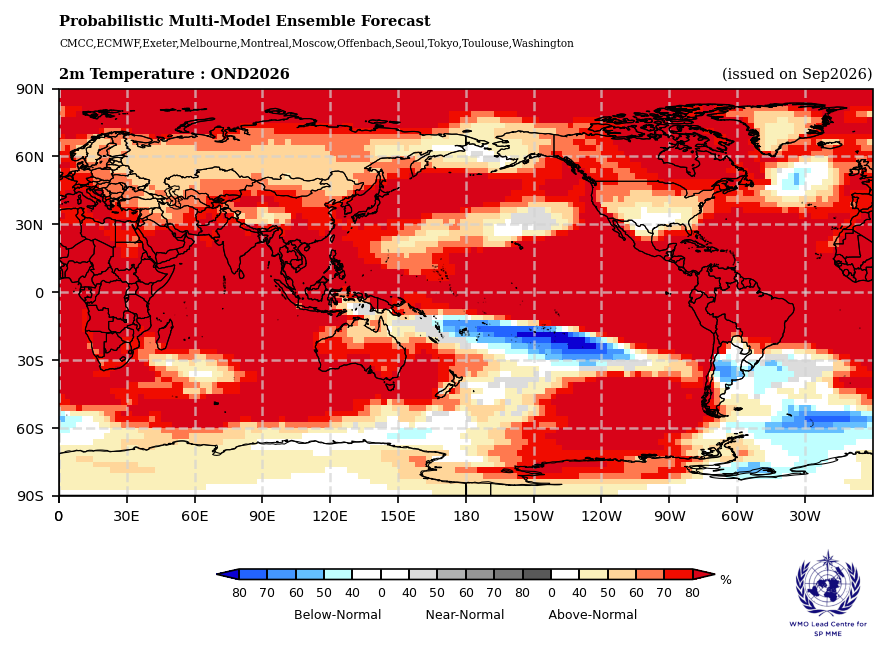
AFP, carried by ABC, reported more than 280,000 respiratory problems in haze-affected regions since Aug. 18. The Guardian reported that tens of thousands of people have sought treatment for haze-linked respiratory illness. Behind both is a drought worsened by El Niño (see the NOAA advisory on a very strong El Niño) and almost 900,000 hectares burned since January.
Panjaitan's agency has already said what ends this: We must recognise that the only way to resolve this is through sustained rainfall.
The ASEAN Specialised Meteorological Centre's outlook on Thursday morning offered little of that, forecasting dry weather across most of the southern region and a continued risk of severe transboundary haze. So the real test of Thursday's flight is not how Palembang's sky looks this afternoon. It is whether BMKG publishes its before-and-after readings against an untouched comparison area, while the peat to the southeast keeps burning.