IPCC Delay Fight Hinges on Two Reports and a Trust Fund Running Dry
After 1,000 days without an agreed report timeline, the IPCC's Addis Ababa session is also deciding whether the panel can set a 2027 budget at all.
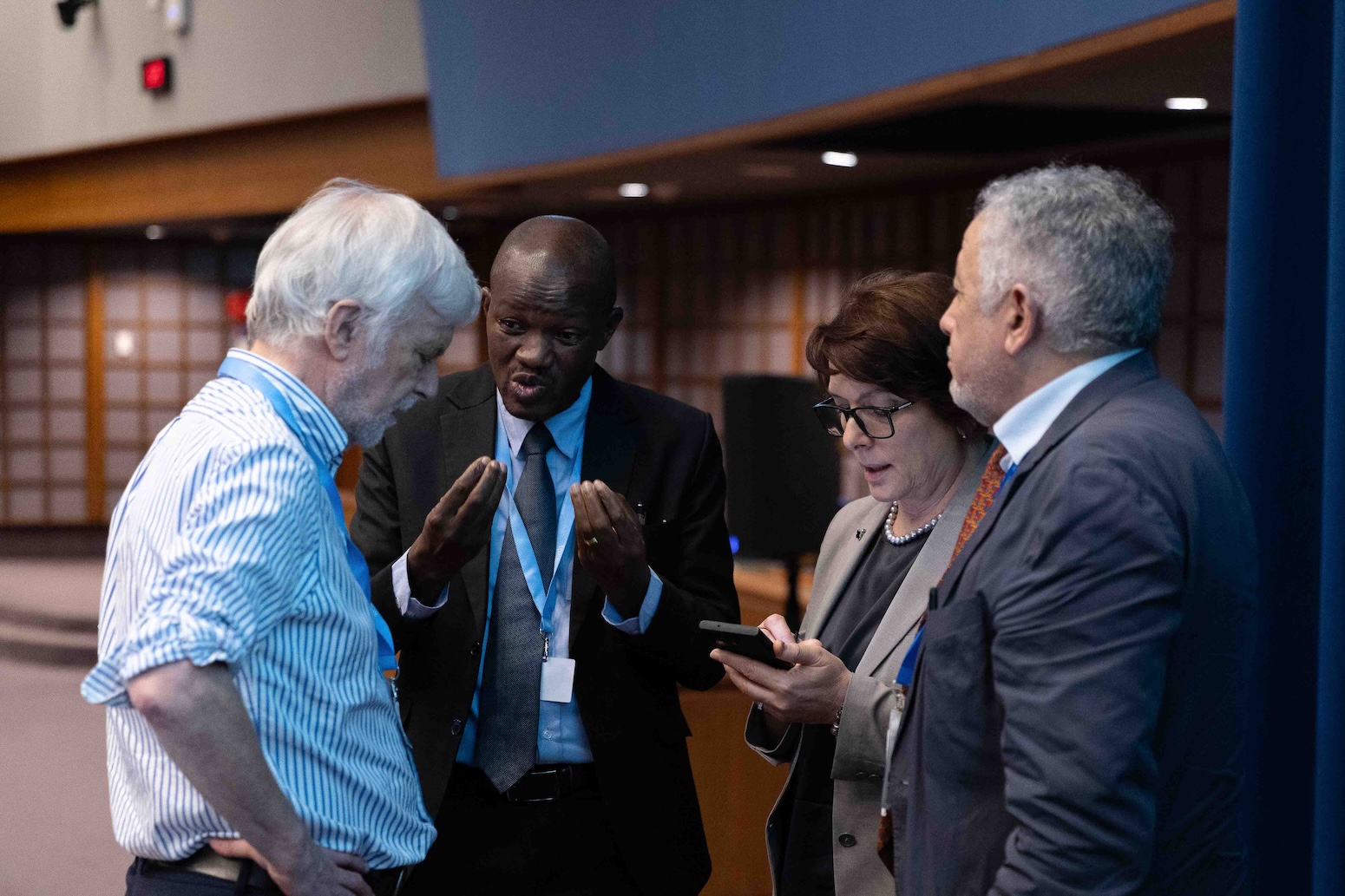
Robert Vautard, a French co-chair of the IPCC's physical-science working group, told Reuters that report timelines are typically approved in "a matter of minutes." This one has now been on the table for 1,000 days, counted from the opening of the Istanbul session on Jan. 16, 2024, to the opening of the Addis Ababa session on Monday.
The Intergovernmental Panel on Climate Change (IPCC) opened its 65th session on Monday, Oct. 12, at the newly inaugurated Ethiopian Meteorological Institute in Addis Ababa. After the opening, the doors closed to the media. The IPCC says the agenda is "led by a discussion of the timelines for the three Working Group contributions" to its Seventh Assessment Report, known as AR7. It is the sixth session to take up the question.
So will the reports arrive in 2028 or 2029? As of Tuesday, nobody knows. The panel's 195 member governments are meeting from Oct. 12 to 16 to decide whether AR7's three reports land before the 2028 global stocktake under the Paris Agreement or slip into 2029. That decision now also decides the IPCC's 2027 budget.
The fight is usually told as science against petro-states. Read the ledger instead and a plainer question emerges: whether the IPCC can keep functioning at all. The report calendar has become the price of a budget, and a panel whose donors are covering about a third of this year's bill cannot easily afford a sixth deferral.
Two calendars, one stocktake
The report co-chairs propose approving all three Working Group reports by September 2028. Reuters quotes the plan as one "that would see all three approved by September 2028." A Lima compromise, reported by Carbon Brief citing the Earth Negotiations Bulletin (ENB), set the second and third reports for July and September 2028.
A bloc that Reuters lists as "India, Kenya, Saudi Arabia, Russia and China" wants the physical-science report in 2028 and the other two in 2029. The Guardian describes the group as "led by Saudi Arabia and Russia and including India and China." IPCC chair Jim Skea has counted four proposals in contention, two of each kind, and told Carbon Brief all are feasible "in principle" if countries show flexibility.
| Report | Co-chairs' plan (Lima compromise) | Delay bloc's plan |
|---|---|---|
| WGI physical science | 2028 | 2028 |
| WGII impacts and adaptation | July 2028 | 2029 |
| WGIII mitigation | September 2028 | 2029 |
| Synthesis Report | by late 2029 (agreed) | by late 2029 (agreed) |
The dates matter because of the global stocktake, the Paris Agreement's five-yearly audit of whether countries are on track. The second one ends at COP33 in November 2028. Its information-collection phase opens at COP31 in Antalya, Turkey, next month, a technical assessment runs from June 2027 to June 2028, and a political phase culminates at COP33, according to Carbon Brief.
Under the Lima compromise, the physical-science report would be ready during the technical phase, and the impacts and mitigation reports could feed the final political talks. Under the 2029 plan, both would arrive after COP33 has closed. Governments would then judge their emissions efforts using the IPCC mitigation report published in April 2022, about six and a half years (79 months) old by November 2028. Reuters reports that the 2028 camp says negotiators "would otherwise have to rely on reports published in 2021-22."
Some observers think even 2028 is too late. "It is already kind of late," said Matti Goldberg, director of international climate policy at the Woodwell Climate Research Center and a former UNFCCC secretariat staffer. "If you want to have a meaningful consideration of the IPCC reports in the global stocktake, they need to be there now or at the beginning of the information collection stage."
A decision that used to take minutes
The AR7 cycle formally began in July 2023 in Nairobi. That makes 39 months and counting without an agreed timeline. According to a Carbon Brief tally of past cycles, the six earlier assessments took between seven and 23 months, an average of 16. AR7 has already run about 1.7 times as long as the previous record.
Reuters calls the standoff "unprecedented in the IPCC's history." At the Bangkok session in March, the Netherlands said "never before has the timeline given rise to such heated and polarized debate," according to ENB.
In Bangkok the timeline was left off the provisional agenda and added only on day one, after objections from Saudi Arabia, India, China, Kenya, South Africa, Russia and others. In Hangzhou in February 2025, the session ran more than a day over, and many smaller island and least-developed-country delegations had gone home before the end, Climate Analytics reported. Skea's own verdict on Bangkok was blunt: "We made some formal decisions by consensus, but I would say they were more to postpone the decision making than they were to take decisions."
The budget riding on the dates
Without a timeline, the IPCC cannot set a 2027 budget. Skea told Carbon Brief a decision was needed before the end of 2026 (79 days from today).
The money is already short. Skea told delegates on Monday that incoming voluntary contributions "amount to about a third of the Panel-approved 2026 budget." The secretariat had warned in March that "in 2024 and 2025 expenditures from the IPCC Trust Fund exceeded contributions" and that the cash balance "will be fully depleted by the end of 2028," according to the Earth Negotiations Bulletin's record of the Bangkok session.
The United States, the IPCC's biggest funder, quit in January, Reuters reports. Climate Home says that under President Joe Biden it gave "an average of $1.7 million a year." South Korea has said it will double its contribution and Sweden committed to a 150% increase. But the EU, among the top three contributors, cautioned against assuming past donors will give the same amounts, the UK is reviewing its contribution and Japan called the situation "alarming."
The lever cuts both ways. In Bangkok it was Saudi Arabia, supported by India, that tied the timeline to "approving the AR7 budget and activities in 2027," warning that deferral risked a budget that "would not be approved." Piers Forster, a University of Leeds professor and former IPCC lead author, argued in a Climate Home opinion piece that "in the face of signals that the Saudis, for example, are prepared to block the IPCC's budget if they don't get their way, some governments are leaning towards appeasement."
Here is the irony. The IPCC calls the Trust Fund "the key mechanism enabling participation by developing-country governments and scientists," and Climate Home reports that most of the money goes to exactly that. A failed budget would hit first the people the delay is meant to protect. Richard Klein, involved in the IPCC since 1994, put the squeeze plainly: "In the end it means more pressure on authors who are already volunteering their time, and quite possibly less inclusivity of experts from developing countries."
An inclusivity case with real weight
The case for more time deserves its strongest form. Scientists from less-resourced countries, the delay camp told Reuters, "struggle to publish new research in time to be included or to take time off from their regular jobs for unpaid IPCC work." Patricia Nying'uro, Kenya's IPCC focal point, said: "The current timeline does not provide adequate time for developing countries to conduct research, publish their findings and have meaningful input."
Joyce Kimutai, who represents Kenya at the IPCC, told Reuters: "If you have a process that goes very quickly … it wouldn't be inclusive." India set out three principles in Bangkok: enough time for government reviews "with no back-to-back reviews," no overlap between reviews and UN climate negotiating sessions, and a minimum period for authors to absorb review comments. It called developing-country inclusivity a crucial issue. Thiagarajan Jayaraman, who represents India, called it "short-sighted" to rest the body's value solely on the 2028 talks, and said "equity and inclusivity" are in some instances "simply ducked."
At Bangkok, Saudi Arabia argued that the IPCC "serves a broader mandate than just providing inputs to the Global Stocktake" and that "compressing the cycle to meet external timelines is improper," according to the Earth Negotiations Bulletin's summary. Russia's economy ministry told Reuters the oil-producer framing was a "deliberate misrepresentation."
The replies are pointed. Hungary argued in Bangkok that "extending deadlines does not increase inclusivity," ENB recorded. Saint Kitts and Nevis called the schedule "neither compressed nor rushed," and Luxembourg argued AR5, not the pandemic-slowed AR6, is the fair comparison. Claudio Angelo of Brazil's Observatório do Clima told the Guardian that the equity problem is real but "not a problem that can be fixed just by giving the IPCC an extra few months to work."
"It is in the interest of some countries to ensure that the IPCC reports are not published on time. But there are also interesting and legitimate comments on inclusivity and diversity."
Kari de Pryck, lecturer, Institute for Environmental Sciences, University of Geneva
Both things can be true, and the ledger suggests the remedy for the second lies more in money than in months.
The science keeps moving
AR7 work has not stopped. Skea said the physical-science expert review concluded earlier this month, the impacts review began last week and the mitigation group held its second lead-author meeting two weeks ago. A special report on climate change and cities goes to an approval plenary in less than six months. AR7 will also carry, for the first time, chapters on climate finance and on addressing irreversible harm, Reuters reports, written in a world where 2024 averaged more than 1.5C above pre-industrial levels for the first time (the backdrop to what climate overshoot means now).
"But our authors deserve clarity and certainty about the key dates and duration of their volunteering commitment to IPCC so they can plan their private and professional lives accordingly," Skea told the opening session.
The closing session is set for Friday, Oct. 16. Until then, around a thousand volunteer authors keep drafting chapters for reports that still have no approval dates, paid for by a fund that, on its current trajectory, runs out the year the stocktake ends.