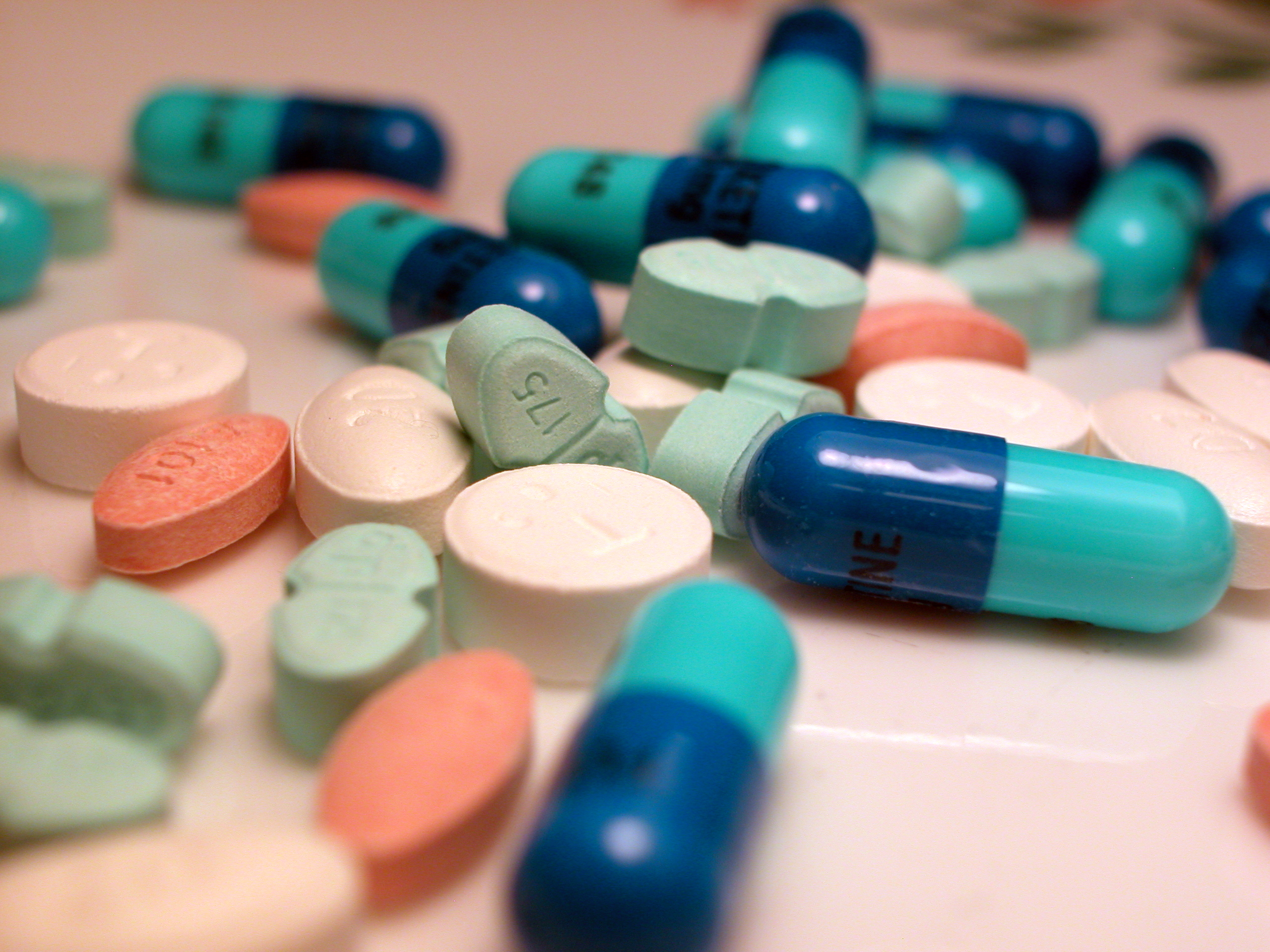
Why Pharmacies Cap How Much Sudafed You Can Buy
A federal tracking system logs every pseudoephedrine sale in real time. Here's why Sudafed sits behind the counter, what the purchase limits actually are, and when they start to matter.

Try to buy four boxes of Sudafed in one trip, and the pharmacy's register may simply refuse the sale. Not because of insurance, not because of stock — because a federal tracking system already knows how much pseudoephedrine has been sold to that ID this month, at every participating pharmacy in the state.
Pseudoephedrine, the decongestant in Sudafed and dozens of combination cold and allergy products, has been kept behind the pharmacy counter since 2006 under the Combat Methamphetamine Epidemic Act of 2005. The law exists for one reason: pseudoephedrine is also the key precursor chemical for cooking methamphetamine, and Congress decided the simplest way to slow illegal production was to choke off the retail supply.
How much pseudoephedrine can I legally buy?
Federal law sets two hard numbers that apply to every buyer nationwide, regardless of state: 3.6 grams of pseudoephedrine base per day, and 9 grams per rolling 30-day period. Buying through the mail or from a mobile vendor — a kiosk, for instance — cuts the monthly allowance to 7.5 grams.
Those figures sound abstract because "grams of base" isn't printed on a Sudafed box. The limit is measured in the pure chemical, not the salt form on the label, and each gram of pseudoephedrine hydrochloride works out to about 0.82 grams of base. In practical terms, the monthly 9-gram cap allows roughly 90 caplets of a standard 120-milligram, 12-hour formula — about four and a half 20-count boxes — or several hundred tablets of the regular-strength 30-milligram version. Someone treating their own cold is very unlikely to come close. The limit starts to matter when a person is buying for an entire household during flu season, or shopping several pharmacies in the same week.
Why is Sudafed kept behind the counter?
Every sale requires a government-issued photo ID, and the pharmacy logs the buyer's name, address, the date, and the exact quantity — a record retailers must keep for at least two years. Roughly 29 states have gone further, adopting the National Precursor Log Exchange, an electronic system that checks a buyer's purchase history across every participating pharmacy in real time. If a sale would push someone over the limit, the system generates a stop-sale alert before the transaction can go through, which is why a customer can be turned away at the register with no advance warning.
There's a narrow carve-out: a single package containing 60 milligrams or less doesn't require a logbook entry, though it still counts toward the buyer's running total and still has to sit behind the counter.
State rules can be tighter, sometimes much tighter
Federal law sets a floor, not a ceiling, and pharmacies must follow whichever rule is stricter. Mississippi currently requires a prescription before a pharmacy can dispense pseudoephedrine at all. Oregon used to have the same requirement and dropped it, betting that monthly purchase caps paired with real-time tracking would curb diversion without sending every cold-symptom shopper to a doctor first. A handful of states classify pseudoephedrine as a Schedule III or Schedule V controlled substance, layering on dispensing rules beyond the standard behind-the-counter framework.
Buying in more than one state within the same 30-day window is where the math gets genuinely tricky, since one jurisdiction's lower cap can apply even when the federal number would still allow the purchase.
The penalties for knowingly exceeding the federal cap are criminal, not just administrative — up to a year in prison and a minimum $1,000 fine on a first offense, rising sharply with prior drug or chemical convictions. Retailers carry their own exposure: knowingly violating the sales limits can bring a civil penalty of up to $25,000 per violation, which is a large part of why pharmacists don't make exceptions even for an obviously legitimate reason.
It's the same enforcement logic the FDA leaned on this year in its compounded semaglutide ban: restrict retail access at the point of sale rather than chase the resulting product afterward. For readers curious about a different kind of counter-medicine puzzle, our piece on why nasal sprays lose their punch covers a mechanism that has nothing to do with legal limits and everything to do with how the body adapts.
Most shoppers will never hit the wall. The system is built for the rare case — the household stocking up, the multi-pharmacy run — and it's designed to stop the sale automatically rather than leave the judgment call to a pharmacist standing at the register.