Why Some Earthquakes Come in Swarms, Not One Big Shock
Tuesday's magnitude 7.1 Kumamoto earthquake struck as one sudden jolt, while sequences in the Philippines and the Canary Islands unfolded as sprawling swarms. The difference comes down to fluid, not fault size.
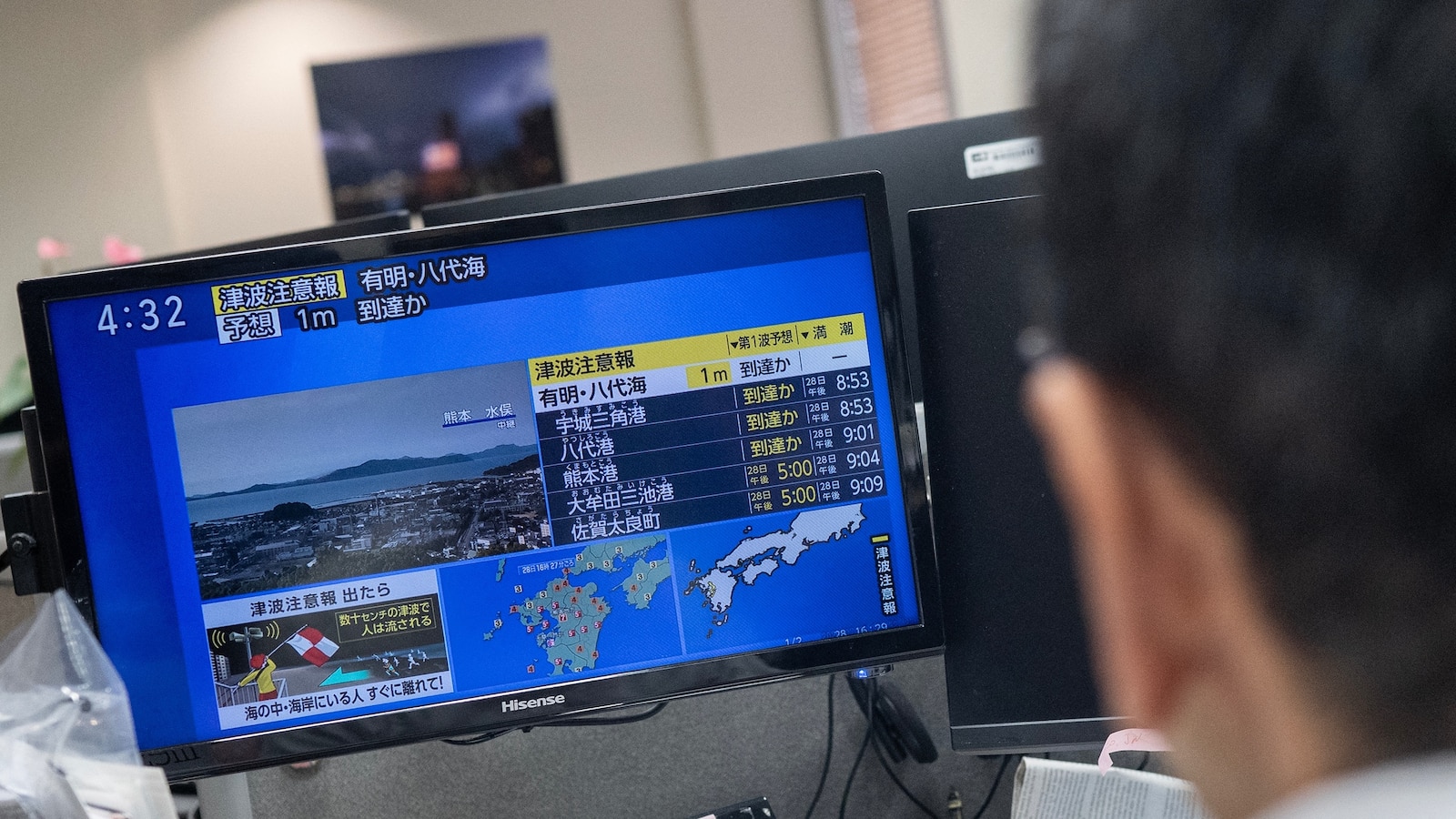
A magnitude 7.1 earthquake tore through Japan's Kumamoto Prefecture on Tuesday afternoon, shaking the city of Uki and the town of Hikawa hard enough to register a 7 — the maximum reading on Japan's seismic intensity scale. The Japan Meteorological Agency put the epicenter at a shallow depth near Uto City and issued a tsunami advisory for the Ariake and Yatsushiro seas as officials warned of waves approaching a meter. A weaker aftershock, magnitude 5, followed about half an hour later.
It arrived as a single, sudden jolt with no clear warning. Compare that to what was happening the same week more than 2,000 miles away in the Philippines, where the Claveria area off Masbate logged 54 separate earthquakes in a single day, or off Tenerife in Spain's Canary Islands, where a "hybrid" seismic episode rattled instruments for nearly five hours without ever producing one dominant shock. Same planet, same rough timeframe, two entirely different personalities of seismic event. The difference between them is one of the more genuinely strange open questions in seismology.
What is an earthquake swarm?
Most sequences follow a pattern seismologists can predict in outline even if they can't predict the timing: a mainshock hits first, then a tail of aftershocks decays over weeks or years, each one typically about a full magnitude unit smaller than the one before it. A swarm breaks that rule entirely. As the U.S. Geological Survey puts it, swarms are sequences with "relatively many earthquakes within a relatively small area" that simply refuse to fit the mainshock-aftershock shape — sometimes the biggest quake lands in the middle of the sequence rather than the start, sometimes activity holds steady or even climbs for weeks instead of tapering off.
Why do earthquake swarms happen without a main shock?
The USGS's working explanation points to an "extra ingredient" that plain tectonic stress doesn't need: fluid. Water migrating through cracks in the crust raises pore pressure and reduces the friction holding a fault in place, and the process can feed itself — a small quake makes the surrounding rock more permeable, which lets more fluid through, which trips more small quakes, in a loop that can run for days or months without ever building toward one big release. Magma does something similar in volcanic settings, forcing its own pathway through the rock. Neither mechanism needs a single overwhelming rupture to run its course; both can just keep leaking energy out in small, roughly equal pieces.
Is the Kumamoto region prone to this kind of quake?
Kumamoto has an unusually well-documented history on exactly this question, and it cuts the other way from a swarm. In April 2016, the region was hit by a magnitude 6.5 foreshock, then — 28 hours later — a much larger magnitude 7.3 mainshock along the same fault system, a sequence rare enough worldwide that it became a research subject in its own right. Researchers at the University of Tokyo's Earthquake Research Institute later found the foreshocks had migrated gradually toward the eventual rupture point in the hours beforehand, evidence of a slow slip creeping along the fault and loading stress onto the patch that ultimately gave way. The main finding in the current study is that such phenomena also occur, albeit on a small scale, at active faults situated inland,
lead researcher Aitaro Kato said of the work.
That 2016 sequence is why Japanese officials are careful, after any quake in the region, to warn residents that a first shock is not necessarily the last word — a lesson residents learned the hard way when some returned to damaged homes after the April 14 foreshock only to be caught by the far more destructive mainshock two days later. Tuesday's magnitude 7.1 event hasn't (as of this writing) produced a larger follow-up, but the region's own history is the reason Japan's earthquake warnings routinely urge vigilance for days afterward rather than treating the immediate aftershock window as the end of the risk.
Can scientists predict whether a swarm will turn into a bigger quake?
Not reliably, and researchers are candid about that limit. Kato's own team cautioned that identifying foreshock migration after the fact is very different from forecasting in real time whether a given fault has accumulated enough stress to rupture big. The tools for measuring that "criticality" in advance are still being built. For residents living through a swarm or a foreshock sequence right now, the honest scientific answer is closer to "we can describe the pattern once it's already unfolding" than "we can tell you what happens next" — an uncomfortable amount of humility for a field that gets asked, after every headline-making quake, whether anyone saw it coming.
What separates Kumamoto's 2016 doublet from this week's Philippine and Canary Islands activity, then, isn't geography or even magnitude — it's whether the fault beneath each region needed one clean break to release its stress, or whether fluid and slow slip let it bleed that stress out in dozens of smaller increments instead. Both are earthquakes. Only one of them announces itself as a single, unmistakable event.