Vera Rubin Observatory Starts Its 10-Year Sky Survey
The world's largest digital camera has begun a decade-long film of the southern sky, imaging it every few nights to catch whatever moves or flares.
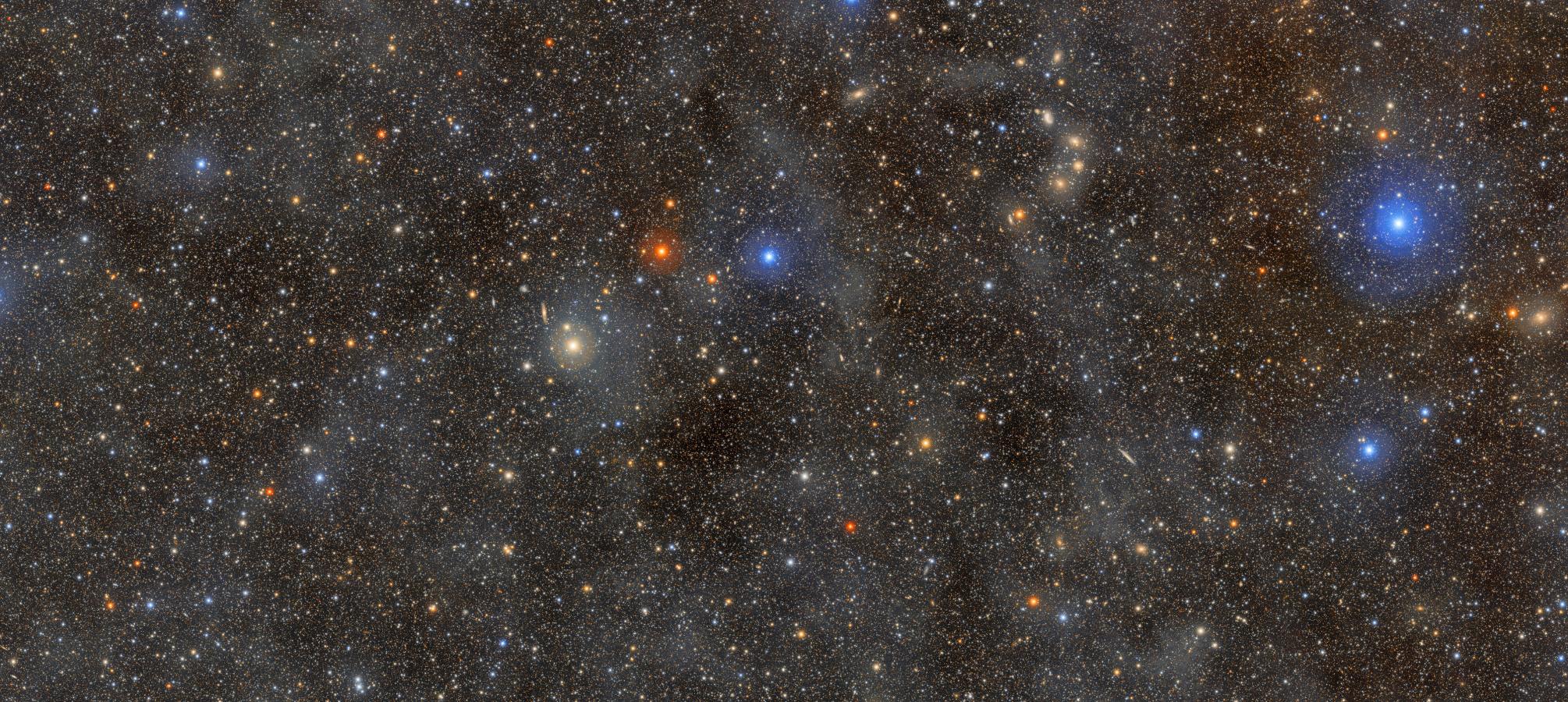
From a mountaintop in Chile, a camera the size of a small car has started taking a picture of the sky roughly every 40 seconds, and it will not stop for a decade.
The NSF–DOE Vera C. Rubin Observatory formally began its Legacy Survey of Space and Time on Monday, the 10-year census that astronomers have been building toward for more than 20 years. Perched on Cerro Pachón and named for the astronomer whose work gave the first solid evidence for dark matter, Rubin will scan the entire southern sky every few nights and keep doing it, over and over, until the late 2030s.
"Today, we begin filming the greatest cosmic movie ever made," said Brian Stone, performing the duties of the director of the U.S. National Science Foundation. The film metaphor is doing real work here. Rubin is not chasing a single deep image; it is after change, the flicker of a star that varies, the flash of a supernova, the streak of an asteroid nobody has logged.
The engineering is what makes that possible. At the telescope's heart sits a 3,200-megapixel sensor, the largest digital camera ever built, feeding what its operators describe as a discovery machine rather than a conventional observatory. Each point on the sky gets revisited about 800 times across the survey, and combining those repeat exposures pulls faint objects out of the dark that no single shot could catch.
The scale of the data is the genuinely new part. Rubin generates about 10 terabytes a night and can fire off as many as seven million alerts before dawn, each one a note that something in the sky moved or brightened. Automated brokers sort that torrent so scientists can chase the interesting few. When the survey is done, the archive is expected to hold billions of objects and trillions of measurements, and Rubin's operators stress that the data will be public, not locked behind a single team.
It has already shown what it can do. During a six-week optimization run before the survey officially started, Rubin turned up more than 11,000 previously unknown asteroids, including 33 near-Earth objects, according to Space.com. That is a preview, from a warm-up. It also makes Rubin, almost incidentally, one of the most productive tools ever pointed at the hazard of things that cross Earth's orbit.
The decision to call the survey open was deliberate and technical, not ceremonial. Rubin held off until image quality, survey speed, uptime and calibration all cleared review, said Željko Ivezić, who heads the survey. The wait fits a wider run of instruments finally reading the sky at industrial scale, the same shift that has NASA rovers sifting Martian mud for organic carbon and turned even a World Cup ball into a physics testbed.
"It's taken 20 years of hard science, engineering, and more to get to the point where we can call 'action,'" said Phil Marshall, deputy director of Rubin operations for SLAC. The cameras are rolling now. What they record over the next ten years is, for once, genuinely nobody's to predict.