Why Tap Water Tastes Different From One City to the Next
Two glasses of tap water from two different cities aren't the same water. Source rock, disinfectant choice, and plumbing all leave a taste behind.
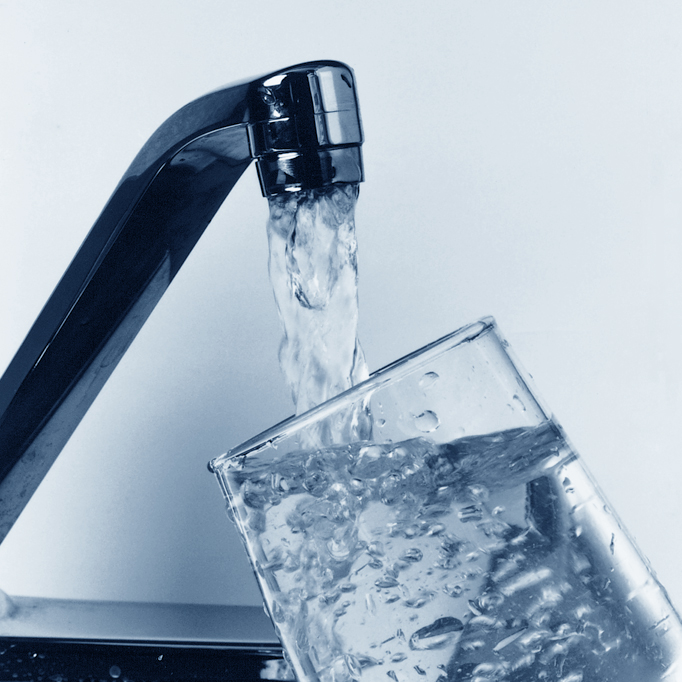
Fill a glass from a kitchen tap in New York City and one in Los Angeles, and you are not drinking the same water on a molecular level. Neither city is doing anything wrong. Neither is lying about safety. They are simply pulling water out of the ground, or out of a mountain range, in two completely different ways. That choice, made decades before either glass reached a sink, is most of what your tongue is picking up.
It starts before the water is ever treated
New York draws most of its supply from reservoirs in the Catskill and Delaware watersheds, water that spends relatively little time in contact with mineral-heavy rock before it's collected. Los Angeles blends water from the Colorado River, imported aqueducts, and local groundwater basins, sources that pick up far more dissolved calcium and magnesium on the way. According to the U.S. Geological Survey, water is classified soft, moderately hard, hard, or very hard based on exactly how much of that dissolved mineral content it's carrying.
Groundwater is generally the bigger offender here. As it moves through soil, rock, and aquifer sediment, it dissolves small amounts of naturally occurring minerals and carries them along, which is why well water and groundwater-heavy municipal supplies tend to run harder than surface water pulled straight from a mountain reservoir. Hard water isn't unsafe. It's just chalkier, and it leaves the mineral deposits you've probably scraped off a kettle or a shower head.
Then a disinfectant gets added, and that's a second choice
Every U.S. utility disinfects its water before it reaches your tap, and the two dominant methods taste nothing alike. Straight chlorine produces the sharp, "pool-like" smell most people associate with tap water. Chloramine, chlorine mixed with ammonia, is a weaker disinfectant, but it's more chemically stable, so it survives longer trips through a distribution system without breaking down. That stability comes with a taste tradeoff: chloramine tends to produce a milder odor and fewer taste complaints precisely because it reacts less with the organic material already in the pipes.
The EPA caps both disinfectants at the same ceiling, 4.0 milligrams per liter, a level the agency considers safe for the general population. So a city using more chlorine isn't cutting corners on safety. It's made an engineering tradeoff between a stronger short-term disinfectant and a more stable, longer-lasting one, and the byproduct of that tradeoff is exactly what you notice in a glass.
The last mile: your own pipes
Even identical source water can taste different by the time it reaches two different buildings, because the final leg of the trip runs through plumbing the utility doesn't control. Copper pipes can leach small amounts of metal into water that's been sitting still, producing a faint metallic edge. Older service lines can contribute a similar effect. Biofilm, a thin layer of bacteria that naturally colonizes the inside of pipes, can add an earthy note that has nothing to do with what left the treatment plant. New York's own water utility has noted that customers on its Croton system, a smaller and geologically distinct source from the Catskill/Delaware system, sometimes notice a taste difference for this same reason: different rock, different minerals, before the pipes even factor in.
Even the season plays a role
Reservoirs aren't static tanks; they're bodies of water with their own seasonal chemistry. As outdoor temperatures drop in autumn, the water inside a reservoir circulates from top to bottom in a process limnologists call turnover, stirring up sediment and organic matter that had settled during warmer months. Utilities that draw from open reservoirs, rather than deep groundwater wells, are the ones most likely to see a temporary taste shift tied to this seasonal churn. That's why a city's water can taste slightly different in October than it did in July, with nothing in the treatment process having changed at all.
None of this means one city's water is better or worse than another's, in the sense that matters for safety. Every public utility in the U.S. answers to the same EPA maximum contaminant levels regardless of which source or disinfectant it uses. What differs is everything upstream of that floor: the rock the water passed through, the chemistry chosen to keep it safe in transit, and the pipes it travels through last. A glass of tap water carries the fingerprint of a decision chain that started long before anyone turned on a faucet.