Comcast to Split in Two, Spinning Off NBCUniversal and Sky
The cable giant is cleaving its media empire from its pipes, betting two focused companies can do what one sprawling conglomerate could not.
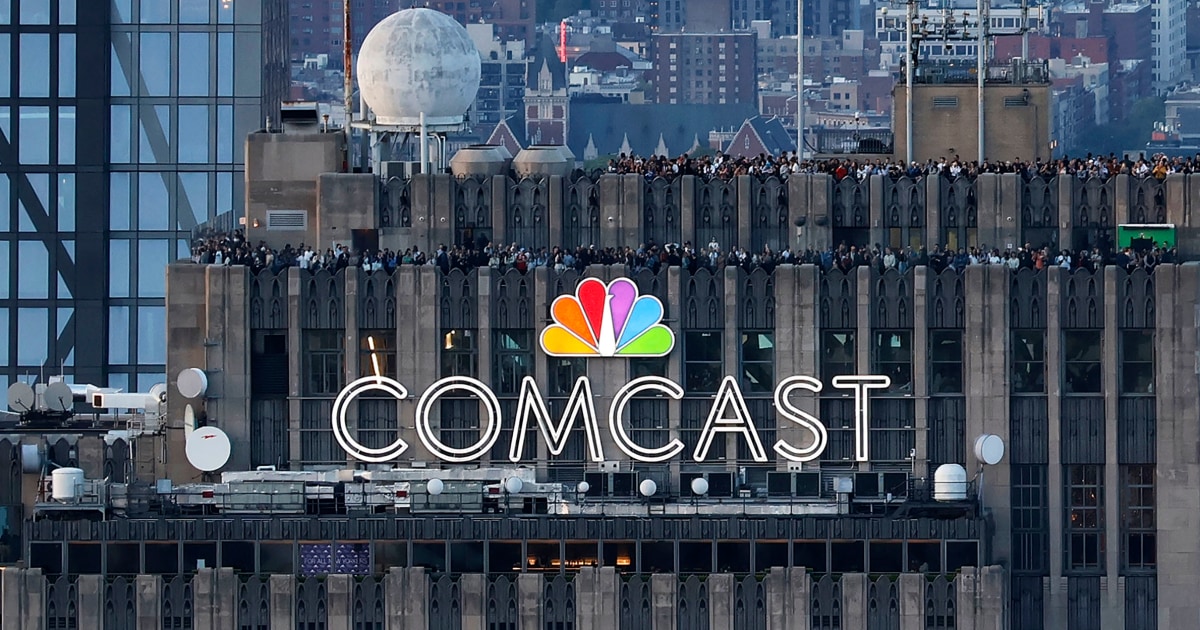
Comcast is taking itself apart. The company said Monday it will split into two separate public companies, spinning off NBCUniversal and the British broadcaster Sky into a standalone media business while the rest of Comcast keeps the broadband and wireless networks that actually pay the bills.
Investors liked the breakup. Comcast shares jumped about 9% after the announcement, a vote of confidence in a wager that two focused companies can do what one sprawling conglomerate could not.
For shareholders, the mechanics are straightforward: the deal is structured as a tax-free spin-off, so owners of Comcast stock will end up holding shares in both companies. "Upon completion of the transaction, Comcast shareholders will own shares in both Comcast and NBCUniversal, creating two focused industry leaders," the company said.
The new NBCUniversal is the glamour half. It carries the Universal film and television studios, the fast-growing theme parks, the NBC and Telemundo networks, the Peacock streaming service, the Bravo cable channel and Sky, the European operation Comcast bought in 2018. What stays behind under the Comcast name is the less cinematic but steadier business: the cables, the cell service and the connectivity platforms.
Chairman and co-CEO Brian L. Roberts, whose family has run Comcast for three generations, framed it as opportunity rather than retreat. "This is a very exciting day for our company," he said. "The transaction we are announcing will unlock a more entrepreneurial management approach and open up a multitude of new opportunities for each business." Roberts will stay involved in both companies. Current co-CEO Mike Cavanagh becomes chief executive of NBCUniversal; former finance chief Michael Angelakis takes over as CEO of Comcast.
"Both companies begin this next chapter from positions of strength," Cavanagh said.
Strip away the optimism and the logic is defensive. Cable television is shrinking, cord-cutting is relentless, and a media arm tethered to a broadband balance sheet has struggled to be valued on its own terms. Splitting lets each side raise money, strike deals and be judged by investors who want either a utility-like cash machine or a content company swinging for streaming and box-office hits, not an awkward blend of both.
It is also the second time in a year Comcast has used the same tool. The company already spun off most of its cable networks earlier in 2026 into a separate firm, Versant, taking channels including CNBC and MS NOW off its books. Monday's move finishes the job, cleanly separating the pipes from the programming.
The timing tracks an industry-wide instinct to simplify. Legacy entertainment companies have spent the past two years splitting, merging and shedding assets as streaming economics and a choppy box office reset what a studio is worth. NBCUniversal, newly unbound and carrying Sky's European reach, will compete in that scrum as its own entity rather than a division.
None of it is final. Comcast is targeting roughly mid-2027 to complete the separation, and the company's own filings caution that the terms and timing could change. For the better part of two years, the people who work in Universal's studios and parks and on Sky's slate will be employees of a company that exists mostly on paper, waiting to find out exactly what they have been spun into.