Hinojosa Can Pause Texas Data Center Permits, but Not Repeal the Tax Break
Abbott had already ordered state agencies to pause data-center permits before he lost. What the winner can do by order, and what waits for the Legislature on Jan. 12, are not the same list.
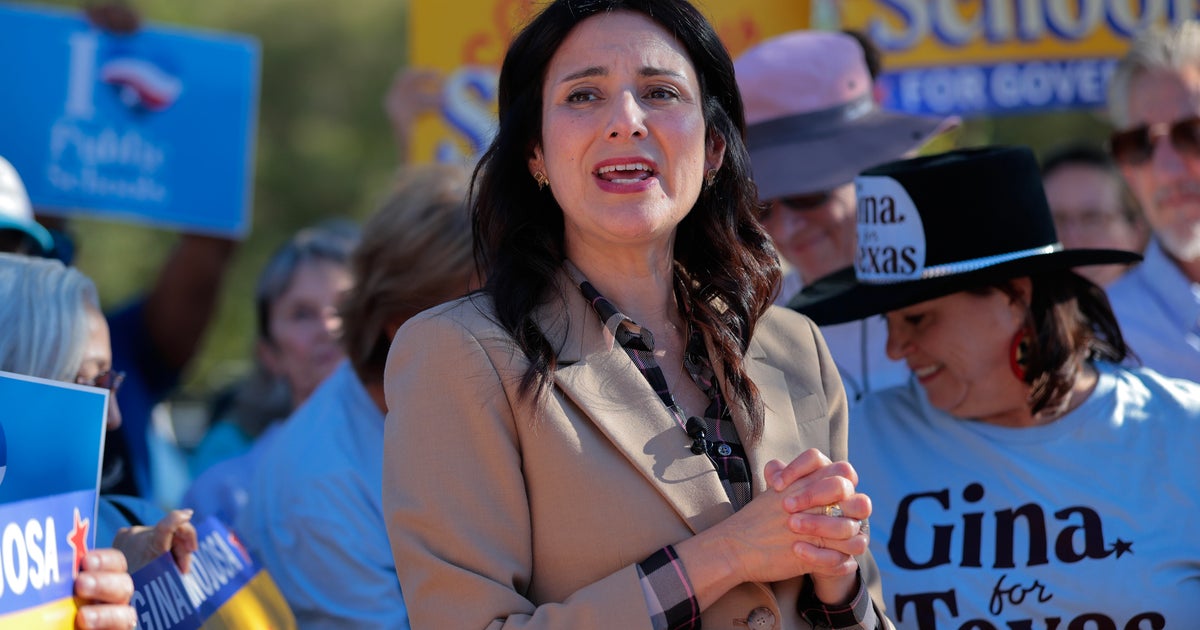
Greg Abbott, who lost the Texas governor's race as of Wednesday morning, Nov. 4, had already told his environmental regulator to issue no data-center permits. Gina Hinojosa, who beat him, says that is not enough.
Hinojosa, a Democratic state representative from Austin, campaigned on a moratorium on new data centers until lawmakers pass protections, an end to the state sales-tax exemption and a "seat at the table" for communities. A governor can direct agencies and decide whether to call a special session. Ending an exemption that forgoes at least $1.3 billion in sales tax this year, giving communities a say and the final word on who pays for grid upgrades need the Legislature, which convenes Tuesday, Jan. 12, 2027. On the schedule the Texas Constitution sets, she would be installed a week later, Jan. 19, "or as soon thereafter as practicable."
Headlines made the result sound finished. Yahoo Finance wrote that a Democrat won after promising to halt new data center construction
; the Financial Times said Democratic governors were elected on promises to stop data centre building
. Nothing was enacted on Tuesday, and Hinojosa's own phrasing is more conditional. In El Paso on Oct. 28 she described a pause on agreements until we can pass laws
. And her campaign's data-center page is addressed to Abbott, not to herself: it says he should issue an Executive Order effective immediately
and call a special session.
The pause was never a partisan invention, either. The Information counted at least one candidate backing a pause in 21 of the 36 states electing governors, and both major-party nominees in Michigan, New Hampshire, Ohio, Oregon and Texas backed some form of one. Republican candidates were already drifting from the White House before Tuesday; an earlier look at Trump and his own candidates on data centers and power bills covers that ground.
Ohio and Georgia show the same gap. Amy Acton won in Ohio and Keisha Lance Bottoms in Georgia, both as of Wednesday morning and per AP race calls. Acton calls her stance a conditional moratorium immediately in effect to protect our energy needs
, and The Information reported she has asked the Statehouse to legislate it
; she takes office with a GOP-majority legislature that the Statehouse News Bureau called likely to limit her authority
. Bottoms said on Sept. 14 that a statewide pause would be one of her first priorities, though she was unsure whether an executive order could do it or whether it had to be done legislatively.
A pause by order is a permit decision
A Texas governor has no general power to stop construction. The state law library's annotated constitution says executive officers hold only powers the constitution or the Legislature gives them, which is why Abbott's pause runs through agencies. On Monday, Sept. 21, he directed the state environmental regulator, the Texas Commission on Environmental Quality, to halt all permits sought by data centers until the grid operator finishes an audit. His release was blunt: Until they do, TCEQ will issue no permits sought by data center projects.
Two earlier directives came first. On Aug. 3, Abbott told the Public Utility Commission and the Electric Reliability Council of Texas (ERCOT) to audit every data center in the interconnection queue, the line of projects waiting for grid access; POWER's account of the audit order says noncompliant projects must be denied connection. On Sept. 14 he directed the Texas Water Development Board to enforce water-use reporting by data centers.
The table below sorts the levers by who holds them and what the record shows so far.
| Lever | Who holds it | What the record shows |
|---|---|---|
| Pause state environmental permits | Governor, by directing TCEQ | Abbott did it Sept. 21; TCEQ says all construction-related permits are paused; watchdogs counted at least 16 applications advanced or approved. |
| Grid access | PUCT and ERCOT, under SB 6 | Abbott ordered an audit of the queue Aug. 3; SB 6 rules are due Dec. 31, 2026; Batch Zero study results are due Apr. 9, 2027. |
| Water-use reporting | Texas Water Development Board | Abbott directed enforcement Sept. 14. |
| Special session | Governor alone calls it and states its purpose | Limited to 30 days, per the Star-Telegram's account; Abbott could call one before he leaves, but Hinojosa cannot until she is installed. |
| Sales-tax exemption (about $1.3 billion this year) | Legislature | Abbott and Hinojosa both say end it; Senate Finance Chair Joan Huffman said in April she plans to look at filing a bill to repeal the exemption or review it. |
| Local say over projects | Legislature (Texas counties have no zoning authority) | Abbott wants cities and counties to decide; Hinojosa wants a "seat at the table." |
| Who pays for grid upgrades | PUCT rulemaking under SB 6, then lawmakers | Cost-allocation work is due by December 2026. |
Hinojosa has been frank about the first row. In Dallas on Oct. 13 she said:
"I could issue a moratorium, but it would be in place until laws are passed to accomplish those things."
Gina Hinojosa, Democratic nominee, Oct. 13, 2026, Dallas
An order can hold permits, but it cannot write the law that ends the hold. SemiAnalysis, quoted by Bloomberg, framed it this way: The question now is how long the pause lasts.
The Information reported that Abbott's hold reaches air and water permits for infrastructure directly supporting data centers, applies statewide with no megawatt threshold and has no binding end date. Procurement, leasing, financing and construction that need no new TCEQ authorization can continue.
Whether permits kept moving is disputed. The Houston Chronicle's reporting on the permit count says Public Citizen and FracTracker found TCEQ had advanced or approved at least 16 permit applications for data center projects, eight of them stormwater permits needed to begin construction. Public Citizen's Kathryn Guerra said such a permit authorizes them to do grading, clearing, excavating
. Abbott spokesman Andrew Mahaleris answered: No permits have been approved.
TCEQ's interim executive director, Steven Schar, told Abbott the agency has paused the issuance of all permits related to the construction or development of infrastructure directly supporting data centers
.
Both accounts can be true, because "advanced" and "approved" are different verbs, and the dispute shows the tool's limit: a pause is only as tight as the agency's definition of a data-center permit. Abbott's order is 44 days old today and would be 120 days old by Jan. 19. The Chronicle reported that ERCOT officials told lawmakers in August the audits would not be done until at least December.
Other governors found the same ceiling. New York's Kathy Hochul signed Executive Order 62 on July 14, holding discretionary state permits for projects of 50 megawatts or more; it does not reach local approvals. Lawmakers had passed a one-year moratorium on June 4; she issued the order instead. As the law firm Brownstein put it, A statute and an executive order are not the same, they cannot be challenged the same way and do not bind the same set of actors.
The tax break and local say belong to lawmakers
The sales-tax exemption dates to 2013, with a 2015 addition covering data centers over 250,000 square feet. Hinojosa's page cites House Bill 2712 in 2015; the Texas Tribune dates the exemption to 2013. Both can be true. What changed is the bill: $5 million to $30 million a year through 2022, more than $150 million by 2023, and at least $1.3 billion this year, the Texas Tribune reported from state projections. The Tribune noted the exemption could pay for the state's entire school voucher program.
On the goal, the candidates agree. Hinojosa told CBS, Yes, I would repeal those tax breaks
; Abbott's Sept. 21 release says he will work with the Legislature to eliminate financial incentives; and Senate Finance Chair Joan Huffman said she plans to look at filing legislation to either repeal the exemption or take a very close look at it.
On local say, Abbott wants counties or cities
to have the final say, but AP noted in July that Texas counties have no zoning authority.
Whether Hinojosa gets a friendly Legislature is unsettled. Democrat Vikki Goodwin defeated Republican Lt. Gov. Dan Patrick, but the Texas Tribune wrote that the office's powers largely derive from Senate rules and that the chamber will retain a GOP majority that could curtail them. Control of the chambers was still being tallied; the Daily Texan reported that as of 2 a.m. Wednesday no party had won a majority in either.
The special session is the one lever that moves before January, and it is Abbott's. The annotated constitution calls the governor's exclusive control of whether and when one should be called
a significant power, and the proclamation must state its purpose. Hinojosa asked him to call one "today." Until Jan. 19, he is the only person who can.
The dates below count days from Wednesday, Nov. 4. The Jan. 19 line is arithmetic from the constitution's text, not an announcement.
| Date | What happens | Days from Nov. 4 |
|---|---|---|
| Dec. 31, 2026 | PUCT deadline to implement SB 6 | 57 |
| Jan. 12, 2027 | 90th Legislature convenes | 69 |
| Jan. 19, 2027 | New governor installed on the constitutional schedule (computed; "or as soon thereafter as practicable") | 76 |
| Mar. 12, 2027 | Last day to file bills | 128 |
| Apr. 9, 2027 | ERCOT Batch Zero study results | 156 |
| May 31, 2027 | Session ends | 208 |
She arrives seven days after lawmakers do, with 52 days before the bill-filing deadline.
For a household, the question is the power bill, and the honest answer is that no source puts a Texas figure on it. Senate Bill 6, signed June 20, 2025, tells the Public Utility Commission to revisit how transmission costs are allocated and to make new large loads, those of 75 megawatts or more, contribute to interconnection costs, with implementation due Dec. 31, 2026. According to POWER, two of five rules were adopted by March. Abbott's directive says projects must cover all electrical infrastructure costs, and Hinojosa's proposals, which the Texas Tribune described as shielding consumers from data center-driven utility hikes
, point the same way.
The only dollar figures come from a different grid. In PJM, which serves Ohio and the mid-Atlantic, capacity prices rose from $28.92 per megawatt-day in 2024-25 to $329.17 for 2026-27, and IEEFA estimates the data-center share of the 2025-26 auction increase adds roughly $16 a month to the average Ohio residential bill. That is a different market, so read it as a warning about mechanism, not a forecast for Texas.
The grid queue is bigger than the exposure
Markets moved before anyone could read a statute. Bloomberg reported Nasdaq 100 futures down 2.2% early Wednesday; CNBC, as relayed by Unite.AI, put them down 0.8% as the results arrived. Moves were volatile overnight and the numbers differ by the hour. CNBC's reporting adds that the Nasdaq-100 entered correction territory at the end of October amid concern about slowing data-center spending, so the Texas result landed on a market already nervous.
The exposure estimates are smaller than the headlines. GLJ Research's Gordon Johnson said in a note, per Bloomberg, that roughly 13 gigawatts in Texas is immediately exposed, but Projects with power, permits and steel keep going
, and projects with neither probably go to Louisiana, Oklahoma or nowhere.
The grid queue puts that in proportion. ERCOT's large-load queue stood at about 474.7 gigawatts as of June, per ERCOT's July 29 Senate testimony, with 420.8 gigawatts of it identified as data centers, against a record peak demand of 91,089 megawatts on July 22. ERCOT's market monitor, Jeff McDonald, said ERCOT's own load forecast, a separate figure from the queue, could be considered an upper bound
. The 13 gigawatts GLJ calls exposed is 2.7% of that queue but half of the roughly 26 gigawatts Bisnow counts as operating or under development in Texas. The definitions differ, so the two comparisons only work together.
Analysts split on what the rules do to projects. Bloomberg quoted Jefferies' Jonathan Petersen:
"Regardless of the election outcome, the 2027 session could bring tighter rules around who pays for grid infrastructure, water use and data centre tax incentives," Petersen said. "We view these as more likely to increase development costs and requirements than materially restrict the Texas pipeline."
Jonathan Petersen, Jefferies, as reported by Bloomberg
PIMCO's Libby Cantrill expects a lot more sand in the gears of the AI buildout regardless.
Developers can want rules, too. Spark AI's Jacob Biderman told Bisnow that some developers are actually very happy to see clearer regulations
, and his firm's data show Texas approvals fell 5% in the third quarter as the bottleneck shifted toward the grid.
Congress's lever is tax: Bisnow reported on Nov. 1 that the Senate's top Democratic tax writer had announced plans for an additional excise tax, and Wyden's Data Center Tax Has No Rate, No Name and No Score is the earlier piece on it.
Taken together, the election decided who bargains in Texas, not whether data centers get built: the queue is vast, the one pause in force in Texas is Abbott's, and Hinojosa has defined hers as lasting until laws pass. That makes May 31, when the 90th Legislature adjourns, the date that sorts a statute from a long-running bargaining position.